General information and entertainment, not investment advice. The author is not a SEBI-registered adviser or research analyst. No recommendation, no promised returns. Markets carry risk including loss of capital. Figures may not be current. Consult a registered adviser before acting.
1. At a Glance
Mercury EV-Tech reported FY26 (consolidated) sales of ₹102 Cr, up 14% from ₹89 Cr in FY25. Net profit fell 50% to ₹4 Cr. The latest quarter (Mar-26) collapsed: sales ₹20.21 Cr (−34% YoY), net profit ₹0.30 Cr (−80.6% YoY), operating margin −11.58%. The stock trades at 143x earnings.
Consolidated audited cashflow reveals the true picture: operating cash burn of −₹3,165 Cr, capex of −₹2,371 Cr, total free cash flow of −₹5,536 Cr. The IPO’s ₹19,327 Cr raise (FY25) is half-spent in one year. Cash on hand dropped from ₹605 Cr (FY25) to ₹491 Cr (FY26)—a ₹114 Cr depletion.
Consolidated balance sheet (Sep-25) shows total assets ₹358 Cr, equity ₹280 Cr, borrowings ₹7 Cr. Operating profit margin compressed to 5% (FY26) from 9% (FY25). Subsidiaries (Powermetz, DC2 Mercury Cars, Traclaxx) are consolidated into these numbers and are systematically losing cash.
ROE is 1.51%, ROCE is 2.64%. Neither breaks 3%. The company is not self-funding; it is burning capital at a rate that exhausts reserves in weeks.
A battery and EV manufacturer in a race against its own balance sheet.
2. Introduction
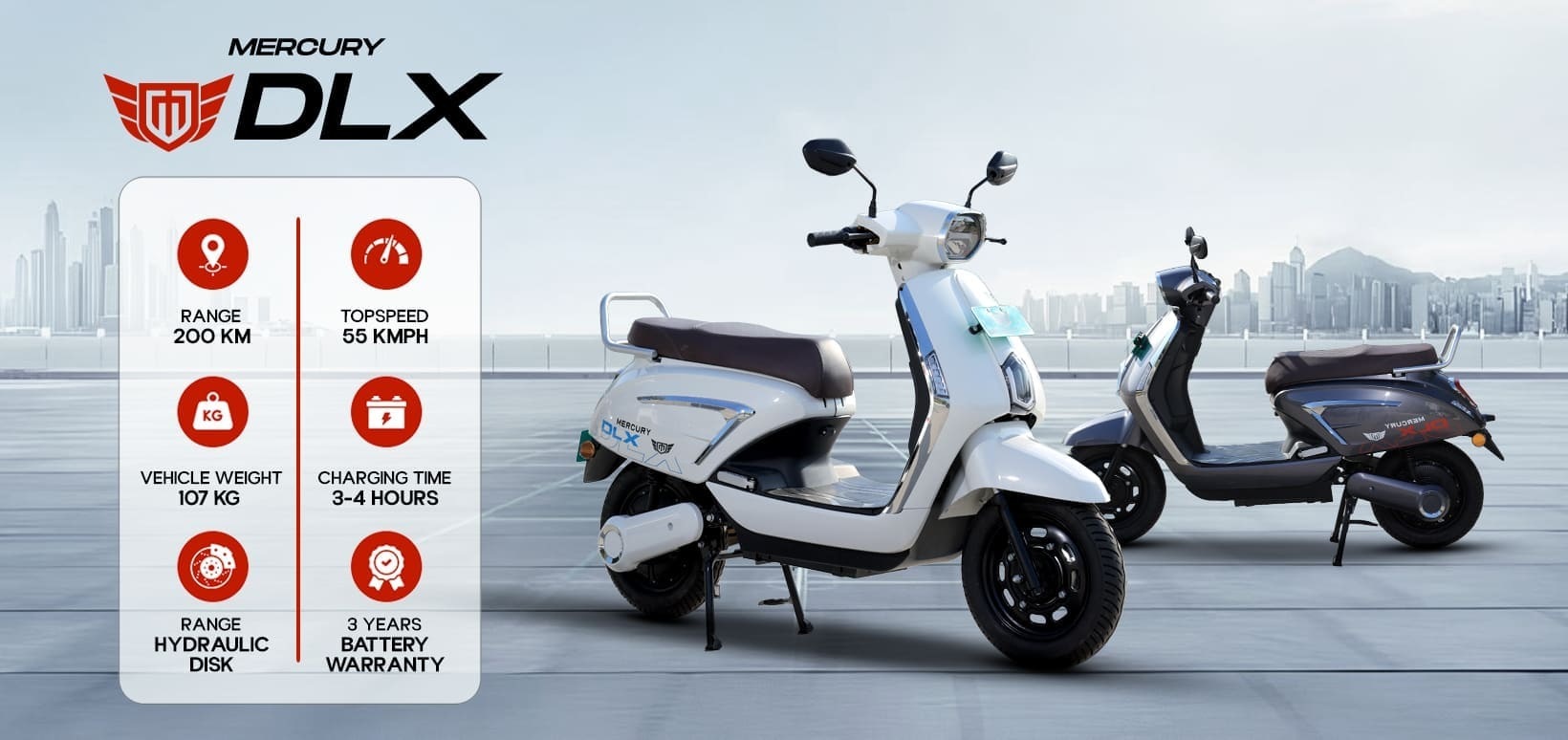
Mercury EV-Tech pivoted in March 2023, shedding its metals heritage to bet everything on batteries and electric vehicles. The company manufactures electric scooters, cars, buses, vintage replicas, and golf cars—niches in a crowded, margin-compressed market.
The deal pace since pivot has been relentless: NCLT-approved merger of subsidiary EV Nest (July 2024); acquisition of 69.84% in DC2 Mercury Cars (January 2025); 65% stake in Traclaxx Tractors (May 2024); commissioning of a 3.2 GW lithium-ion battery plant (April 2025). M&A is the strategy. Consolidation is the narrative.
The IPO listing on NSE arrived in June 2026, raising ₹19,327 Cr in FY25 via share issuance. Warrant lapse in May 2026 forfeited ₹84.94 Cr in upfront cash. Management turned over mid-year: new chairman (May 2025), company secretary resigned (October 2025, replaced December 2025), independent director Ajay Ramkrishna Shukla died (December 23, 2025).
The narrative is expansion. The consolidated numbers are decay.
3. Business Model: WTF Do They Even Do?
Mercury operates at the intersection of EV evangelism and niche manufacturing fantasy.
E-scooters & E-bikes: The workhorse. Supply of 24S LFP battery packs to Kabira Mobility. Orders worth ₹110 Cr (FY23) for two-wheeler EV batteries from unnamed OEMs. Margin-thin, customer-dependent.
Tractors: 65% stake in Traclaxx (acquired May 2024 for ₹52.39 Lac). Farm EV angle. Unproven, portfolio piece awaiting strategics.
Batteries: The all-in bet. A 3.2 GW lithium-ion plant (subsidiary Powermetz, 80% owned) commissioned April 2025, AIS-156 Phase-II certified (Reliance Jio validation). Capex of ₹150+ Cr sunk; payback unproven.
Revenue mix (FY23): ~97% product sales, ~3% other operating revenue. Order book for batteries: ₹1,100 Mn, roughly 11% of FY26 sales—immaterial to trajectory.
The model is built on execution risk, not competitive moats. Scale is absent. Every subsidiary is a cash sink.
4. Financials Overview: Consolidated Figures in ₹ Crore
Figures are consolidated (all subsidiaries included) as reported.
Metric
FY24
FY25
YoY
FY26
Sales
22
89
+306%
102
Expenses
19
81
+20%
97
Operating Profit
3
8
−37.5%
5
Other Income
0
3
—
6
Interest
0
1
—
1
Depreciation
0
1
—
4
PBT
3
10
−30%
7
Tax
1
2
—
2
Net Profit
2
8
−50%
4
OPM %
13%
9%
—
5%
FY26: sales up 14%, but operating profit down 37.5% to ₹5 Cr. Expenses grew 20% while sales grew 14%—negative operating leverage. Depreciation jumped to ₹4 Cr (from ₹1 Cr in FY25)—the battery plant capex now hitting the P&L. Other income of ₹6 Cr (mostly non-operating) masked deeper operational deterioration. Strip it: operating profit is collapsing.
Q4 FY26 (Mar-26) Deep Dive:
Sales: ₹20.21 Cr (−34.1% YoY from ₹30.68 Cr in Mar-25)
Expenses: ₹22.55 Cr (−27.4% YoY, but still exceed sales)
Operating Profit: −₹2.34 Cr (operating loss)
OPM: −11.58%
Other Income: ₹4.71 Cr (mostly non-operating, keeping profit positive)