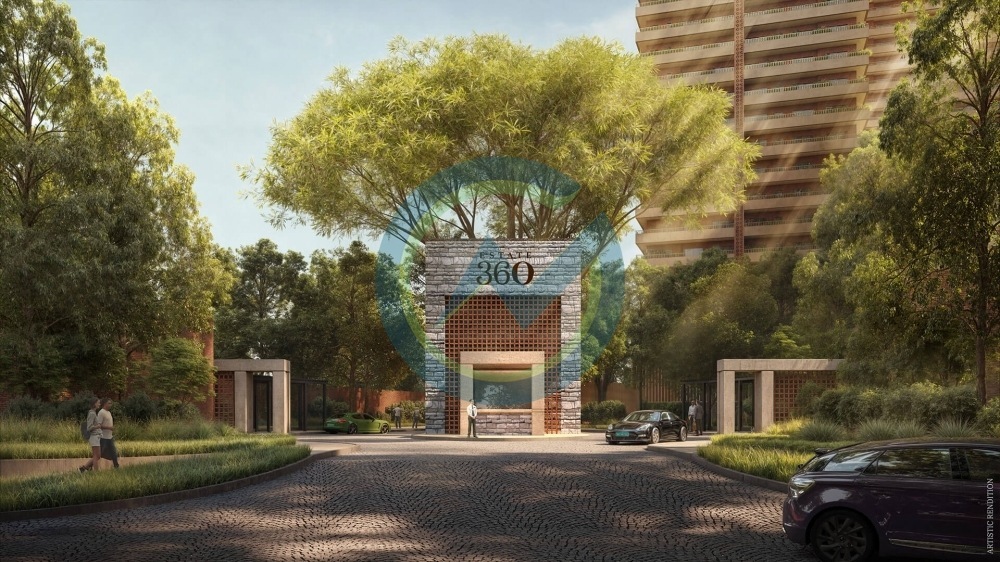
Max Estates FY26: A 580x P/E Multiplex Trading Concrete for Commercial Drama
Section 1 — At a Glance
The financial mechanics of premium real estate development often require investors to sit comfortably with extreme statistical divergences. Max Estates Limited concluded the financial year ending March 31, 2026, showcasing a structural pivot from an office-rental play into a high-octane luxury residential development engine. The company achieved annual pre-sales of ₹5,305 crore, matching the previous year’s performance of ₹5,321 crore, and brought its gross development value pipeline to an elevated ₹17,200 crore. Driven by intense booking velocity in the fourth quarter, which contributed ₹3,392 crore of the total volume, the operational front remains highly active. Annual collections rose by 61% year-on-year to hit ₹1,578 crore, reflecting stable execution milestone tracking across key NCR geographies.
However, this capital-intensive expansion has fundamentally reshaped the balance sheet and compressed near-term accounting profitability. On a full-year basis, consolidated net revenue stood at ₹199.5 crore, up 24% year-on-year, but reported profit after tax moderated to ₹15.5 crore due to elevated upfront corporate allocations, employee expansion, and marketing outlays. Operating profit margins collapsed from 27.7% down to 11.8%, while gross external borrowings expanded significantly to reach ₹2,412 crore. This influx of leverage has reset the net debt position to ₹97 crore, ending the company’s historical debt-free residential cushion as land acquisition outlays accelerated.
The core tension for shareholders lies in the friction between current accounting returns and future project recognition. While operational cash outflows reached ₹616 crore, the market is pricing this enterprise at a premium trailing stock P/E ratio of 580x, reflecting massive forward-looking assumptions about embedded profitability. Capital efficiency metrics remain suppressed, with a reported Return on Capital Employed of just 1.79%. The incoming project cycle over the next 24 months represents the critical gateway through which these massive capitalized inventories must pass before translating into actual recognized revenue.
Section 2 — Introduction
Max Estates Limited, the real estate development arm of the Analjit Singh-led Max Group, has officially outgrown its boutique corporate shell. Originally carved out via a demerger from Max Ventures and Industries Limited, the entity now operates as a pure-play real estate vehicle dedicated to the Delhi-NCR micro-markets. Over the last few decades, the parent ecosystem has built and monetized household institutional brands like Max Life and Max Healthcare. Now, management is attempting to apply that same premium corporate playbook to the historically opaque, erratic world of premium regional brick-and-mortar development.
The strategic direction over the past fiscal year indicates a deliberate attempt to build simultaneous scale across two distinct cycles: sticky, predictable Grade-A commercial asset rentals and volatile, cash-rich luxury residential sales. Backed by institutional co-investment from New York Life Insurance Company—which has progressively scaled its capital commitment to ₹1,800 crore across multiple rounds—Max Estates is transitioning from a conservative manager of legacy corporate spaces into an aggressive competitor on the Noida and Gurugram growth corridors.
Section 3 — Business Model: WTF Do They Even Do?
Max Estates operates what it describes as a “LiveWell, WorkWell” ecosystem, which is corporate phrasing for building ultra-premium office blocks and high-end residential towers that look highly photogenic in investor slide decks. Instead of spamming mid-market affordable housing across the country, they stay strictly anchored in Delhi-NCR, targeting buyers who do not blink at ticket sizes ranging anywhere from ₹6 crore to upwards of ₹14 crore.
Their business model splits down the middle like a well-planned mixed-use development:
The Annuity Engine: They build Grade-A commercial spaces, lease them out to corporate tech and media giants like Adobe, NDTV, and the BBC, and collect steady, inflation-indexed rent. They currently manage a fully stabilized 1.3 million square foot portfolio that runs at a flawless 100% occupancy rate, generating ₹154 crore in annual rental income.
The Residential Cash Monster: They partner with landowners via Joint Development Agreements (JDAs) or deploy outright cash to buy prime acreage, build luxury townships complete with “intergenerational senior living” ecosystems, pre-sell them completely before pouring the first cubic meter of concrete, and utilize customer advances to fund construction.
In short, they find prime land in NCR, wrap it in premium branding, and rely on wealthy end-users to fund their operational ambitions.
Section 4 — Financials Overview
Figures are consolidated, in ₹ crore.
Headline Financial Metrics
Metric
Latest Quarter (Q4FY26)
YoY (%)
QoQ (%)
Revenue
49.4
24.1%
-0.7%
EBITDA / Operating Profit
-3.4
-137.4%
-216.0%
PAT
-4.3
-130.7%
-5.6%
EPS (₹)
-0.31
-338.5%
0.0%
The income statement is currently experiencing the classic accounting temporal distortion typical of real estate developers. While sales teams are busy locking in billions in bookings, the profit and loss statement reads like a minor corporate emergency. Q4FY26 revenue crawled in at ₹49.4 crore, but the quarter slipped into an operational EBITDA loss of ₹3.4 crore. Why? Because under Indian accounting standards, you can pre-sell an entire city sector, but you cannot recognize a single rupee of revenue until the customer receives their keys and the