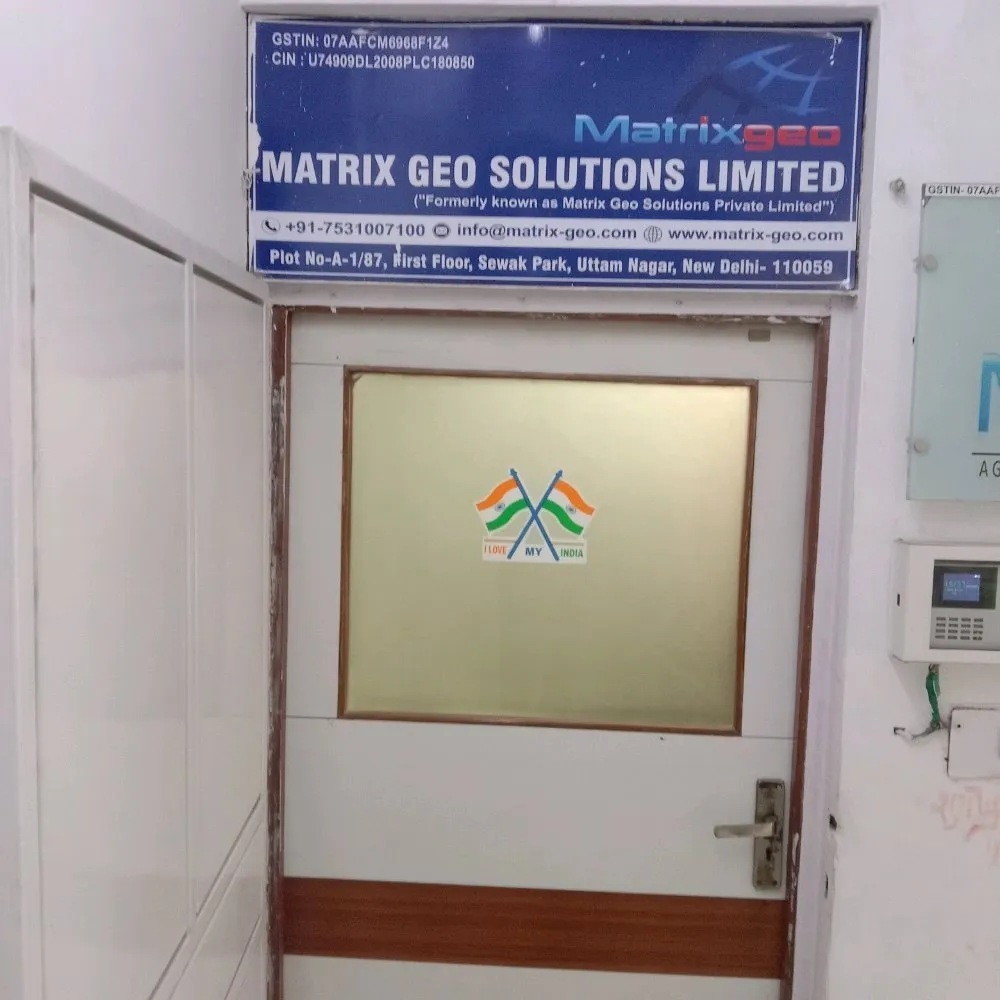
Matrix Geo Solutions Ltd H2 FY26 : The Illusion of 81% Revenue Growth and the Reality of a 480-Day Cash Trap
Section 1 — At a Glance
Matrix Geo Solutions Ltd’s headline financial numbers present a picture-perfect smallcap growth story. For the full fiscal year ending March 31, 2026, the company reported a massive 81.53% surge in revenue from operations to ₹40.10 crore, up from ₹22.09 crore in the previous fiscal year. Profit after tax followed a similar hockey-stick trajectory, rising 71.67% to land at ₹10.06 crore against ₹5.86 crore in FY25. Operating profit margins remained structurally high at 32.74%, driving a strong return on equity of 23.00% and an impressive return on capital employed of 30.04%.
However, peeling back the first layer of these reported profits reveals an entirely different operational reality that is currently worrying discerning market participants. While the profit and loss statement is busy registering records, the company’s cash generation has completely broken down. Operating cash flows plunged into deep negative territory at -₹10.52 crore for FY26, a massive drop from the positive ₹1.97 crore generated in FY25. This structural divergence is driven entirely by a massive balance sheet blockage: trade receivables exploded from ₹11.97 crore to ₹37.65 crore year-on-year. Essentially, almost the entirety of the company’s incremental FY26 revenue is sitting as uncollected paperwork. When asset growth outpaces cash collection, reported accounting profits become nothing more than temporary entries on paper. The market is now faced with a business that is growing rapidly on paper but draining cash at an accelerating rate.
Section 2 — Introduction
Matrix Geo Solutions Ltd, listed on the NSE SME platform in September 2025 after raising ₹38.00 crore in fresh equity, finds itself at a critical structural juncture. Established in 2008, the company has successfully transitioned from a legacy surveying firm into an advanced technological consultancy specializing in drone-based aerial mapping, photogrammetry, and LiDAR data processing.
This analysis exists because the company’s newly minted public balance sheet is showing severe signs of stress just seven months after its initial public offering. While the company has captured investor imagination by winning marquee infrastructure and public sector mapping contracts, its working capital metrics have deteriorated to levels that threaten regular operations. With its stock price down 21.30% over the last six months, the initial IPO euphoria has quickly faded, replaced by urgent analytical questions regarding the company’s true earnings quality and collection capabilities.
Section 3 — Business Model: WTF Do They Even Do?
Matrix Geo Solutions operates primarily as a technology-enabled data factory disguised as a drone operator. It provides Drone-as-a-Service (DaaS) alongside complex geospatial consultancy services like satellite image processing, land use mapping, and flood modeling. They capture raw spatial data across complex Indian terrains, run it through specialized analytics pipelines, and hand over actionable high-resolution 3D models and digital elevation models to infrastructure builders.
While its Drone Academy of India handles DGCA-authorized commercial pilot training, the business model is almost entirely geared toward enterprise geospatial consulting, which accounts for 99.20% of total revenue.
With railways alone accounting for 55.00% of their end-user sector exposure, the company is highly dependent on institutional project cycles.
Section 4 — Financials Overview
Figures are consolidated, in ₹ crore.
Half-Yearly Comparison Table
Metric
Latest Half (Mar 2026)
YoY (Same Half – Mar 2025)
Previous Half (Sep 2025)
Revenue
₹26.04
₹13.00
₹14.06
EBITDA / Operating Profit
₹7.46
₹4.00
₹5.67
PAT
₹6.05
₹3.00
₹4.01
EPS (Reported in ₹)
₹4.15
₹2.61
₹2.75
Note: Half-yearly data points are derived directly from the audited interim tables.
The sequential performance shows a strong volume push in the second half of the year, which is typical for infrastructure service providers as government spending accelerates prior to the monsoon season. However, sudden spikes in year-end revenue frequently coincide with looser credit terms given to buyers.