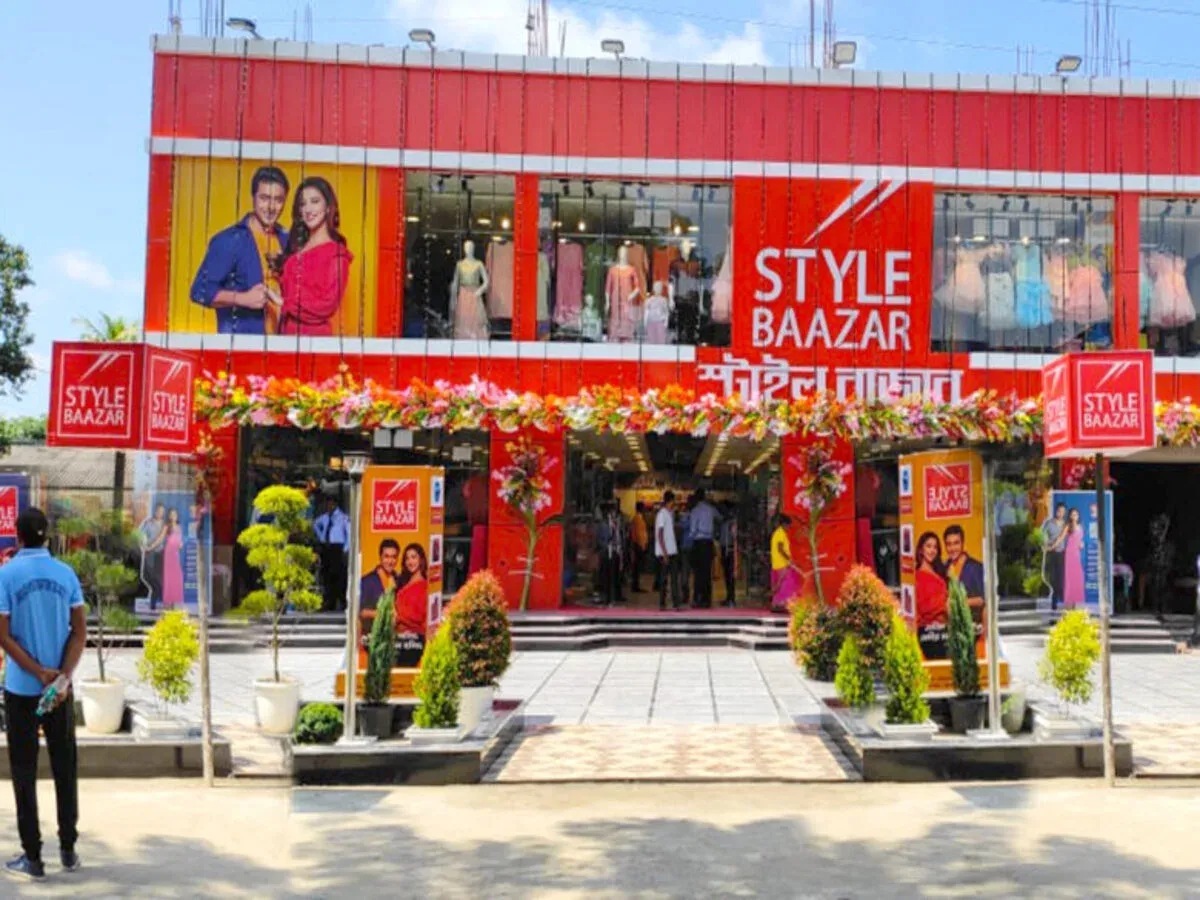
Baazar Style Retail Ltd FY26 : The 116x P/E Fashion Bazaar Trading on Premium Air
Section 1 — At a Glance
Baazar Style Retail Ltd has taken public market investors on a wild, high-speed ride across the retail landscapes of Eastern India, but the valuation math is currently asking for an enormous leap of faith. For the fiscal year ended March 31, 2026, the value fashion player reported its highest-ever consolidated annual revenue from operations of ₹1,840.87 crore, expanding its top-line by a stellar 37.0% year-on-year from ₹1,343.55 crore in FY25. Net profit rocketed by an eye-popping 220% to hit ₹46.89 crore on an Ind-AS consolidated basis, up from ₹14.74 crore in the previous fiscal year.
However, beneath this explosive operational headline lies a multi-layered financial puzzle that requires sharp diagnostic toolkits. Investors are currently cheering a massive competitive coup: a strategic preferential warrant capital infusion of ₹331.53 crore from consumer goods giant Cupid Limited, designed to aggressively accelerate the retail rollout from 40–50 stores annually to an ambitious run-rate of 60–80 stores per year.
Yet, this rapid cluster-based densification has triggered unmistakable corporate growing pains. Heavy regional weather disruptions, political unrest across core eastern territories, and direct operational cannibalization from opening new locations adjacent to old ones dragged Same Store Sales Growth (SSG) down to a sluggish 3% for the full year. Worse, the company closed the fiscal year with a massive consolidated debt burden of ₹995.22 crore, leaving it trading at a steep price-to-earnings (P/E) multiple of 116.40x. When retail growth is fueled by aggressive capital addition rather than intrinsic store-level efficiency, capital productivity metrics run the risk of becoming severely diluted. Can the private-label fashion locomotive outrun its heavy structural overheads, or is the market overpaying for a regional footprint?
Section 2 — Introduction
Baazar Style Retail Ltd is an Eastern India-focused value fashion retailer that has built an extensive corporate footprint across states like West Bengal, Odisha, Assam, and Bihar. Since its incorporation in June 2013, the company has positioned itself as a rapid-scale aggregator in regional apparel retail, progressively swallowing unorganized market share across Tier-2, Tier-3, and Tier-4 underpenetrated towns.
The company finds itself in the analytical spotlight today following its massive ₹835 crore initial public offering (IPO) and a subsequent string of fast-paced balance sheet changes. The primary investment thesis surrounding the business has historically focused on its blistering speed of execution—making it the fastest-growing value fashion retailer in Eastern India between 2017 and 2024 in terms of revenue and store count. However, as the business climbs past a total retail area of 2.5 million square feet, it is confronting a classical retail inflection point: transitioning from a high-margin regional champion into a heavily capitalized, debt-laden, multi-state apparatus that must continuously defend its local turf against deep-pocketed national conglomerates.
Section 3 — Business Model: WTF Do They Even Do?
At its core, the company operates a classic “cheap and cheerful” value fashion retail pipeline. It acts as a one-stop apparel and home goods engine for lower-to-middle-income families in suburban and rural catchments, offering an extensive assortment across men’s wear, women’s wear, kids’ wear, and basic household items. The apparel segment dominates the business model, accounting for 86% of total revenue, while general merchandise accounts for the remaining 14%.
The real operational engine, however, is their rapidly scaling Private Label portfolio. Rather than just selling third-party unbranded stock, the company owns and distributes 11 private fashion labels—including its crown jewel casual wear brand, Square Up, which alone generated an impressive ₹4,063 million (~₹406 crore) in revenue during FY26. These internal brands accounted for 53% of total revenue in FY26, up from 45% in FY25. The strategic playbook here is simple to understand but incredibly difficult to execute perfectly: attract discount-seeking consumers with sharp entry-level price points, hooks them with private labels, and build regional multi-buy frequency to extract steady operating margins.
Section 4 — Financials Overview
Figures are consolidated, in ₹ crore.
Quarterly Performance Trend
Metric
Latest Quarter (Mar 2026)
YoY
QoQ
Revenue
465.71
34.86%
-0.13%
EBITDA / Operating Profit
48.18
104.15%
-46.09%
PAT
-25.64
-300.00%
-235.16%
EPS (₹)
-3.44
-273.91%
-235.43%
Note: EBITDA and Operating Profit figures exclude Other Income.