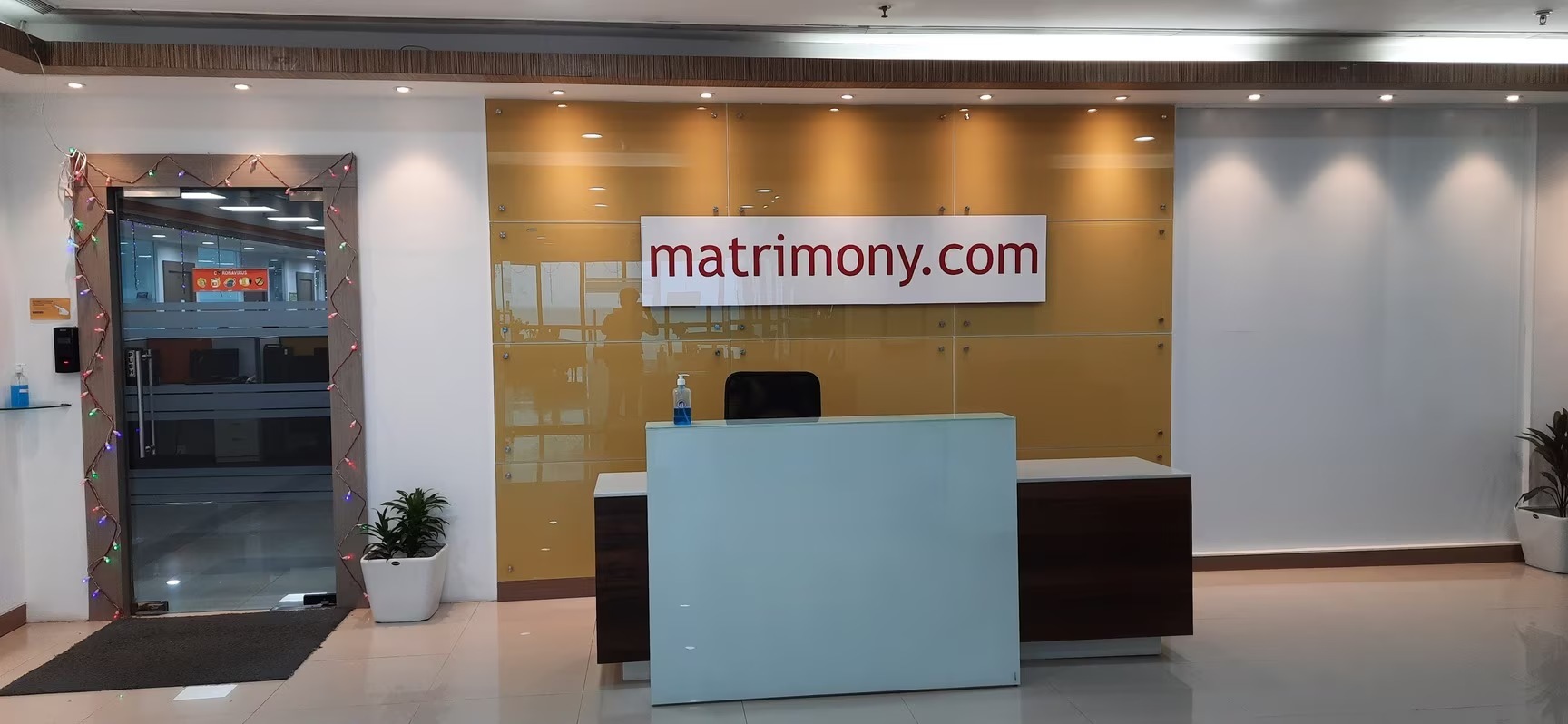
Matrimony.com Q4 FY26: The Grinding Realities of Matchmaking, Tax Penalties, and the ₹20 Crore Deferred Revenue Paradox
1. At a Glance
The search for a lifelong partner is an emotional, high-stakes journey for millions of individuals, but analyzing the corporate entity that monetizes this quest requires cold, unyielding financial scrutiny. Matrimony.com Limited presents a fascinating paradox to the modern corporate analyst. On one side stands a business with a dominant 60% national market share, negative working capital dynamics, and a completely debt-free balance sheet holding over ₹3,000 million in cash and liquid investments. On the other side sits a business model that appears to have hit a structural growth ceiling, where compounding top-line growth over a five-year horizon has slowed down to a mere 4.01%.
The latest financial disclosures reveal sharp structural shifts, regulatory hurdles, and strategic realignments that demand immediate attention. While consolidated revenues for Q4 FY26 grew by 7.86% year-on-year to reach ₹116.83 million, the full-year performance tells a much flatter story. Full-year FY26 consolidated revenue stood at ₹4,600 million, representing a microscopically small growth of 0.9% compared to ₹4,558 million in FY25. More concerning is the systematic compression of profitability. Full-year EBITDA plunged by 17.7% from ₹638 million down to ₹525 million, dragging EBITDA margins down by 250 basis points from 13.9% to 11.4%. Profit After Tax (PAT) followed a similar downward trajectory, falling 24.5% to ₹342 million for the full year.
Behind these compressed margins lies an intense financial reality: the company must continuously deploy capital just to protect its territory. In FY25, advertising expenditure reached ₹1,850 million, absorbing an astonishing 41% of entire operating revenues. This heavy marketing intensity underscores a core vulnerability—the lack of structural pricing power and the perpetual need to re-acquire the customer base.
Adding further complexity to the financial narrative is an array of immediate operational and legal disruptions. The corporate structure experienced significant transition shocks with the sudden resignation of Chief Financial Officer Mr. Sushanth S Pai, closely followed by the exit of Mr. Vaitheeswaran S, Vice President of Personalised Services, who was relieved effective March 31, 2026. Simultaneously, the company has run directly into the tax dragnet, receiving material Goods and Services Tax (GST) orders across four separate states with total penalties and demands exceeding ₹102 million (₹10.2 crore) in April 2026.
Can a business that relies on a constant cycle of acquiring new users maintain its premium market valuation when its core engine experiences margin erosion? This investigation looks past the marketing presentations to dissect whether the company’s aggressive share buybacks are a sign of capital efficiency or an admission that internal growth opportunities have dried up.
2. Introduction
Matrimony.com Limited represents one of the earliest online consumer internet architectures in India. Founded at the turn of the millennium, the company successfully scaled its operations by digitizing traditional match-seeking structures. It survived the early dot-com crashes, navigated the transition from desktop web browses to mobile applications, and established a pan-India brand equity footprint anchored by its flagship portal, BharatMatrimony.
The platform relies on a transaction-seeking model that functions entirely differently from traditional subscription businesses. In a standard software-as-a-service or media streaming model, value is derived from customer retention and extended lifetime value. In matchmaking, structural success is paradoxically defined by customer churn; if the platform successfully delivers its core value proposition, the user finds a partner and deletes the application permanently. This inherent dynamic forces the corporate machinery into a continuous cycle of fresh customer acquisition, making the business exceptionally sensitive to changes in consumer acquisition costs, digital media pricing, and organic discovery channels.
The company’s operational footprint is bifurcated into two primary segments: Matchmaking Services, which contributes a dominant 99% of top-line revenue, and Marriage Services (including platforms like WeddingBazaar and Mandap.com), which continues to linger as a highly sub-scale 1% peripheral experiment. Geographically, domestic operations form the foundational bedrock of the financial engine, contributing approximately 85% of revenues, while the remaining 15% is harvested from cross-border international diasporic communities looking for matches back home.
3. Business Model – What Do They Even Do?
To understand how Matrimony.com operates, one must look closely at its highly granular monetization engine. The company does not treat the Indian consumer landscape as a single, homogenous entity. Instead, it deploys a hyper-localized micro-market strategy. The corporate matrix splits the country into distinct regional, linguistic, and community-driven portals, running 17 regional brands alongside more than 300 highly specialized community websites under the CommunityMatrimony umbrella. This is further segmented into professional networks like DoctorsMatrimony and IIMIITMatrimony.
The primary product offerings are structured around time-bound subscription access packages lasting 3, 6, or 12 months. Free profiles can register and browse, but communicating with potential matches requires unlocking a paid layer. For ultra-high-net-worth individuals and affluent families, the company bypasses algorithmic matchmaking entirely, offering Elite Matrimony and Assisted Matrimony. These premium tiers provide dedicated relationship managers who handle profiling and introductions manually.
The structural flaw in this otherwise high-margin software business shows up clearly when looking at the transaction values. In FY25, the platform maintained a paid subscription base of 1.00 million profiles, which experienced a slight downward contraction to 0.96 million profiles by the end of FY26. While the company successfully pushed its Average Transaction Value (ATV) upward to ₹5,032 across the full year, it was forced to spend massive sums on Google search engine marketing, television advertisements, and localized branding campaigns just to maintain its user volumes.
The company’s asset-light vendor marketplace, WeddingBazaar, alongside its venue booking platform, Mandap.com, was originally designed to capture back-end transaction values like catering, photography, and decoration. However, this ecosystem has struggled to gain traction, remaining deeply unprofitable and structurally small compared to the core matchmaking business.
4. Financials Overview
A precise evaluation of the most recent corporate reporting reveals a noticeable divergence between billing numbers and recognized revenues. During the later half of FY26, the management shifted its product mix toward long-duration 1-year packages. Under standard accounting principles, when a consumer pays upfront for a 12-month package, the cash is recognized immediately as billing, but the revenue must be recognized linearly over the 365-day life of the subscription. This accounting treatment has created a temporary revenue deferral mismatch, muting current revenue recognition while cash collections remain resilient.
Consolidated Financial Performance Comparison
(Figures in ₹ Crores)
Metric
Latest Quarter (Mar 2026)
Same Quarter Last Year (Mar 2025)
YoY Change (%)
Previous Quarter (Dec 2025)
QoQ Change (%)
Revenue
11.68
10.83
7.86%
11.32
3.18%
EBITDA
1.45
0.71
104.23%
1.29
12.40%
PAT
0.97
0.82
18.29%
0.83
16.87%
EPS (₹)
4.70
3.79
24.01%
3.85
22.08%
Note: For absolute precision in calculating the Price-to-Earnings metrics later in this analysis, the standalone, non-annualized EPS recorded for the final quarter (Q4 FY26) is exactly ₹4.70, while the full-year reported consolidated EPS for FY26 is ₹16.53.
The financial results for the quarter ended March 31, 2026, show clear signs of sequential operational recovery. Revenue climbed by 3.18% compared to the trailing December quarter, while EBITDA expanded to ₹1.45 crore, primarily driven by a disciplined reduction in quarterly marketing allocations. Matchmaking marketing expenses dropped down from a high of