At a Glance
The chemicals sector is often a game of commodities, but every once in a while, you stumble upon a specialist that commands a literal stranglehold on its niche. Imagine a company that controls nearly 90% of the domestic market share for a critical polymer used in everything from the oil in your car’s engine to the rubber in your tires. That is the statistical reality of this business. With a Market Cap of ₹788 Cr and a mouth-watering ROCE of 28.6%, it looks like a fundamentalist’s dream. The efficiency is staggering: in FY24, the company hit a peak ROCE of 42%, signaling a business that isn’t just growing, but printing cash with surgical precision.
However, beneath the surface of these glossy ratios lies a brewing storm of systemic risks. While the company has delivered a 26.4% CAGR profit growth over the last five years, recent events have thrown a wrench into the machinery. We are looking at a business that is fundamentally “Debt-Free” but currently grappling with a “Force Majeure” event. Geopolitical tensions in the Middle East have led the Indian government to divert feedstock to domestic LPG needs, effectively starving downstream industries.
The red flags are waving in the wind: ICRA has placed the company’s ratings on watch with negative implications as of March 2026. This isn’t just a minor supply chain hiccup; it is a structural threat to production volumes. Despite the massive 48,000 MTPA capacity, if you can’t get the raw materials, the machines stay silent. Investors are now caught between a company with a stellar historical track record and a future clouded by volatile feedstock availability and high customer concentration, where the top 5 clients control 39% of the top line.
Is this a temporary roadblock for a specialized giant, or the beginning of a supply-side nightmare?
Introduction
Kothari Petrochemicals Ltd (KPL) is the crown jewel of the HC Kothari Group, a Chennai-based conglomerate that has pivoted from a shell company in 2006 to become India’s dominant force in the Polyisobutylene (PIB) space.
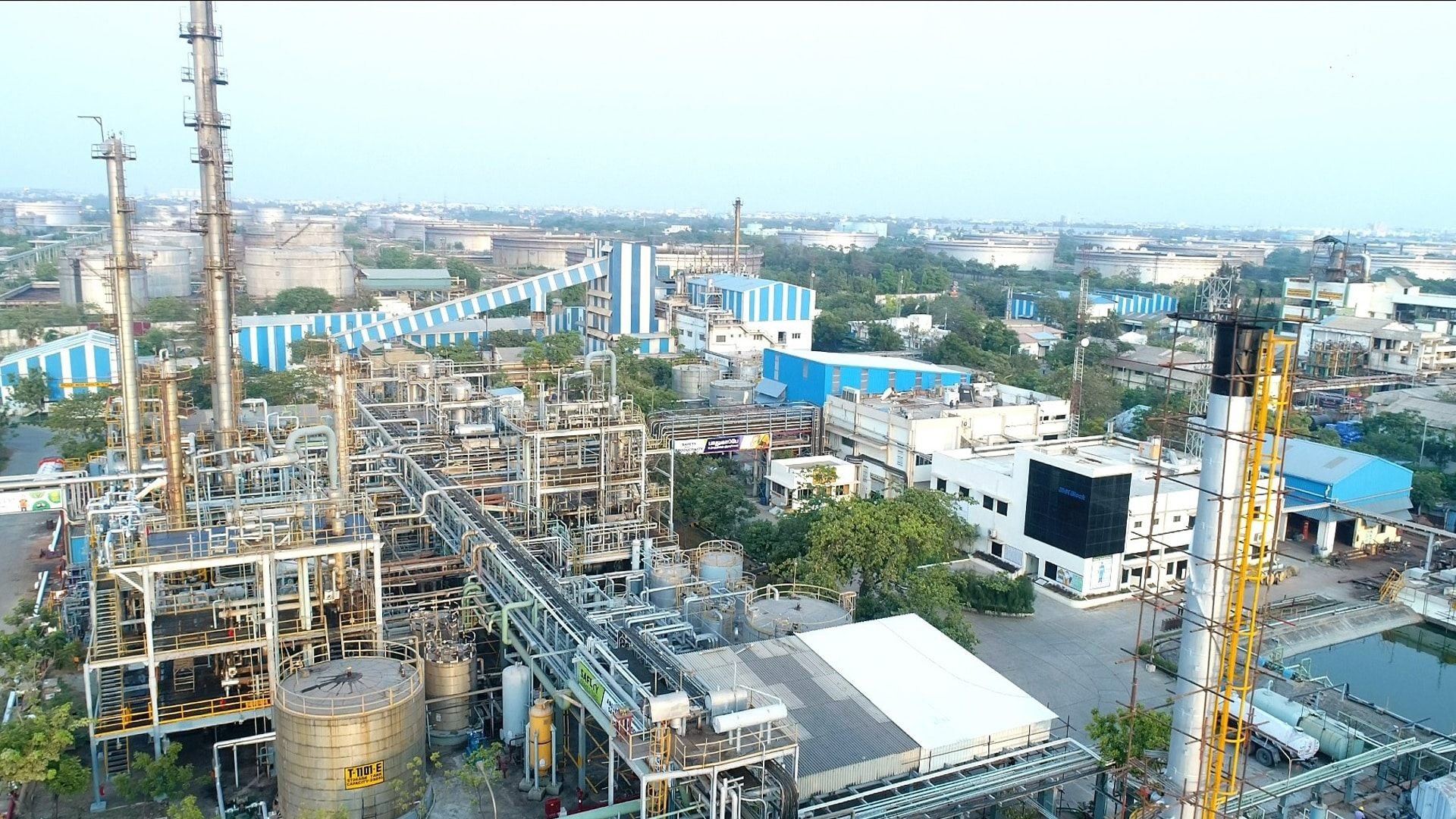
The company operates out of a sophisticated manufacturing facility in Manali, Chennai. They don’t just make one type of PIB; they produce a spectrum of grades tailored for lubricants, plastics, paints, and food packaging. If you’ve ever wondered why high-end 2T engine oils perform the way they do, KPL’s viscous liquid polymers likely have something to do with it.
Financially, KPL has been a powerhouse of efficiency. It transitioned from a caustic soda manufacturer decades ago into a specialized chemical player with an asset-light feel, despite the heavy industrial nature of its work.
The story here is one of market dominance. Being the largest producer in India isn’t just a title; it’s a moat. But as we will explore, even the deepest moats can be bridged when the sovereign decides to prioritize cooking gas over petrochemical feedstock.
Business Model – WTF Do They Even Do?
At its simplest, KPL takes Isobutylene (sourced from big brothers like Reliance Industries and CPCL) and turns it into Polyisobutylene (PIB). Think of PIB as a “performance enhancer” for industrial liquids. It’s a non-drying, viscous polymer that makes lubricants slippery, plastics more durable, and adhesives stickier.
The company focuses on Low Molecular Weight PIB. This isn’t a commodity you sell at the local kirana store; it’s a specialized input for giants like Indian Oil (IOCL) and HPCL. They’ve recently expanded their licensed capacity to 48,000 MT, which is a significant jump from their earlier 36,000 MT levels.
The business model relies on a clever “Formula-Based Pricing” mechanism for long-term contracts. This essentially means if the price of raw materials (linked