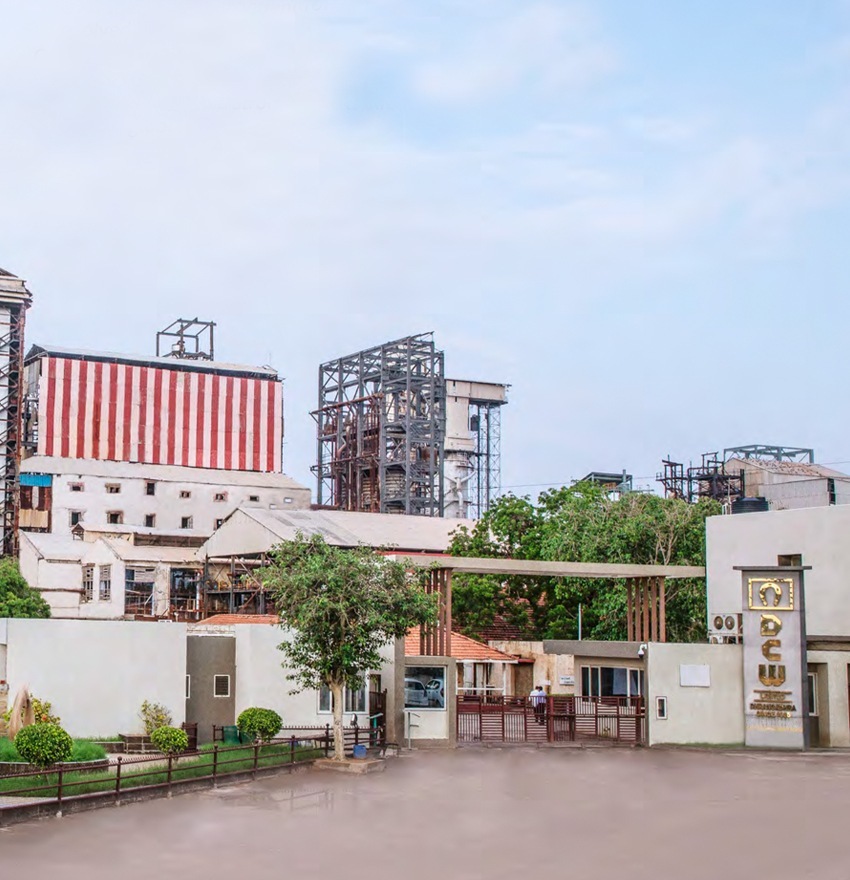
The chemical sector has been a graveyard for optimistic projections over the last twenty-four months, yet a century-old veteran is proving that old dogs can indeed learn new, high-margin tricks. DCW Ltd has just reported a 60.2% YoY jump in Net Profit for Q4 FY26, a feat achieved not by riding a favorable tide, but by swimming aggressively against a brutal commodity down-cycle.
While global chemical giants are busy writing apology letters to shareholders for “China-led oversupply,” this company has quietly completed a massive strategic pivot. In the December quarter, when its core commodity business (Basic Chemicals) hit a literal breakeven point—meaning they made zero profit on over ₹ 362 crore of sales—the Specialty segment carried the entire company on its back. This is no longer just a “soda ash and caustic soda” play; it is a Specialty Chemical powerhouse masquerading as a commodity laggard.
The numbers gaining investor attention are hard to ignore: ₹ 2,144 crore in annual revenue and a Net Debt to Equity ratio that has collapsed to 0.07. This is a balance sheet being vacuum-cleaned in real-time, preparing for a massive scale-up as their 50,000 MTPA CPVC capacity comes online. The “detective” in any smart investor should be asking: how is a company with a ₹ 1,500 crore market cap generating over ₹ 220 crore in EBITDA while its primary products are at decade-low pricing?
Introduction
DCW Ltd is currently a tale of two cities. One city is the Basic Chemicals division, which is battling a relentless flood of cheap imports from China, suppressed realizations, and “uneven” demand recovery. The other city is the Specialty Chemicals division, which is breaking volume records, expanding capacity, and essentially keeping the lights on.
The company, which traces its lineage back to India’s first Soda Ash plant in 1925, has spent the last decade executing one of the most deliberate “value-chain climbs” in the Indian industrial space. They have moved from being a price-taker in bulk commodities to becoming a dominant, licensed manufacturer of high-end products like Chlorinated Poly Vinyl Chloride (C-PVC) and Synthetic Iron Oxide Pigments (SIOP).
As of Q4 FY26, the transformation is nearly complete. Despite a global supply glut that has “completely wiped off” margins for bulk players, DCW managed to grow its top line by 13.2% in the final quarter. More importantly, they’ve done this while slashing finance costs and paying down debt with the discipline of a Victorian accountant.
The narrative for FY27 is no longer about survival; it’s about operating leverage. With the final 10,000 MT expansion of CPVC commissioned in March 2026, the company enters the new fiscal year with its largest-ever revenue-generating engine fully fueled and ready to go.
Business Model – WTF Do They Even Do?
To the uninitiated, DCW looks like a chaotic kitchen where someone is making soap, plastic pipes, and paint all at once. In reality, it’s a masterclass in vertical integration.
The “Basic” Bread and Butter
They manufacture Soda Ash, Caustic Soda, and PVC. These are the “commodities.” You use them in everything from detergents to irrigation pipes. Currently, the business model here is basically a boxing match where China is throwing heavy punches (oversupply), and DCW is using its captive power and salt supplies to stay on its feet. They produce their own salt and have a 58 MW captive power plant, which is the only reason they aren’t bleeding out like their peers.
The “Specialty” Secret Sauce
This is where the money is. They take their own PVC and turn it into C-PVC (used for hot water pipes). They take their own intermediate chemicals and turn them into SIOP (high-end pigments for construction and coatings).
- C-PVC: They are one of the few players in India with the technical license (from Arkema, France) to pull this off.
- SIOP: They run one of the largest commercial-scale plants in Asia.
Essentially, they are their own best customer. By