01 — At a Glance
Pumps, Chaos, and the Gods of Valuation Expansion
- 52-Week High / Low₹2,476 / ₹1,406
- Q3 FY26 Revenue₹1,116 Cr
- Q3 FY26 PAT₹139 Cr
- Q3 EPS₹15.65
- Annualised EPS (Q3×4)₹62.60
- Book Value₹278
- Price to Book5.61x
- Dividend Yield0.44%
- Debt / Equity0.10x
- Return (1-Year)+0.75%
The Reality Check: Kirloskar Brothers reported Q3 FY26 revenue of ₹1,116 crore, +0% YoY (basically flat), with PAT at ₹139 crore (+14.5% QoQ but -9.6% equivalent YoY adjusted). Annualised EPS at ₹62.60 (Q3 ₹15.65 × 4) against CMP ₹1,558 = P/E 24.9x on this run-rate. The headline P/E of 29.9x is based on FY25 full-year EPS of ₹52.29 — a year ago, when things were less chaotic. Management admits Q3 lost ₹50 cr to SAP/ERP implementation and another ₹50–100 cr to Jal Jeevan Mission funding delays. Strip those one-time hits, and you’re looking at a very healthy quarter. But the stock, being the stock, ignored the narrative and just priced in eternal growth.
02 — Introduction
The Pump Dynasty That Built India (And Now Troubleshoots SAP)
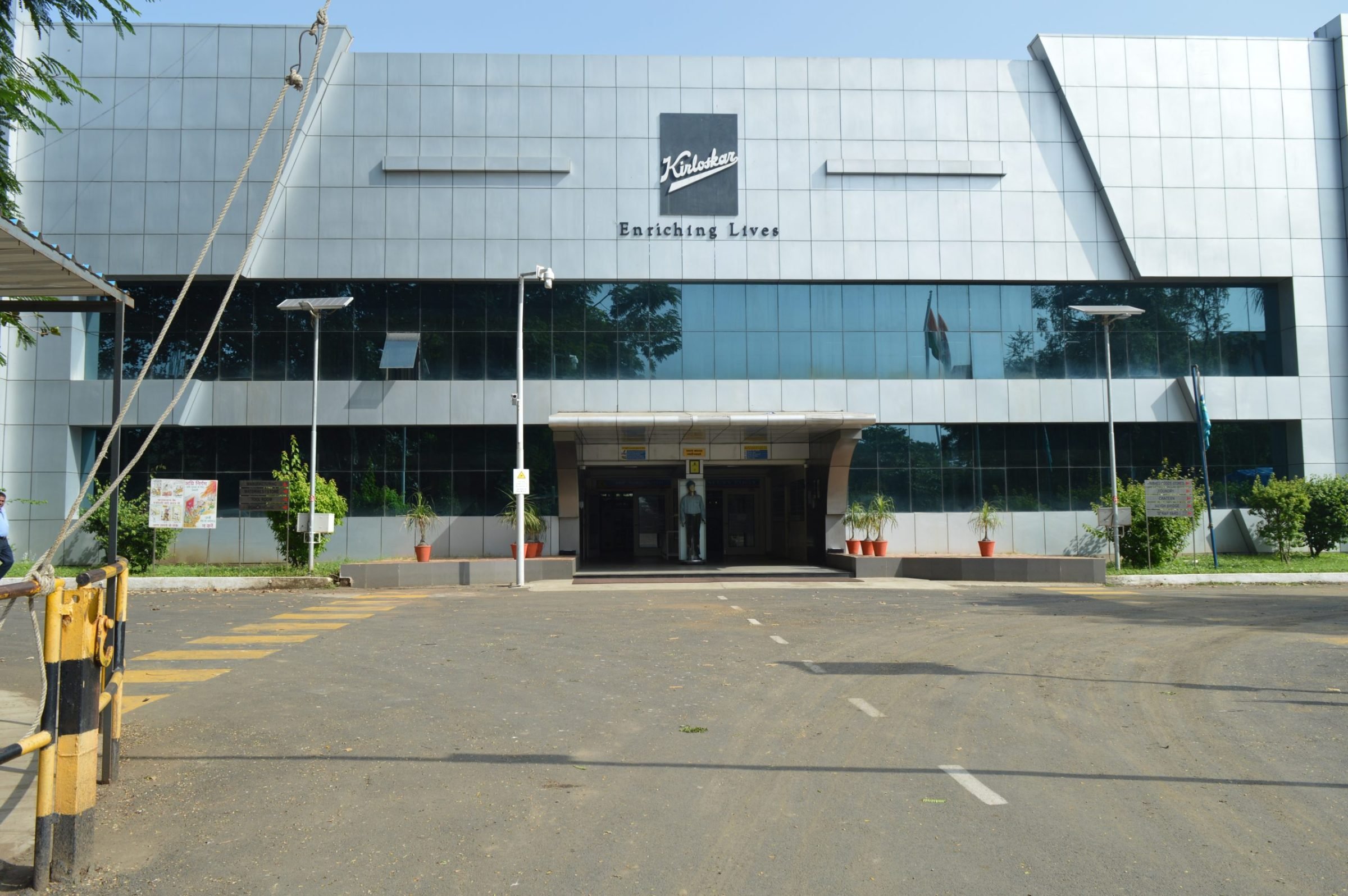
Kirloskar Brothers Limited was founded in 1888 — not 1988, not 1980, but 1888. When you’re shipping pumps for literally 136 years, you develop opinions. One of those opinions, clearly, is that Enterprise Resource Planning software is a form of organised chaos.
The company makes pumps. Not just any pumps — industrial centrifugal pumps, submersible turbine pumps, axial flow pumps, and the kinds of specialist fluid-management hardware that shows up on large-scale irrigation projects, power plants, oil & gas refineries, water treatment facilities, and nuclear power stations. Market cap: ₹12,368 crore. Global footprint: 11 manufacturing plants across India and internationally. Annual turnover: ₹4,492 crore (FY25). Profit after tax: ₹419 crore (FY25). ROCE: 27.6%. Stock P/E: 29.9x.
For three quarters, KBL delivered exactly what large-cap industrials promise: steady order growth, margin expansion, international performance improving, and a shift away from low-margin EPC (Engineering, Procurement, Construction) projects into higher-margin product business. Then came Q3 FY26 — when the company simultaneously rolled out a new foundry ERP system, faced government funding delays across its biggest channel (Jal Jeevan Mission), and watched its standalone quarter collapse from 2.7% QoQ growth (Q2) to flat YoY (Q3).
Management’s response: “This is temporary. Our order book is strong. Demand is healthy. We are just executing like it’s 1888 — at our own pace, on our own terms.”
Concall Reality (Feb 2026): “ERP go-live caused production drop from ~700 castings/day to 200–300/day. By quarter-end, we’d normalised. JJM funding delays aren’t demand destruction—they’re timing. We hold inventory for dealer working capital instead of pushing volume. This is disciplined, not weak.”
03 — Business Model: Pumps, Pipes, and Painfully Slow Order Recognition
They Move Water. Literally. That’s the Entire Moat.
KBL sits at the intersection of three revenue pools: Made-to-Stock pumps (51% of revenue, small pumps for retail & agriculture), Made-to-Order pumps (25%, engineered solutions for specific industrial specs), and Engineered-to-Order / Project business (24%, mega-infrastructure, power, water, oil & gas). Historically, projects were a bear — low margin, high capex, working capital stretched over years. In FY10, they were 54% of revenue. By FY25, they’d shrunk to just 3–4%, with most of the business now in higher-margin product categories.
The shift is strategic. When you’re executing a ₹50–100 cr irrigation project for a state government, your receivable maturity can stretch to 18–24 months. When you’re selling ₹5 lakh pump units through 16,200+ domestic channel partners, cash turns in 30–40 days. The latter is far more elegant from a capital efficiency standpoint — KBL’s ROCE of 27.6% reflects exactly this strategic evolution.
Geographically, 67% of revenue is domestic, 33% international. Domestically, the company has 14 manufacturing facilities (9 India-based, 5 international). Subsidiaries include SPP Pumps (which acquired the Rodelta and Syncroflo brands in Europe), Karad Projects (motors), The Kolhapur Steel (castings), and Kirloskar Ebara (JV with Japan’s Ebara Corporation). They export to 80+ countries and have strategic relationships with everyone from ArcelorMittal to NTPC to Saudi Aramco.
Domestic Sales67%India Revenue
International33%Global Presence
Channel Partners16,200+Domestic Network
Found. Capacity17,000 MT/yrCastings Output
The Order Recognition Game: KBL is aggressively conservative about booking orders, especially for large pumps. “We do not book orders unless they are confirmed with advances,” management stated during the concall. This is uncommon audacity in a sector where many competitors book on LOIs (letters of intent). The tradeoff: lumpy, lumpy, lumpy revenue recognition. But when the order does ship, it ships solid.
💬 Question for the room: If you’re managing dealer working capital by deliberately NOT pushing volume when government funding dries up — aren’t you really just managing your own market share? Or is this genius?
04 — Financials Overview
Q3 FY26: The Quarter That Didn’t Happen (But Almost Did)
Continue reading with a premium membership.