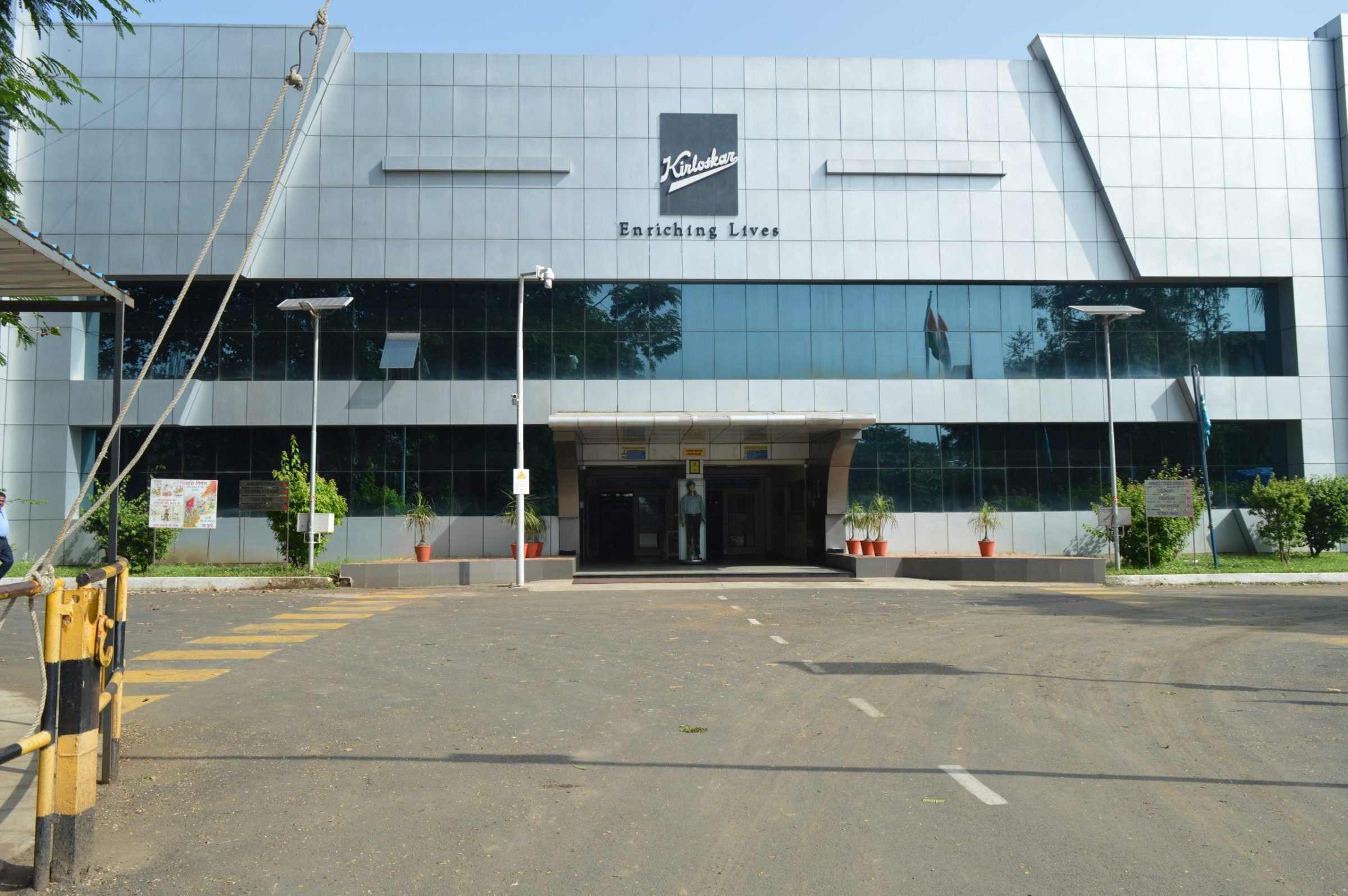
The fluid management giant is navigating a complex map. While the order book is swelling to record highs, the bottom line is feeling the heat of internal execution hiccups and external macro-pressures. From ERP-induced manufacturing drops to a Supreme Court battle over its very name, Kirloskar Brothers Limited (KBL) is far from a “boring” pump company.
1. At a Glance
KBL is currently a story of robust demand meeting execution bottlenecks. The company reported a consolidated revenue of ₹4,538 crore for FY26, but the narrative lies in the details. On one hand, the Order Book has surged by 27% YoY to ₹3,949 crore, signaling that the world still wants Kirloskar pumps. On the other hand, Operating Profit Margins (OPM) have dipped from 14% to 12%, and Net Profit for the quarter ending March 2026 saw a 6.26% decline compared to the same period last year.
Investors are keeping a hawk-eye on the Working Capital Days, which have bloated from 51.5 days to a staggering 81.7 days. This suggests that while the company is selling, the cash is getting trapped in the system—partly due to funding delays in government-linked projects like the Jal Jeevan Mission (JJM).
The corporate floor is also buzzing with high-stakes drama. The Supreme Court has absolute stays on trademark licensing, effectively restraining the “Kirloskar” brand from being used by competing group companies. Furthermore, a GST demand of ₹154.8 crore in Andhra Pradesh (though currently stayed) and a recent ₹5.29 crore penalty for previous years serve as a reminder of the regulatory minefield the company is walking through.
Is the management walking the talk? They claim a strategic shift toward high-margin products, yet the Employee Expenses have jumped to ₹779 crore, and Other Expenses remain sticky. The company is gaining attention for its Nuclear and Data Center plays, but the question remains: Can they convert this high-tech hype into hard, cold cash?
2. Introduction
Kirloskar Brothers Limited is the flagship of the 138-year-old Kirloskar Group, founded by Laxmanrao Kirloskar. It isn’t just about pumps; it is about the movement of fluid across civilizations. From providing drinking water to 35% of India’s population to powering the cooling systems of global tech giants like Meta and Amazon, KBL’s footprint is massive.
The company operates through 14 manufacturing facilities—9 in India and 5 overseas—catering to 12+ industries including Power, Irrigation, Marine, and Oil & Gas. Under the leadership of Sanjay Kirloskar, the company has spent the last decade trying to shed its image as a “government contractor” (EPC) and rebrand itself as a high-tech engineering product company.
Recent years have seen KBL pivot toward Industry 4.0, investing in 3D printing for foundries and IoT-based remote monitoring (KirloSmart). However, the legacy “engineered-to-order” business still dictates the rhythm of the balance sheet. With a presence in 120+ countries, KBL is as much a global engineering play as it is an Indian infrastructure proxy.
3. Business Model – WTF Do They Even Do?
If you think they just sell hand pumps to farmers, you are stuck in 1950. KBL is essentially a “fluid tailor.” They design, manufacture, and maintain complex pumping systems that keep cities from drowning and power plants from melting down.
Their revenue comes from four distinct buckets:
- Made to Stock (50%): Standard pumps for homes and farms. High volume, steady cash flow.
- Made to Order (25%): Specialized industrial pumps.
- Engineered to Order (21%): High-tech, one-of-a-kind monsters for nuclear plants or giant irrigation schemes.
- Services & Spares: The “hidden gold.” This is where they charge for maintenance and parts, which usually carries much higher margins.
The “Detective” in us notices a smart move: they’ve slashed their exposure to low-margin EPC (Engineering, Procurement, and Construction) projects from 75% in 2010 to just 3% today. Why? Because EPC is where profits go to die in a sea of government bureaucracy and delayed payments. Instead, they now focus on being the supplier to the EPC players. Smart, right?
4. Financials Overview
The numbers reflect a company in transition. While revenue is growing, the cost of doing business—and the friction of internal changes—is eating into the pie.
FY26 Performance Table (Consolidated)
| Metric | Latest Qtr (Mar ’26) | Same Qtr LY (Mar ’25) | YoY Var (%) | Prev Qtr (Dec ’25) | QoQ Var (%) |
| Revenue | ₹ 1,415 cr | ₹ 1,281 cr | +10.4% | ₹ 1,116 cr | +26.8% |
| EBITDA | ₹ 182 cr | ₹ 190 cr | -4.2% | ₹ 142 cr | +28.1% |
| PAT | ₹ 112 cr | ₹ 138 cr | -18.8% | ₹ 125 cr | -10.4% |
| EPS (₹) | ₹ 14.04 | ₹ 17.27 | -18.7% | ₹ 15.65 | -10.3% |
Financial Wisdom: Revenue is vanity, Profit is sanity, but Cash Flow is reality. KBL is currently high on vanity but needs a sanity check on its rising costs.
Management Walk-the-Talk Check:
In previous concalls, management promised to stabilize the Foundry ERP implementation. While they claim it has “reverted to where we want it to be,” the ₹50 crore revenue hit earlier in the year due to production drops (from 700 to 200 castings/day) shows how fragile the supply chain was. They also claimed to stay away from JJM volatility, yet admitted to holding ₹50–100 crore in inventory because dealers weren’t getting paid by state governments. That’s essentially a back-door exposure to the very risk they said they’d avoid.
5. Valuation Discussion – Fair Value Range
Let’s get clinical. We will use the latest consolidated data for a reality check.
Step 1: EPS Annualization
Since March is the full year-end, we use the actual FY26 EPS of ₹47.04.
Step 2: P/E Method
The Industry P/E is 38.0. KBL currently trades at a P/E of 34.3 (based on CMP ₹1,615).
- Conservative P/E (28x): $47.04 \times 28 = ₹1,317$
- Aggressive P/E (35x): $47.04 \times 35 = ₹1,646$
Step 3: EV/EBITDA Method
FY26 EBITDA is ₹621.3 cr. Enterprise Value (EV) is ₹12,669 cr.
EV/EBITDA = 20.4x.
Historical or peer-based fair multiple for heavy engineering is typically 18x to 22x.
- Lower end (18x): $(₹621.3 \times 18) – Net Debt = ~₹1,450$
- Upper end (22x): $(₹621.3 \times 22) – Net Debt = ~₹1,780$
Step 4: DCF (Simplified)
Given the FCF of ₹204 cr and a 12% growth rate with a 10% discount rate.
- Estimated Fair Value: ₹1,520 – ₹1,680
Fair Value Range: ₹1,380 – ₹1,720
This fair value range is for educational purposes only and is not investment advice.
6. What’s Cooking – News, Triggers, Drama
The kitchen at KBL is spicy right now.
- The Trademark War: The Supreme Court has absolute-stayed the licensing of the “Kirloskar” mark to competing group companies. This is basically a family feud played out in the highest court of the land. It creates brand confusion and legal bills that could choke a whale.
- Nuclear Dreams: KBL is now developing Primary Heat Transfer Pumps for fast breeder reactors. They’ve passed tests by NPCIL. If India goes big on nuclear, KBL is the only one with the keys to the pump room.
- Data Centers: They are supplying to Meta and Amazon. Every time you post a reel, a Kirloskar pump might be cooling the server that hosts it.
- GST Ghost: A ₹154.8 crore GST demand is hovering. While they have an interim stay, it’s a massive contingent liability that could bite if the court’s mood changes.
7. Balance Sheet
KBL has a clean house, but the attic is getting crowded with “receivables.”
| Row Item | Mar 2026 (Consol) | Mar 2025 (Consol) | Mar 2024 (Consol) |
| Total Assets | ₹ 4,407 cr | ₹ 3,666 cr | ₹ 3,325 cr |
| Net Worth | ₹ 2,464 cr | ₹ 2,093 cr | ₹ 1,719 cr |
| Borrowings | ₹ 250 cr | ₹ 182 cr | ₹ 192 cr |
| Other Liabilities | ₹ 1,693 cr | ₹ 1,391 cr | ₹ 1,413 cr |
| Total Liabilities | ₹ 4,407 cr | ₹ 3,666 cr | ₹ 3,325 cr |
- The Net Worth is growing nicely—retained earnings are doing their job.
- Borrowings jumped from ₹182 cr to ₹250 cr. Not alarming, but why take debt when you have ₹862 cr in cash/liquid investments? (Likely for foreign subsidiary operations).
- Sarcastic Note: They have enough cash to buy a small island, yet they are paying interest on loans. Someone loves the bank’s coffee.
8. Cash Flow – Sab Number Game Hai
The cash flow statement is where the “Product vs Project” war is won or lost.
| Cash Flow Type | Mar 2026 | Mar 2025 | Mar 2024 |
| Operating (CFO) | ₹ 334 cr | ₹ 386 cr | ₹ 370 cr |
| Investing (CFI) | ₹ (209) cr | ₹ (236) cr | ₹ (166) cr |
| Financing (CFF) | ₹ (44) cr | ₹ (92) cr | ₹ (159) cr |
They generated ₹334 crore from operations, which is decent but lower than last year. Where did the money go? ₹135 crore went into buying new machines (Fixed Assets) and a massive chunk is rotating in “Investments” (Mutual Funds). They are effectively a pump company that moonlights as an investment fund.
9. Ratios – Sexy or Stressy?
| Ratio | Mar 2026 | Mar 2025 | Witty Judgement |
| ROE (%) | 17.7% | 21.9% | Cooling down like a server in a data center. |
| ROCE (%) | 20.8% | 28.0% | Still solid, but the “excellence” is leaking. |
| Debt to Equity | 0.10 | 0.09 | Practically debt-free. Sexy. |
| PAT Margin (%) | 8.3% | 9.3% | Squeezed like a lemon in a summer cooler. |
| Inventory Days | 142 | 142 | They love their warehouses. Too much. |
Question for you: If ROCE drops by 7% in one year despite revenue growing, are they becoming more efficient or just bigger and clumsier?
10. P&L Breakdown – Show Me the Money
| Year | Revenue | EBITDA | PAT |
| Mar 2026 | ₹ 4,538 cr | ₹ 544 cr | ₹ 377 cr |
| Mar 2025 | ₹ 4,492 cr | ₹ 609 cr | ₹ 419 cr |
| Mar 2024 | ₹ 4,001 cr | ₹ 520 cr | ₹ 350 cr |
Commentary:
Revenue grew by a measly 1% this year, while EBITDA fell by nearly 11%. This is the “Adverse Operating Leverage” the management mentioned in the concall. Basically, their fixed costs (salaries, electricity, legal fees) stayed high while the production hiccups and state government payment delays meant they couldn’t ship enough pumps to cover the spread.
11. Peer Comparison
| Company | Revenue (Qtr) | PAT (Qtr) | P/E |
| Cummins India | ₹ 3,054 cr | ₹ 486 cr | 64.4 |
| Kirloskar Oil | ₹ 2,116 cr | ₹ 155 cr | 40.2 |
| KSB | ₹ 601 cr | ₹ 39 cr | 53.8 |
| Kirl. Brothers | ₹ 1,415 cr | ₹ 112 cr | 31.7 |
Sarcastic Note: Cummins is living in the stratosphere with a 64 P/E, while Kirloskar Brothers is the “value buy” of the group, sitting at 31.7. KSB is half the size but trading at a premium. It seems the market rewards KSB’s predictability more than KBL’s global drama.
12. Miscellaneous – Shareholding and Promoters
| Category | Latest Holding (%) |
| Promoters | 65.95% |
| FIIs | 6.24% |
| DIIs | 10.38% |
| Public | 17.43% |
Promoter Roast: Sanjay Kirloskar and family hold the fort. While the promoters are “technically” strong, the ongoing legal battle with other Kirloskar factions makes the boardroom look like a scene from Succession. FIIs have been slowly increasing their stake from 1.7% to 6.2% over three years—someone in London or New York likes these pumps.
13. Corporate Governance – Angels or Devils?
KBL’s governance is a tale of two cities. On one hand, you have a 70% Independent Board and zero pledged shares. That’s the “Angel” side. They also win “Golden Peacock” awards for sustainability like it’s a hobby.
On the “Devil” side, the Trademark licensing stay by the Supreme Court suggests deep internal friction. When a group can’t agree on who gets to use the name on the door, it distracts the management. Also, the resignation of high-level KMPs (Human Resources and Transformation heads) in late 2023 raises eyebrows. Are they transforming too fast, or not fast enough?
14. Industry Roast and Macro Context
The pump industry is a brutal, unorganized mess. At the bottom end, you have thousands of small players in Rajkot and Coimbatore making “cheap and cheerful” pumps that last two seasons. KBL has to compete with them while maintaining a “premium” engineering status.
The sector is currently obsessed with “Green” themes—Solar pumps (KUSUM scheme) and “Fish-friendly” pumps in Europe. KBL refuses to touch KUSUM directly because they don’t want to chase the government for money. Meanwhile, in the UK, high energy prices are de-industrializing the nation, hurting KBL’s service revenue. It’s a weird world where the UK is “too expensive to pump” and India is “too slow to pay.”
15. EduInvesting Verdict
Kirloskar Brothers is an engineering powerhouse that is currently its own worst enemy. The shift from EPC to Products is the right move for long-term survival, and the entry into Data Centers and Nuclear shows they have the “tech-muscle.”
However, the recent drop in margins and the ballooning working capital days are red flags that cannot be ignored. The company is currently “asset-heavy and cash-constricted” in its operations, even if the balance sheet looks rich.
SWOT Analysis
- Strengths: Zero pledged shares, dominant domestic market share, 138-year brand legacy, high-tech R&D (Nuclear/3D Printing).
- Weaknesses: Rising working capital cycle (81 days), declining operating margins, legal disputes over trademark.
- Opportunities: Data center cooling systems globally, India’s fleet of new nuclear reactors, “Fish-friendly” pump retrofits in the EU.
- Threats: State government funding delays (JJM), volatile raw material prices (Steel/Pig Iron), intense competition from the unorganized sector.
Final Thought: KBL is like a high-performance engine that has just been fitted with a complex new ERP fuel-injection system. It’s sputtering a bit right now, but if it clears the gunk, it has a lot of road left to cover.
Fair Value Range Disclaimer:
This fair value range is for educational purposes only and is not investment advice. Please consult a SEBI-registered advisor before making any financial decisions.