Kanoria Energy FY26: A ₹0.39 Crore Bottom Line Trying to Justify a 331x Multiplier
Section 1 — At a Glance
The capital markets frequently present structural disconnects where asset pricing diverges entirely from trailing operational outputs. Kanoria Energy & Infrastructure Ltd presents an acute case of this phenomenon. Operating with a micro-cap valuation of ₹128.96 crore, the enterprise closed the financial year ending March 31, 2026, with a net profit of just ₹0.39 crore. This thin margin of profitability stands against a trailing twelve-month revenue framework of ₹269.78 crore, down from ₹298.37 crore in the prior fiscal period, representing an active top-line contraction.
While structural revenue compression remains an immediate operational concern, institutional investors are increasingly focused on the acute degradation of capital efficiency metrics. The return on equity (ROE) has cratered to a negligible 0.42%, while the return on capital employed (ROCE) balances at 6.82%. When asset utilization metrics descend below the risk-free rate of sovereign debt instruments, the fundamental premise of equity risk premium is compromised.
Yet, beneath these depressed earnings, the company managed to liberate significant working capital, producing an operating cash flow of ₹58.17 crore for the year—a dramatic pivot from historical cash locks. The core question remains whether this balance sheet optimization indicates an operational turnaround or simply the orderly liquidation of obsolete working capital items.
Section 2 — Introduction
Kanoria Energy & Infrastructure Ltd, an industrial fixture originally incorporated in 1980, spent the vast majority of its long corporate life operating under the decidedly unglamorous moniker of “A Infrastructure Limited”. In April 2023, management initiated a structural name change to its current corporate title, presumably searching for a modern aesthetic upgrade.
Headquartered out of its registered office and manufacturing works in Hamirgarh, located within the Bhilwara district of Rajasthan, the company has historically anchored itself to deep cyclical industrial materials. Over forty-five years of operations, the corporate framework has been tested by changing regulatory standards and shifting domestic raw material costs. However, its historical longevity has not insulated it from aggressive margin compression in the face of modern building material alternatives.
Section 3 — Business Model: WTF Do They Even Do?
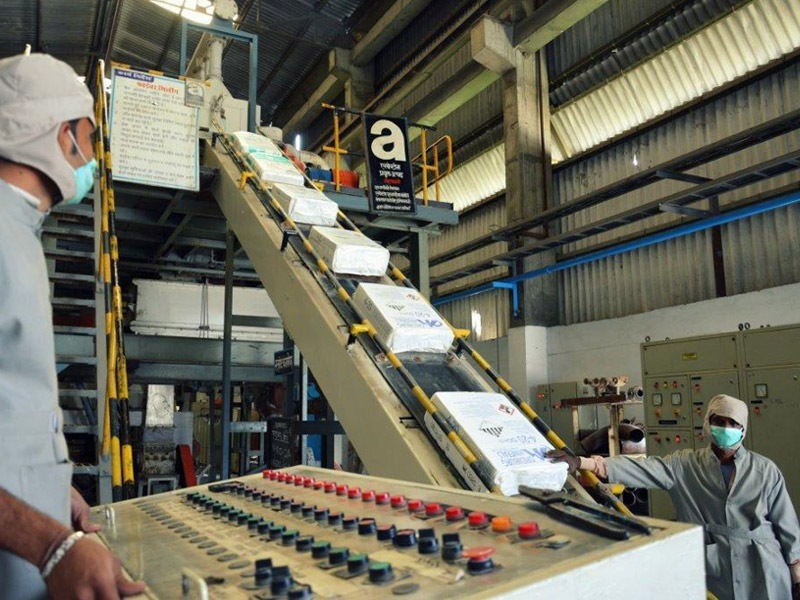
If you are looking for high-tech digital workflows or SaaS recurring revenues, you have knocked on the entirely wrong factory door. Kanoria Energy manufactures Asbestos Cement (A.C.) Pressure Pipes, couplings, and corrugated roofing sheets. They sell these heavy-duty items under the consumer brand name “JAI KIRTI”.
The company’s primary target market consists of large-scale infrastructure systems, including vital water supply initiatives backed by the World Bank, alongside bore-well casings, sewage disposal lines, and rural irrigation networks. On the roofing side, their products line the ceilings of low-cost housing, industrial warehouses, and rural factories.
Historically, the revenue split has been anchored by A.C. Roofing Sheets at roughly 54%, with A.C. Pressure Pipes driving 44%, leaving a tiny 2% rounding error for loose asbestos fiber sales. It is a model reliant on heavy physical volume, high freight costs, and continuous government infrastructure spend.
Section 4 — Financials Overview
Figures are consolidated, in ₹ crore.
Metric
Latest Quarter (Mar ’26)
YoY
QoQ
Revenue
75.48
12.44%
35.58%
EBITDA / Operating Profit
4.40
9.45%
-11.11%
PAT
0.16
128.57%
128.57%
EPS
0.02
100.00%
100.00%
The trailing quarter displays a deceptive optics bump, with a top line of ₹75.48 crore rising nicely over the matching period last year. However, sequentially, while revenue bounded ahead by 35.58%, the absolute conversion to profitability remains highly problematic. Operating profits actually fell over the consecutive quarter, highlighting structural pricing weaknesses or internal inefficiencies.
Quarterly earnings metrics frequently offer nothing more than fleeting