1. At a Glance
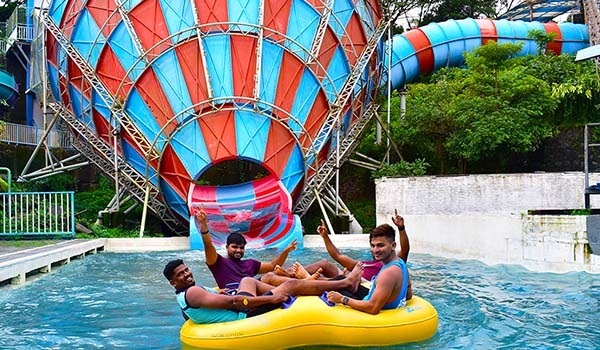
A paradox is brewing in the Indian amusement park sector. Imagicaaworld Entertainment Limited is capturing significant investor attention, boasting a consolidated market capitalization of ₹2,394 crore. On paper, the headline expansion numbers look staggering. The company now commands an extensive portfolio of 9 operational or planned parks across western India and Madhya Pradesh, covering over 220 acres.
Yet, beneath this massive expansion lies a stark, chilling reality that should give every serious financial analyst a momentary pause. While the company has grown its physical footprint aggressively, its core operational metrics for the latest quarter tell a deeply conflicting story. Net profit for the final quarter of the financial year 2026 trickled in at an incredibly thin ₹0.40 crore, collapsing from the ₹15.73 crore recorded in the same quarter of the previous year.
The consolidated annual performance has hit an icy patch. Total annual revenue rolled backward from ₹410.2 crore in FY25 to ₹373.9 crore in FY26. Worse, the consolidated absolute profit after tax fell off a cliff, dropping from ₹77.2 crore down to a near-breakeven ₹0.60 crore for the full year.
The stock market, in its infinite and sometimes irrational wisdom, has priced this business at a Price-to-Earnings (P/E) multiple of 3,799. This is not a typo. At a time when the broader leisure industry trades at a median multiple of around 74, this company’s valuation screams for extreme caution. The fundamental disconnect between a plunging bottom line and a hyper-inflated premium creates an intense risk profile. Investors are being asked to pay upfront for growth that is currently being digested through aggressive debt-funded acquisitions and heavy fixed overheads.
Are the new parks going to turn cash-positive before the finance costs erode the remaining equity, or is this entertainment giant skating on paper-thin ice? Let us dig into the real numbers behind the roller coasters.
2. Introduction
Welcome to the wild world of experiential consumer spending, where corporate life cycles move faster than a high-speed drop tower. Imagicaaworld Entertainment Limited, once known as Adlabs Entertainment, is no stranger to financial dramatic arcs. The company practically introduced global-scale theme parks to the Indian consumer base with its massive 110-acre Khopoli destination. However, high capital requirements and subsequent external disruptions pushed the original capital structure to its absolute limits.
In a dramatic corporate rescue operation during the financial year 2023, the Malpani Group stepped in under a resolution plan, acquiring a majority stake through Malpani Parks Private Limited. The new promoters brought more than two decades of regional water park management expertise to a listing vehicle that was desperately gasping for liquidity.
The strategy under the new management has been simple but incredibly bold: consolidate all regional amusement assets under one umbrella, aggressively buy up existing cash-generating properties, and scale up non-ticketing avenues like Food & Beverage (F&B) and hospitality. But executing this playbook involves balancing multiple moving parts on a very tight wire.
As we analyze the audited financial results for the quarter and financial year ended March 31, 2026, we see a company trying to absorb a massive corporate acquisition while simultaneously battling sudden regional macro headwinds. For the general public looking at this asset, it is vital to separate the massive crowds at the park ticket booths from the actual cash flowing into the corporate bank accounts.
3. Business Model – WTF Do They Even Do?
Stripped of the flashing neon lights, the grand musical fountains, and the costumed characters roaming the streets, Imagicaaworld is essentially an asset-heavy land monetization and high-margin retail distribution business. They build massive entry barriers by locking up large parcels of land near major urban hubs and selling experiences that cannot be digitally downloaded.
The business model splits neatly into two distinct buckets:
- Parks Division: This is the absolute muscle of the firm, typically driving around 87% of the total revenue. They monetize through ticket entries across theme parks, water parks, and unique concepts like the Sai Teerth devotional park. Once the customer is inside the gates, the secondary monetization machine turns on—selling high-margin programmatic F&B, branded merchandise, and parking spaces.
- Hotels Division: Accounting for the remaining 13% to 15% of the topline, the company operates the 287-room luxury property, Novotel Imagicaa Khopoli. This asset acts as an operational hedge, capturing corporate meetings, incentives, conferences, and exhibitions (MICE) alongside lavish weekend destination weddings.
The management’s current obsession is transforming from a localized weekend getaway into a pan-India entertainment network. They are buying out operational parks via slump sales—such as the recent massive transaction acquiring four parks in Lonavala and Shirdi from Giriraj Enterprises—while introducing asset-light indoor family entertainment centers like the “Hello Park” digital-physical chain. It sounds brilliant on paper, but running multiple high-maintenance parks requires flawless operational efficiency, because when the monsoon hits early or consumers tighten their wallets, those massive fixed maintenance costs do not vanish.
4. Financials Overview
Let us lay down the raw, unfiltered