Ideal Technoplast Industries Ltd – H1 FY26 Results: ₹17.3 Cr Sales, ₹1.8 Cr PAT, 69% Capacity Utilisation & SME-Level Plastic Power Play
1. At a Glance – Plastic, Profits, and Peak Gujarati Hustle
Ideal Technoplast Industries Ltd is what happens when Surat’s entrepreneurial DNA meets plastic buckets and says, “Kem cho, margins kem chhe?” With a market cap hovering around ₹92.5 Cr and a current price of ₹185, this SME-listed plastic packaging player has quietly turned into a neighbourhood overachiever. The company clocked quarterly sales of ₹17.3 Cr and a PAT of ₹1.8 Cr, translating into a juicy 69.8% quarterly profit growth. ROCE stands at a respectable 20.2%, ROE at 19.3%, and EPS at ₹7.24. Not bad for a business whose core products include buckets, containers, and bottles—items you usually don’t associate with financial excitement. The stock has delivered a one-year return of 50.4%, though the last three months have been slightly moody with a -8.4% return, probably because markets sometimes treat SME stocks like moody teenagers. With promoter holding at 73.5% and zero pledging, Ideal Technoplast looks like a family-run plastic empire that prefers discipline over drama. The latest half-yearly numbers suggest momentum, but the balance sheet whispers caution. Curious already? Good. Keep reading.
2. Introduction – From Buckets to Balance Sheets
Ideal Technoplast Industries Ltd was incorporated in 2012, long before “SME IPO frenzy” became a dinner-table topic among retail investors. The company does not pretend to be fancy. It makes plastic containers, buckets, bottles, and a whole zoo of packaging solutions that quietly sit in paint shops, cashew warehouses, dairy units, and agro stores across India. This is not a startup chasing “disruption.” This is a manufacturing business chasing volumes, margins, and working capital sanity—sometimes successfully, sometimes with mild heartburn.
The company raised ₹16 Cr through its IPO and got listed on NSE SME in August 2024, entering the public markets with the confidence of a Gujarati trader who has already mentally calculated his breakeven. Since listing, the company has shown revenue growth, profit growth, and enough volatility to keep traders entertained and long-term investors slightly anxious.
What makes Ideal Technoplast interesting is not just growth, but the structure of that growth. Sales in FY24 were around 122% higher than FY23, driven largely by square containers and round containers. Cashew industry alone contributes 63% of revenue, which is both a blessing and a concentration risk wearing a shiny plastic lid. The company has expanded its footprint across 10 states and 50+ cities, proving that buckets travel better than people think.
But here’s the real question: Is this a boring plastic company pretending to be exciting, or an exciting SME pretending to be boring? Let’s dissect.
3. Business Model – WTF Do They Even Do?
At its core, Ideal Technoplast is a plastic packaging solutions provider. Think of it as the guy who supplies the dabba before the product inside becomes famous. The company manufactures plastic containers, buckets, bottles, HDPE containers, fertilizer buckets, lubricant oil containers, dairy buckets, food containers, and even hydroponic systems. Basically, if it needs to store, transport, or look neat on a shelf, Ideal Technoplast probably has a mould for it.
The company also manufactures molds and dies in-house, which gives it some control over design, customization, and cost. This is not just plastic arbitrage; this is manufacturing with tooling, capacity planning, and client-specific requirements. Its user industries span paints, agro, chemicals, cosmetics, adhesives, lubricants, food, edible oil, and dairy. That’s a diversified customer base on paper, but revenue tells a more concentrated story.
Cashew buckets dominate revenue. Yes, cashew. India’s love for dry fruits is indirectly paying for this company’s ROCE. Square containers contribute about 55% of product-wise sales, round containers 39%, bottles 2%, and trading income around 4%. This mix suggests a heavy dependence on a few SKUs, which is efficient but risky if demand shifts.
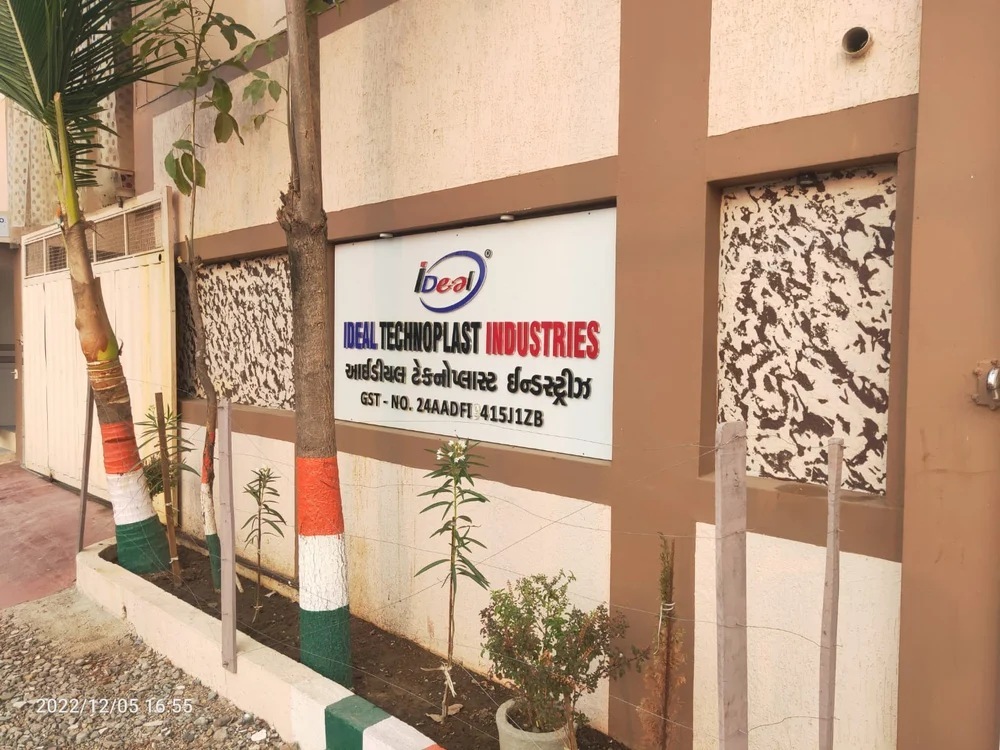
The manufacturing facility in Surat spans 20,000 sq. ft. with an installed capacity of 2,267.75 MT and utilisation of 69% in FY24. That means there’s room to grow without immediately burning cash on capex—always a comforting thought for shareholders who don’t enjoy dilution surprises.