01 — At a Glance
When Skincare Startups Become Billion-Rupee Problems
- 52-Week High / Low₹334 / ₹190
- Q3 FY26 Revenue₹587 Cr
- Q3 FY26 PAT₹51.7 Cr
- Quarterly EPS₹1.48
- TTM Revenue₹2,220 Cr
- Book Value₹38.8
- Price to Book6.93x
- Dividend Yield0.00%
- Debt / Equity0.09x
- OPM %7.64%
The Auditor’s Sigh: Honasa just delivered its highest-ever quarterly revenue (₹587 Cr), highest-ever profits (₹51.7 Cr), and a +104% year-on-year profit spike. Mamaearth is back to double-digit growth. Derma Co is printing double-digit EBITDA margins. Meanwhile, the stock trades at 56.7x earnings — which is fancy-speak for “we are pricing in miracles, and we have already received three.” ROCE is 7.44%, which is roughly what a fixed deposit earns these days. But it’s trendy, it’s digital-first, and it’s on Shark Tank reruns. The market is in love. Your portfolio adviser is sweating.
02 — Introduction
A Unicorn Learning That Profitability Is Not a Four-Letter Word
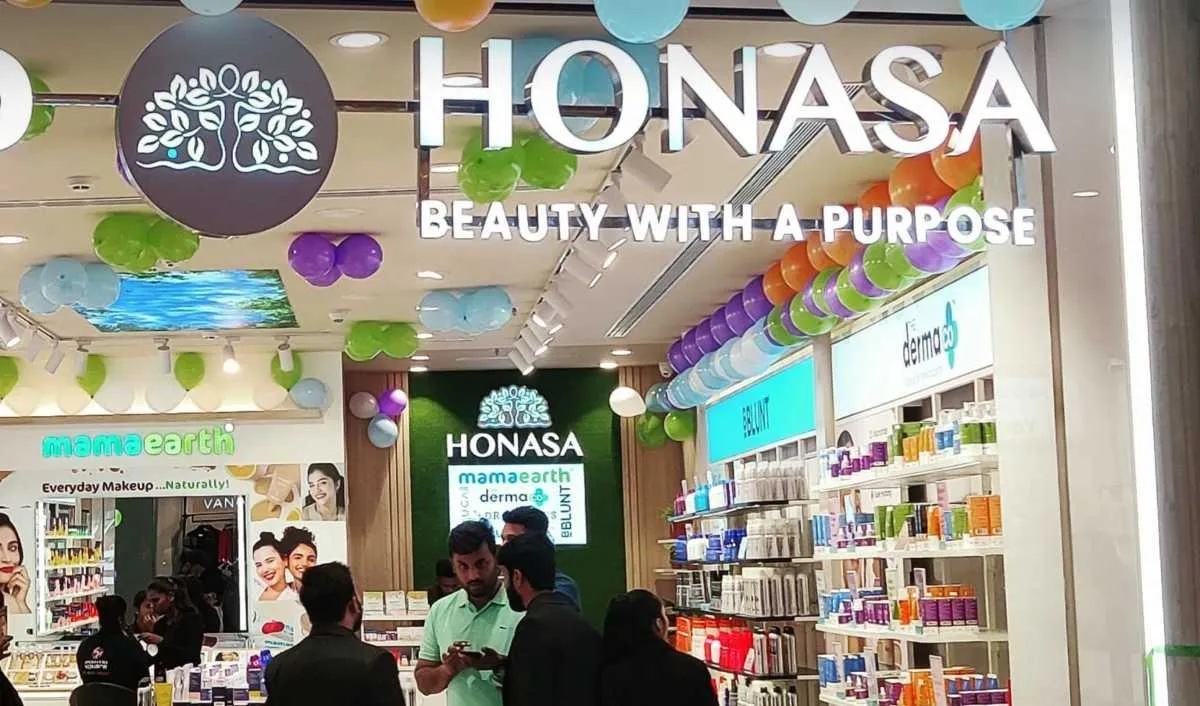
Let’s talk about Honasa. Incorporated in 2016, at a time when “digital-first” was the only pitch deck that didn’t sound stupid, Honasa Consumer built an empire out of skincare startups nobody had heard of. Mamaearth — the toxin-free, oat-based, grandma-approved moisturizer brand that somehow convinced Gen Z that Ayurveda and dermatology could coexist in the same face serum. The Derma Co — the clinical, active-ingredient-heavy, “sunscreen is skincare” brand. Aqualogica. BBlunt. Dr. Sheth’s. Staze. A portfolio so cluttered that it makes the average investor wonder if the CEO has actual brand strategy or just collects beauty companies like Pokémon cards.
And yet — ₹2,220 crore in TTM revenue, highest-ever quarterly profits, and a channel strategy that actually works. In Q3, e-commerce grew 20%, modern trade grew 25%, and general trade grew at the same clip. Not flashy. Not hypergrowth. But evidence of something clicking. Management reiterated in the concall that UVG (underlying volume growth) was +30%, and they’re not one-channel dependent anymore.
But here’s the thing: The business carries a 7.44% ROCE. The P/E is 56.7x. A dividend payout of zero rupees. And every analyst in India is simultaneously bullish and confused. Which usually means the truth sits somewhere in the middle — a company that’s genuinely improving, but whose valuation has already booked in the improvement, plus most of a sequel and a spinoff.
Let’s break down what’s real, what’s hype, and what’s basically makeup on a finance model that still looks like a startup’s first fundraising deck.
Concall Insight (Feb 2026): “Highest-ever quarterly revenue and profits.” Management emphasized broad-based channel growth and a “repeatable operating model” — picking winning products, building hero SKUs, and distributing the hell out of them. In skincare, that’s called execution. In venture capital, it’s called a “narrative inflection.”
03 — Business Model: WTF Do They Even Do?
Selling Skincare and Stress to Gen Z, 250,000 Outlets at a Time
Honasa’s empire is built on a deceptively simple model: Create or acquire beauty brands. Make them digital-first — because selling on Instagram is cheaper than Doordarshan ads. Then flood 250,000 FMCG outlets with the same products because distribution beats everything in personal care. Finally, generate enough cash to acquire the next brand and call it a “synergy.” Rinse. Repeat. Profit, if you’re lucky.
The portfolio sits at roughly 250 products launched in recent years, with a focus on what management calls “focus categories” — the ones actually making money. About 75% of revenue comes from 25% of the portfolio. The rest is basically creative experiments that investors pretend are “future pillars.” Mamaearth (toxin-free, natural positioning), The Derma Co (clinical, active-ingredient heavy), and the acquired Reginald Men (entry into men’s skincare — because apparently, men discovered sunscreen in 2025) form the core. Young brands like Aqualogica and Dr. Sheth’s are the “next pillars.” Staze is color cosmetics. Everyone is confused but nobody admits it.
Distribution is 65% online (D2C, e-commerce platforms, apps) and 35% offline (250,000 FMCG outlets, 10,000+ modern trade stores). Management has shifted offline to 80% direct distribution, which is a fancy way of saying “we own the relationship now instead of begging distributors.” Inventory is held for 30 days, which is healthy for a company that wasn’t healthy five years ago. Working capital cycle is negative — they take payments faster than they pay suppliers. In startupspeak, that’s called “unit economics maturity.” In reality, it means they’re finally not imploding.
Mamaearth43%Revenue Anchor
Online Mix65%D2C + E-Commerce
Offline Outlets250K+FMCG Reach
TTM Growth17.3%Revenue CAGR
Reginald Men Acquisition (Dec 2025): Honasa paid ₹195 crore EV (95% stake) for a ₹74 crore LTM revenue business with ₹18 crore EBITDA. Multiple: ~2.6x EV/Revenue, ~10.8x EV/EBITDA. Men’s skincare is an inflection point globally; management cites searches for “sunscreen for men” rising. Whether this translates to another ₹500 crore brand or becomes a acquisition casualty remains to be seen.
💬 Drop a comment: Do you actually use separate sunscreen for men, or is that just marketing genius?
04 — Financials Overview
Q3 FY26: The Highest-Ever Quarter (But At What Cost?)
Continue reading with a premium membership.