1. At a Glance
Hindustan Hardy Ltd (HHL) is currently commanding a level of investor attention that is hard to ignore, primarily driven by a staggering 34% growth in sales over the last twelve months. For a company operating in the gritty, capital-intensive world of propeller shafts and universal joints, such a leap in topline is a loud signal. The market cap stands at a lean ₹129 Crore, making it a quintessential micro-cap play that has seen its stock price compound at 46% CAGR over the last five years.
However, beneath the surface of this growth engine, serious red flags are beginning to emerge. While the revenue has scaled from ₹81 Crore to ₹109 Crore in a single year, the Quarterly Profit Variance has plummeted by nearly 29%. This disconnect between the ability to sell more and the ability to keep more is the central paradox of HHL’s current financial standing. The Operating Profit Margin (OPM), which looked robust at 15% in early FY26, has compressed back to 9.15% in Q4 FY26.
The company’s balance sheet is also under stress from an Auditor’s perspective. The Working Capital Cycle remains heavy, with Gross Current Assets sitting at 183 days. While debtor days have shown marginal improvement, the company is still extending credit for up to 120 days to its OEM customers, essentially acting as a financier to the big boys of the auto industry.
Furthermore, the recent demise of the Chairman and a subsequent reshuffle in the top leadership—including the resignation of the CFO to take over as Managing Director—adds a layer of governance transition risk that most investors are overlooking in the excitement of the sales numbers. With the Stock P/E at 15.4 against an Industry P/E of 29.1, the market is clearly pricing in these risks, refusing to give it the premium valuation enjoyed by its larger peers.
Is this a classic case of “growing too fast for its own good,” or is the margin contraction a temporary blip in an otherwise powerhouse small-cap story?
2. Introduction
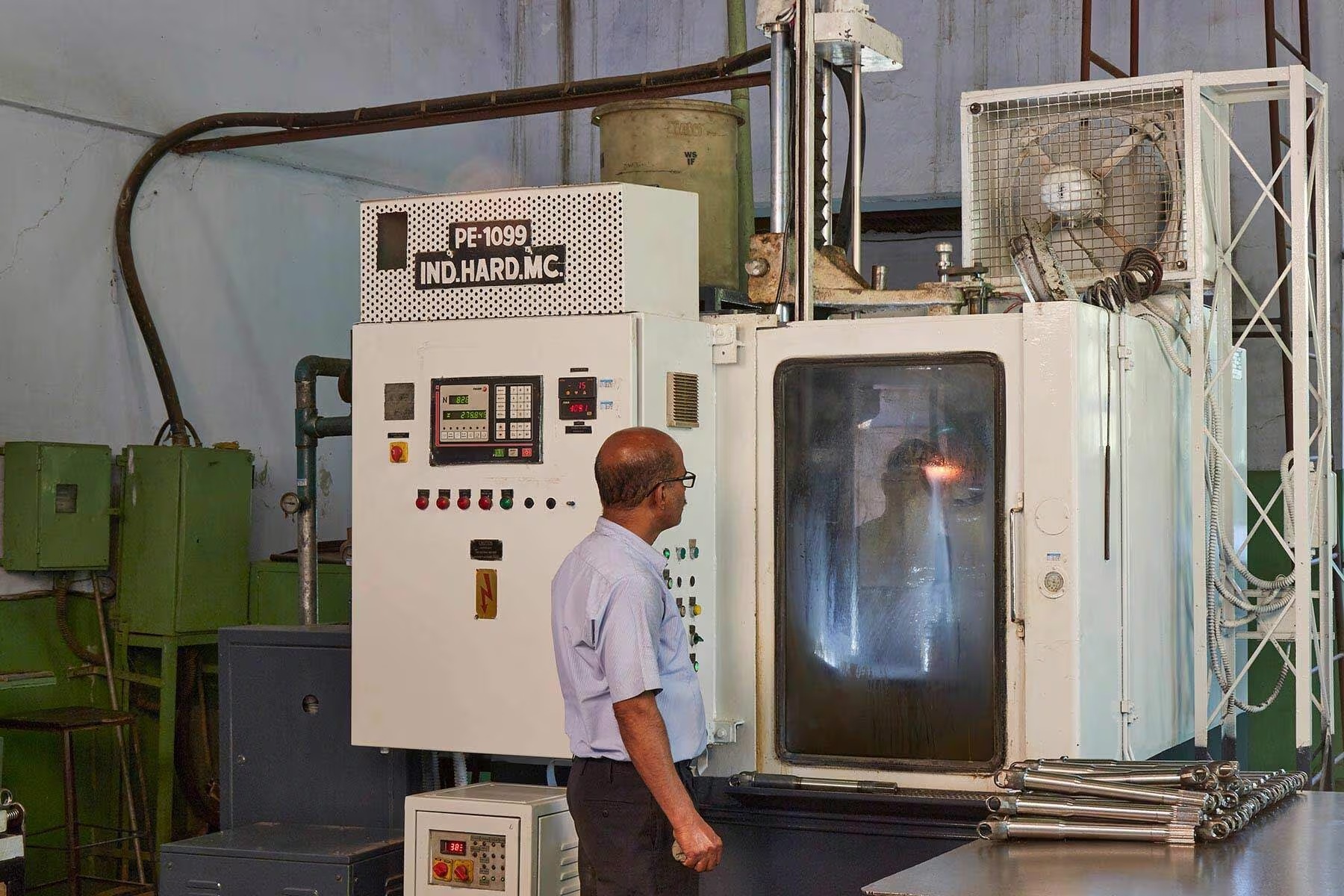
Hindustan Hardy Ltd, incorporated in 1982 and based out of Nashik, is a specialized player in the automotive component space. It doesn’t make the cars; it makes the parts that make the wheels turn—literally. The company specializes in Propeller Shafts, which are critical mechanical devices that transfer power from the engine to the point of application.
The company operates in a niche but vital segment of the $Auto Component$ industry. Its product profile includes Double Cardan Shafts and Universal Joints, catering to a diverse set of industries including Commercial Vehicles, Agriculture, and Off-highway construction equipment. This diversification has been their shield, allowing them to pivot when one sector slows down.
Geographically, HHL is not just a domestic story. While 77% of its revenue comes from India, it has a significant export footprint (23%), exposing it to global demand cycles and, more importantly, the volatility of foreign exchange.
In the last year, the company has seen a leadership transition following the demise of Mr. Sanjaya Saran. The current Chairperson and Managing Director, Ms. Devaki Saran, now steers a ship that is growing rapidly in volume but struggling to maintain its profitability ratios in a high-cost environment.
3. Business Model – WTF Do They Even Do?
Imagine you have a massive engine at the front of a truck and the wheels are all the way at the back. How do you get that power across? You use a long, rotating pipe called a Propeller Shaft. That is HHL’s bread and butter.
They don’t just “make pipes”; they design complex mechanical assemblies that have to withstand incredible torque and stress without snapping. Their business model is built on being a Tier-1 and Tier-2 supplier to big names like TAFE (Tractors and Farm Equipment Ltd) and SML Isuzu.