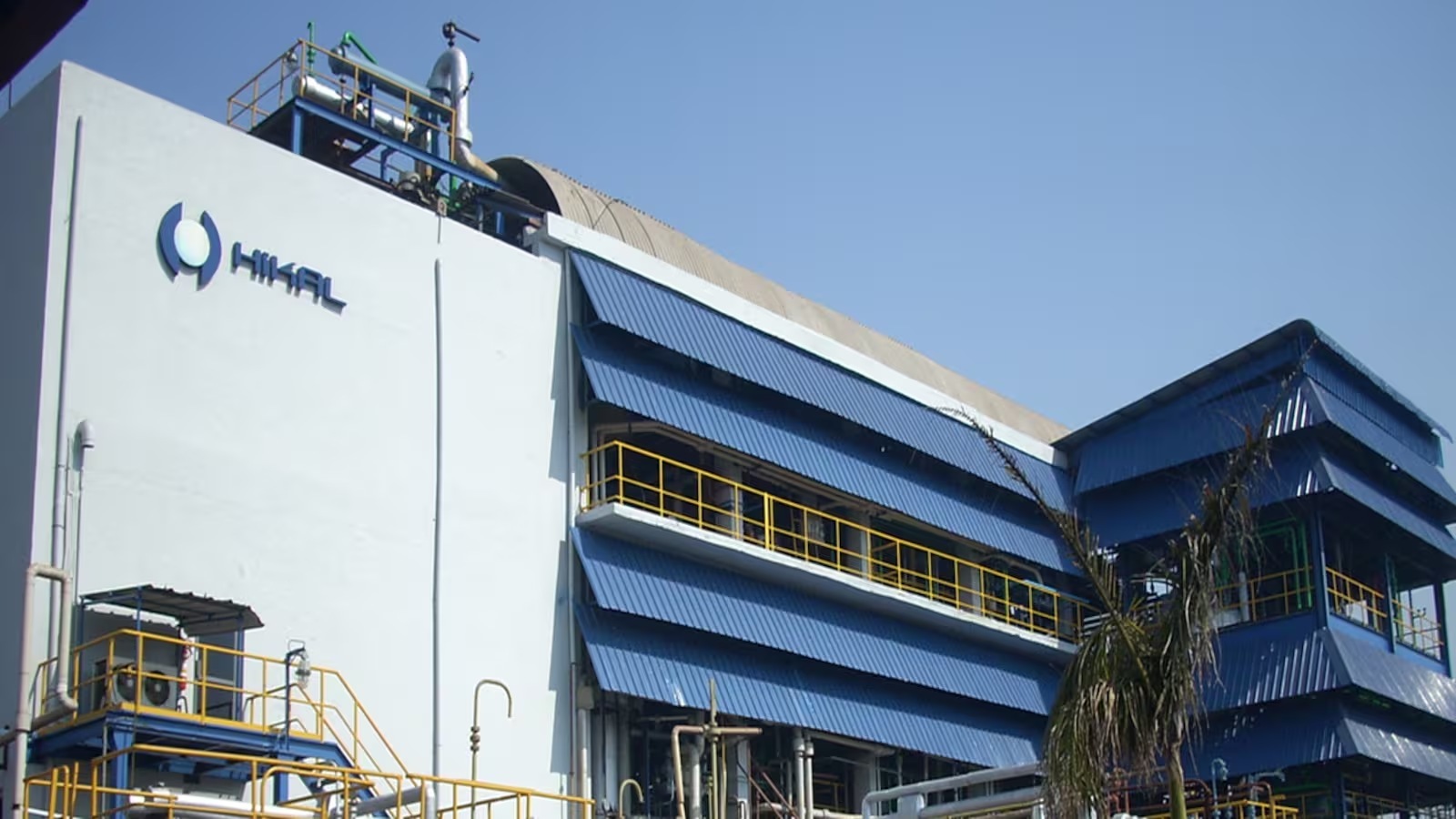
Hikal Q4 FY26: Remediation Theatre Meets a Reckoning
A fine chemicals outfit trying to grow out of an FDA warning letter, while the market prices it like a pharmaceutical penny stock. ₹519 Cr quarterly revenue and a 20.3% EBITDA margin: the good news. ₹190 CMP on a 64x P/E to reported FY26 EPS of ₹(3.96): the reality check.
At a Glance
Hikal delivered Q4 FY26 revenue of ₹519 Cr — a dip from Q4 FY25’s ₹552 Cr — but EBITDA margin compressed into Q4 at 20.3%, a meaningful step-up from Q3’s 16.8%. The PAT story is complicated: ₹14.4 Cr reported after a ₹47 Cr impairment charge tied to a Panoli agro facility being retooled for pharma. Full-year FY26 marked a sharper inflection: ₹1,713 Cr revenue (down 8% YoY from ₹1,860 Cr), EBITDA of ₹220 Cr (down 33% YoY), and a net loss of ₹49 Cr after ₹85 Cr in exceptional charges (labour code + impairment).
The wrinkle: the market is watching an FDA warning letter to the Jigani pharma site (issued Aug 2025, conviction letter Aug 20). Management claims customer relationships “largely intact” and expects resolution “by end of FY26” (which is now), but the language around NCE (New Chemical Entity) CDMO growth is softening. “Till the FDA comes out, the new NCE growth will be muted.” The credit rating houses noticed: ICRA downgraded Hikal from A+ to A (stable outlook) on leverage and compliance risk in Nov 2025.
A business in mid-remediation, pivoting hard to Panoli, building HPAPI labs, and asking investors to trust that Q4’s 20% EBITDA margin is the floor, not a ceiling.
Who Are These People, Really?
Hikal was founded in 1988 by the Hiremath family as a chemical business. It listed on BSE/NSE in 1995. Today it is a Contract Development and Manufacturing Organization (CDMO) and fine chemicals supplier to pharma, crop protection, and specialty chemicals. The business is split three ways: Pharmaceuticals (60% of FY26 revenue at ₹1,021 Cr), Crop Protection (40% at ₹692 Cr), and an emerging Animal Health division.
The firm claims five manufacturing plants across Maharashtra, Gujarat, and Karnataka. The Panoli, Gujarat facility was acquired from Novartis in 2000. The Bangalore unit came via a Wintac acquisition. Taloja’s crop protection plant is positioned as the world’s only fully integrated Thiabendazole producer. Facilities host 3,000+ employees and 24 production blocks.
Ownership: Promoters hold 68.8% (via Kalyani Investment Company, 31.36%; plus a web of Hiremath family trusts and vehicles). FII holding slipped from 5.7% to 1.44% in the past two years — not a sentimental backdrop. DII buying has been flat to modest (7.2% now). Public holds 22.51%.
The R&D footprint: 15 synthetic labs, 4 instrumentation labs, 250+ postgraduates and 26 PhDs in Pune. A capex spree from FY24–FY26 (~₹600 Cr growth, ~₹300 Cr maintenance) has left them with a high-potency API lab, an expanded Kilo lab, and a pilot plant at Panoli. Full utilization is “2–3 years away,” per management in investor presentations.
The Business Model: Complexity Hunting
Hikal sells Active Pharmaceutical Ingredients (APIs) — the molecules inside pill bottles — and advanced intermediates for innovator companies and generic makers. The outfit does custom synthesis, process development, and contract manufacturing. Margins hinge on whether you’re making commodity acetaminophen (thin) or a high-potency oncology intermediate (meaty).
Pharma segment (FY26: ₹1,021 Cr revenue, ₹33 Cr EBIT margin at 3.2%): 52% CDMO (contract manufacturing), 48% Own Products. Own products are APIs they’ve commercialized and sell into the open market — Japan, Latin America, US generics. CDMO is where the innovation happens. A customer (let’s call them Roche) wants a molecule made at scale; they call Hikal. Hikal figures out the process, validates it, manufactures it. Repeat. FY26 was soft — Pharma EBIT fell from ₹137 Cr (FY25) to ₹33 Cr. The FDA warning letter to Jigani (owned products hub) decimated Q1 and Q2 volumes.
Crop Protection (FY26: ₹692 Cr revenue, ₹51 Cr EBIT at 7.4%): Fungicides, herbicides, insecticides, and the intermediates behind them. China-driven pricing wars have been surgical. FY26 stabilized after years of global inventory correction. Q4 showed recovery — revenue up 45% QoQ to ₹228 Cr, EBIT margin at 17.1%. The rebound signal was clear, but management flagged that “pricing pressures still remain.”
Animal Health (disclosed as an emerging play in investor presentations): APIs for the companion-animal segment. A 10-year contract with an unnamed “innovative animal health company” was signed; validation of all products completed by Q4; now “progressing well into the commercial phase.” Management targets ₹500+ Cr revenue in this division over the next 4–5 years.
Specialty Chemicals & Personal Care: Described as “on track for commercialization” — a diversification lever into battery chemicals, personal care actives, and home care products. The Taloja Kilo Lab and expanded Pune R&D are positioned as the factory for this. Not yet material to revenue.
The revenue mix tells the story: CDMO has grown as a % (Pharma CDMO 52% vs 42% in FY22; Crop CDMO 65% vs just 24% in FY22). The thesis is shift from commodity APIs to contract manufacturing — stickier, higher-margin, innovation-led. Whether the market buys it when the largest market (US generics) is watching FDA warning letters is the hinge.
Financials Overview: The Exceptional Noise
Figures are consolidated, in ₹ crore.
Metric
Q4 FY26
Q4 FY25
YoY
Q3 FY26
QoQ
Revenue
519
552
-6%
494
+5%
EBITDA
105
123
-15%
83
+27%
EBITDA %
20.3%
22.4%
-205 bps
16.8%
+356 bps
PAT (reported)
14
50
-71%
-6
+190%
EPS (reported)
1.17
4.07
-71%
-0.47
—
FY26 consolidated revenue hit ₹1,713 Cr vs ₹1,860 Cr in FY25. EBITDA margin was 12.9% (down 479 bps YoY). Reported net loss was ₹49 Cr. Adjusted (excluding ₹85 Cr exceptional), PBT was ₹7 Cr — essentially breakeven operations.
The exceptional items were labour code severance (₹38 Cr) and an impairment of a multipurpose agrochemical facility at Panoli (₹47 Cr) being retooled for pharmaceuticals. Management made the hit upfront. The Panoli facility “will come on stream in the next financial year,” suggesting FY27 cost absorption is done.
Management on H1 to H2 momentum: H2 (Oct–Mar) saw Pharma revenue rebound 60% to ₹629 Cr from H1’s ₹392 Cr. Q4 specifically showed “sequential improvement in EBIT margins due to better product mix” — a euphemism for higher-margin work starting to flow and lower customer deferments as Jigani remediation progressed.
Metric
FY25
FY26
Change
Sales
1,860
1,713
-8%
EBITDA
328
220
-33%
EBITDA %
17.7%
12.9%
-479 bps
PAT (reported)
91
-49
Loss
Net Debt / EBITDA
2.3x
2.9x
+0.6x
ROCE %
9.9%
3.5%
-640 bps
ROCE collapsed. Leverage rose. The remediation year did its job on the balance sheet — capex of ₹149 Cr, but operating cashflow held at ₹302 Cr — but the top line and bottom line took a hit.
What Is Management Promising in Coming Quarters?
Earnings Call Briefing (May 27, 2026):
Management’s core pitch: “Q4, FY26 marks an improvement in Hikal’s operating performance. The company is moving decisively from a phase of remediation and normalization to one of sustainable growth.”
The promises:
Pharma CDMO pipeline strengthening. DMF filings (Drug Master Files — regulatory authorization to make a molecule) targeting 5–6 annually vs. 2–3 historically. New high-potency lab, expanded Kilo lab, and Panoli as a “clean FDA platform” are enablers. Management: “NCEs have multiple source options… till the FDA comes out, the new NCE growth will be muted.” Translation: the Jigani warning letter has frozen new high-value customers from committing till Jigani is cleared. But Panoli (approved May 2023, no FDA issues) is being marketed as the derisked alternative.
HPAPI and ADC (Antibody-Drug Conjugate) chemistries. High-potency APIs and ADC linkers/payloads are being built out. Commercialization horizon: 3–5 years. A purpose-built HPAPI manufacturing facility is planned for Pune over FY28. Management acknowledged the long cycle but positioned it as a differentiation play.
Animal Health scaling. One key multinational contract is now in “commercial phase” post-validation. The aspiration remains ₹500+ Cr business in 4–5 years. No FY27 guidance was provided (management citing “uncertainty because of the war situation today, raw materials, logistics, shipments”).
Crop Protection recovery. “The worst phase of the industry cycle is now largely behind us.” Volumes are improving. Pricing pressures persist (China-driven). New product launches planned for Japan and Brazil in FY27–FY28.
Specialty Chemicals / Personal Care. Commercialization underway. Expected to “begin contributing meaningfully from FY27 onwards.”
On the FDA Warning Letter: Management is “continuously dialogue” mode. They claim “relationships largely intact” but conceded lost business in Q4 own products, “which will come back in the next few quarters.” The timeline for FDA resolution was described as “18 to 24 months”