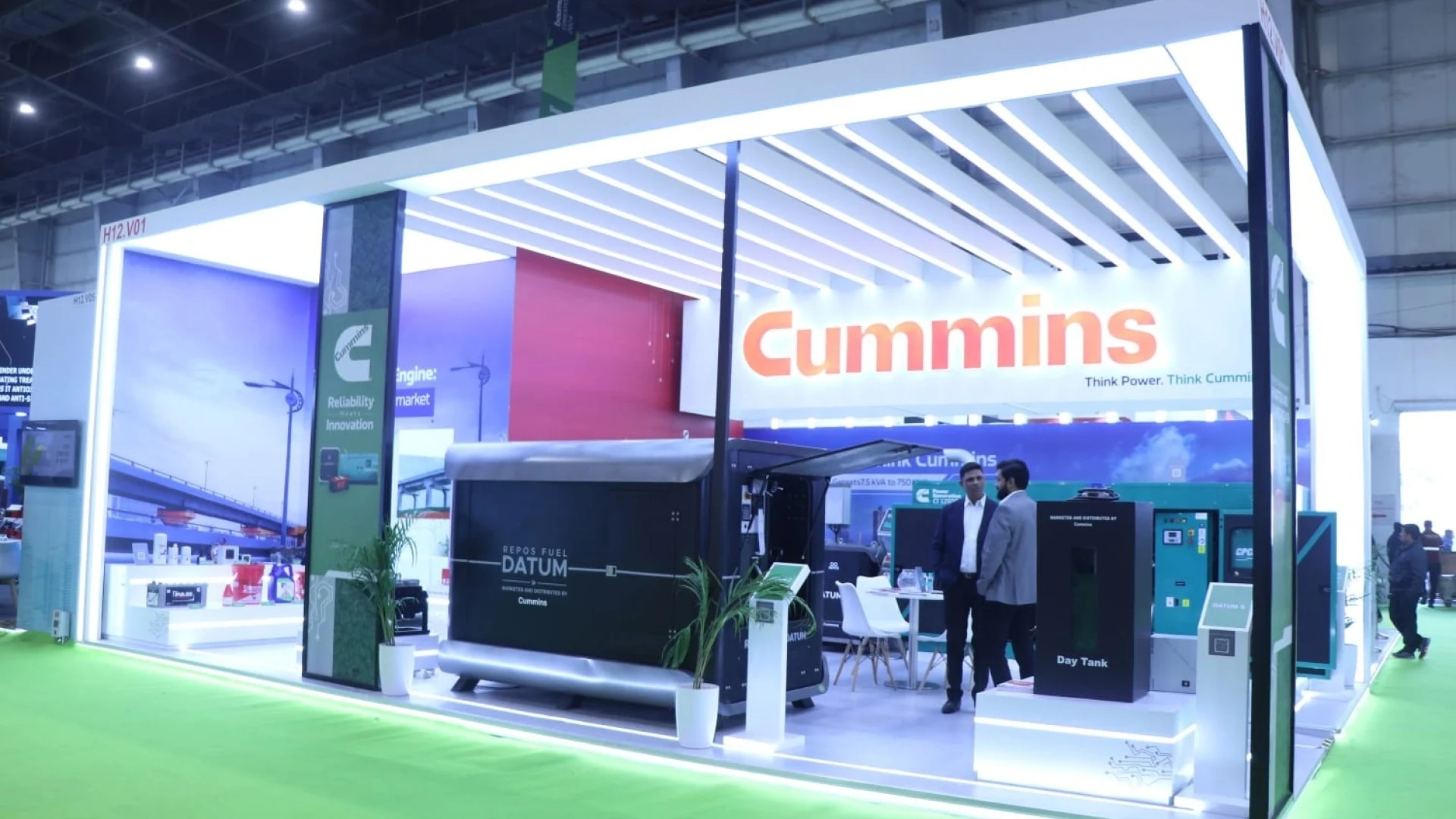
Cummins India FY26: The Genset Gets a Data-Center Glow-Up
Section 1: At a Glance
Cummins India delivered a ₹12,143 Cr topline in FY26 — a 16.9% jump that outpaced inflation and most of its peers. Net profit climbed 18.1% to ₹2,362 Cr, while PBT hit ₹3,086 Cr (+19%). The problem? Its ₹5,784 share price has inflated the P/E to 67.9x on an 85.20 annualized EPS. That’s the math whispering a question: are datacentres enough to justify the valuation, or is this stock riding on momentum and future promises?
The engine maker has pivoted toward India’s AI infrastructure boom—datacenters now run 30–35% of domestic power-generation revenue. Borrowings shrank to ₹37 Cr. Working capital crept up. And tax demands have arrived (₹152 Cr+ in recent orders, under appeal). Growth is strong. Valuation is theatrical. The jury on sustainability is split.
Section 2: Introduction
Cummins India is part of Cummins Inc. (USA)—a global powerhouse in engine and power-generation systems. The Indian subsidiary manufactures diesel and natural-gas engines ranging from 2.8 to 100 liters, gensets up to 3000 kW, and distributes lubricants through Valvoline Cummins (a 50:50 JV with Valvoline International). It serves power-generation, railways, mining, oil & gas, defence, marine, and construction.
The company was a quiet mid-cap not long ago. The India AI capex sprint changed that narrative. Hyperscalers and colocation providers went shopping for reliable backup power, and Cummins’ Q60 engine became the genset of choice for data-center clusters. FY26 revenues grew ₹1,752 Cr in the year alone. The stock, up 71% in the past year, reflects belief in that tailwind. But at 18.9x book value and a 67.9 P/E, the stock is pricing in a lot of upside that doesn’t yet exist.
Section 3: Business Model: WTF Do They Even Do?
Engines (81% of FY26 revenue, ₹9,846 Cr). The core business. These aren’t car engines—they’re heavy-duty industrial diesels and gas engines for power stations, railways, and mining. QSK60 and smaller variants dominate. Larger engines (78L, 95L) are sourced from the parent or imported.
Power Generation sub-segment. A docile segment until 2023. Now the darling. Cummins supplies gensets (diesel-powered generators) to data centers, hospitals, and commercial buildings. In FY26, it shipped 23,000+ CPCBIV+ units across India, accelerated product launches in the 1000–2500 kVA range (the sweet spot for hyperscales), and expanded its GOEM dealer network from 113 to 127. The lead time from order to installation is 6–12 months. Cummins manages the full journey: procurement, engineering, on-site deployment, and post-install service.
Industrial sub-segment (₹1,650 Cr, -1% YoY). Railways: early-stage success with LHB coach power cars. Mining: after two tender-light years, orders are picking up again. Compressors: a cyclical business now entering a downturn. Construction: stable. Defence: prototype engines delivered to OEMs for wheeled and tracked vehicles. These pockets don’t add up to big toplines yet, but they show the company isn’t a one-trick pony.
Distribution (₹3,278 Cr, +22% YoY). The unsung profitability engine. Over 450 service touchpoints, 116 highway dealerships, and a fresh battery division. Growth levers: expanded CPCB IV+ warranty services (as older gensets exit factory cover), dual-fuel kits, retrofit emission devices, predictive maintenance packages. The pitch? Move beyond selling gensets—sell solutions and lock in aftermarket revenue.
Geography. Domestic revenue hit ₹9,961 Cr (83% of total, +19%). Exports fell to ₹1,989 Cr (17%, +12%), with concentration in Europe and Asia-Pacific. Geopolitics and supply disruptions keep management cautious on export outlook.
Section 4: Financials Overview
Figures are consolidated, in ₹ crore.
Metric
FY25
FY26
YoY Change
Revenue
10,391
12,143
+16.9%
EBITDA
2,791
3,297
+18.1%
PBT
2,593
3,086
+19.0%
Net Profit
1,999
2,362
+18.1%
EPS (₹)
72.15
85.20
+18.1%
Margins held firm: EBITDA margin at 27.2%, PBT margin at 25.4%, and PAT margin at 19.4%. The 1% decline in Industrial sales dragged on topline growth, but Power Generation and Distribution more than compensated.
What’s Cooking in the Concall. Management disclosed that datacenters now represent ~30–35% of domestic PowerGen revenue in FY26, ramping to 35% in Q4. Inquiry flow post-October 2025 has “picked up… definitely increased quite a lot.” Hyperscaler exposure was quantified at ₹250 Cr for the quarter alone. On pricing: “It is not just about the cost and the pricing… It is the whole value proposition.” Translation: Cummins is selling reliability and uptime guarantees, not racing competitors to the bottom.
On the supply side, lead times on imported genset nodes have “increased due to data center demand… very high,” but Cummins insists this is demand-driven, not a COVID-era electronics shortage. In India, capacity utilization sits at ~70%. No major capex is planned; the focus is “more output from each of our installed bases today.”
Section 5: Valuation Discussion: Fair Value Range (Educational Only)
What follows is an educational look at what the numbers imply — not a price target, and not advice.
Method 1: P/E Approach. Annualized EPS is ₹85.20. Peers in the industrial-equipment space trade in a 35–50x range (Kirloskar Oil at 46.9x, Elgi Equipments at 43.8x, KSB at 51.5x). Assuming a 40–45x multiple for Cummins—a hair above peers, reflecting parent backing and the datacenter tailwind—the math suggests: 85.20 × 40 = ₹3,408, and 85.20 × 45 = ₹3,834. Fair value range: ₹3,400 to ₹3,850.
Method 2: EV/EBITDA. FY26 EBITDA is ₹3,297 Cr. Peers cluster at 28–38x EBITDA multiples. At 30–35x, the range