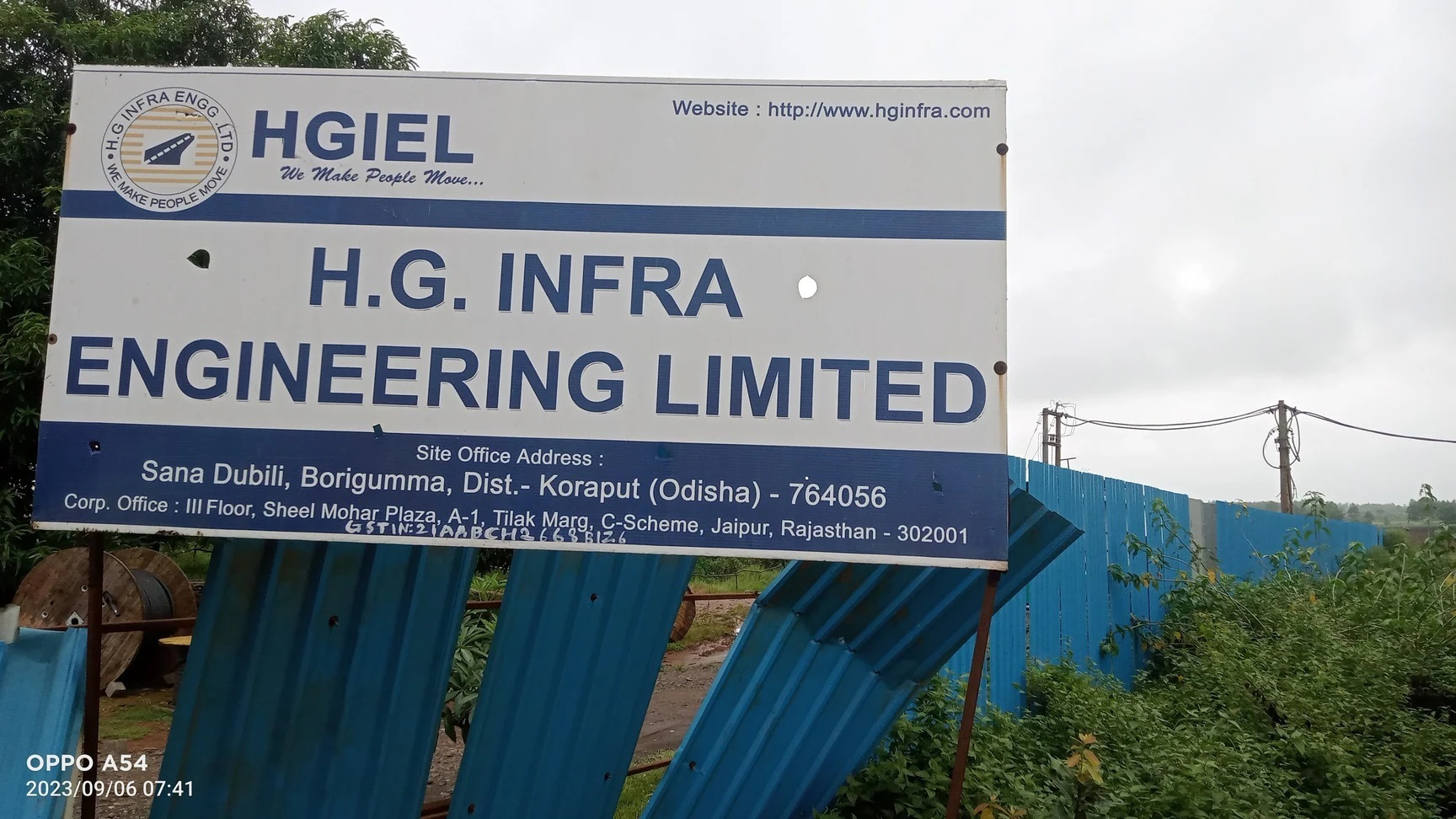
H.G. Infra Engineering Q4 FY26: The Margin Cliff, The Order Book Shrug
General information and entertainment, not investment advice. The author is not a SEBI-registered adviser or research analyst. No recommendation, no promised returns. Markets carry risk including loss of capital. Figures may not be current. Consult a registered adviser before acting.
1. At a Glance
The company’s consolidated PAT fell 34.7% year-on-year to ₹330 Cr in FY26, while revenue inched up just 3.5% to ₹5,235 Cr. The operating margin, stable at 19.3%, masked a deeper problem: the net margin contracted from 10% to 6.3%. Q4 was the villain here—PAT collapsed to ₹85 Cr (5.9% margin) from ₹147 Cr a year ago. Geopolitical headwinds, appointed-date delays in HAM projects, and cost escalation in Q4 are management’s narrative; what matters is that the company’s profitability lost its footing. The order book stands at ₹10,147 Cr (announced Mar 26, now further bolstered post-Ganga and Pune-Shirur wins); diversification into railways, BESS, and transmission projects now represents 47% of the order backlog. Standalone debt spiked 52% to ₹16,274 Cr, driven by working-capital intensity and delayed project completions. The company guided FY27 revenue at ₹6,500–7,000 Cr with an EBITDA margin of ~14%—a reset from the 19.3% FY26 achieved—acknowledging weaker Q1–Q2 visibility due to macro volatility.
2. Introduction
H.G. Infra Engineering limited, a 24-year-old civil construction firm, started as a road-building outfit and has since woven itself into India’s infrastructure fabric: roads, railways, metros, solar plants, and battery energy storage. Its promoters—the Singh brothers—steered the company through the hybrid-annuity-model (HAM) boom, where the firm bid on, built, and later monetised road assets to Government. Now the playbook is shifting. Road construction margins are compressing, so the company is hunting new geographies and project types: solar KUSUM plants, battery storage systems (BESS), transmission lines. By June 2026, it had bagged three major wins in May alone—Pune–Shirur (₹3,931 Cr EPC), Odisha HAM ring road (₹1,582 Cr), and two transmission lines (₹1,220 Cr combined)—signalling intent to move up the risk ladder.
The bigger test, however, is execution risk. Solar commissioning delays, loan repayments tied to COD milestones, battery supply chains sourced offshore, and geopolitical volatility eating into margins aren’t niche concerns; they’re live and messy. The concall in May spoke plainly: “continued headwinds from West Asian conflict,” supply chain disruption, forex volatility, input-cost inflation. That tone matters more than the order backlog.
3. Business Model: WTF Do They Even Do?
The company operates across five main buckets:
Roads remain the backbone—53% of the order book as of March 2026. HAM contracts (where the firm builds and operates for 15–25 years, extracting toll revenue) used to be the sweet spot, but bidding competition has intensified. The firm is now also chasing EPC (engineering, procurement, construction) turnkey contracts where it builds and exits. Pune–Shirur is an example: ₹3,931 Cr BOQ-based EPC from Welspun, 36-month timeline, expected revenue contribution ~₹750–900 Cr in FY27 and ₹1,600+ Cr in FY28 to hit completion bonuses.
Railways make up 27% of the order book and are growing. Three major wins post-March: two Adani coal-plant rail projects (Anuppur ₹340 Cr, Mirzapur ₹440 Cr) and a Thane Metro JV. Government rail capex is budgeted at ₹2.78 lakh Cr for FY27; the firm sees tailwinds.
BESS (battery energy storage) is the shiny new segment—735 MW / 1,470 MWh contracted with GUVNL and NVVN, representing 15% of the current order book. Execution timeline: Banaskantha and Dholera commissioned by Dec 2026; Choraniya by June 2027. Post-commissioning, these projects are expected to contribute ~₹225 Cr annual revenue under long-term operation contracts.
Solar (KUSUM scheme) showed 96.3% physical progress but is mired in delays—monsoon, land acquisition for transmission lines, local hurdles. The firm has invested ₹851 Cr in equity and faces ₹99 Cr in loan repayments due to delayed commissioning; management expects a re-sanction post-COD, reducing net capital outlay.
Transmission (T&D) is nascent—₹1,220 Cr in two new RECPDCL EPC wins (UP, Jharkhand) announced in May 2026; equity requirement ~₹275 Cr spread over 3 years. These projects are brownfield transmission projects with a 35-year concession post-commissioning.
The geographic mix has rebalanced: North 32%, East 31%, West 19%, South 18% (as of FY24). A fleet of 3,000+ equipment pieces supports site execution. The risk? Each segment has different execution and commercial dynamics—solar’s supply chain fragility, BESS’s battery sourcing, transmission’s land-acquisition tangle, roads’ margin compression. The company is betting that diversification offsets risk; the data so far says execution variability still dominates.
4. Financials Overview
Figures are consolidated, in ₹ crore.
Metric
Q4 FY26
Q4 FY25
YoY
FY26
FY25
YoY
Revenue
1,427
1,361
+4.8%
5,235
5,056
+3.5%
EBITDA
237
244
-2.9%
1,012
1,058
-4.4%
PAT
85
147
-42.4%
330
505
-34.7%
EPS
13.06
22.55
-42.1%
50.69
77.56
-34.7%
Q4 was a margin wreck. Revenue rose 4.8% but PAT fell 42%, signalling cost inflation (materials, freight, insurance) and a ₹711 Cr exceptional item (positive, mostly settlements and claims). Remove the exceptionals, and Q4 PAT is closer to ₹283 Cr standalone—still a miss. Management attributed the Q4 collapse to: (1) muted NHAI awards in FY26 (started the year targeting ₹10,000 Cr of new orders; landed just ₹1,300 Cr), (2) delayed appointed dates in HAM projects, and (3) cost escalation from geopolitical volatility and prolonged monsoon. FY26 as a whole saw 3.5% revenue growth but a 35% PAT drop—a clear signal that the business is growing its top line on longer-cycle projects (HAM, BESS, solar) while core road EPC margins are under pressure.
The company’s concall guidance for FY27 is cautious: revenue ₹6,500–7,000 Cr (implying ~14% growth) with an EBITDA margin of ~14% (down from FY26’s 19.3%). Management explicitly said “you cannot guarantee the margin accurately” due to macro volatility and Q1–Q2 weakness expected.
5. Market Expectations & Historical Multiples
This section describes how the market is currently pricing the company and how that compares with its own history and peer group. It is descriptive, not predictive.