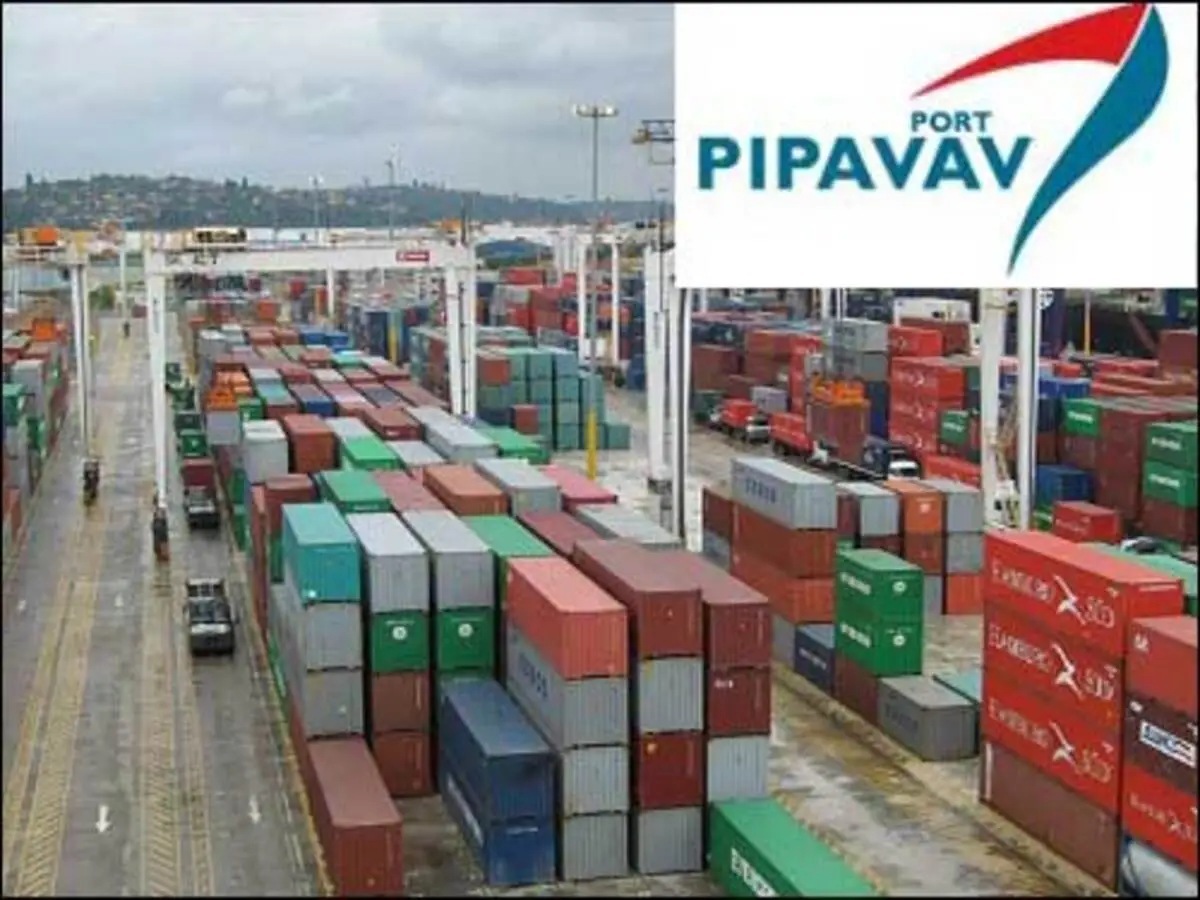
Gujarat Pipavav Port FY26: Container Drama, RoRo Records, Liquid Patience
General information and entertainment, not investment advice. The author is not a SEBI-registered adviser or research analyst. No recommendation, no promised returns. Markets carry risk including loss of capital. Figures may not be current. Consult a registered adviser before acting.
1. At a Glance
The port squeezed ₹1,158 Cr in revenue (up 17% year-on-year) from four cargo streams—but the story broke into two seasons.
Container cargo collapsed 18.5% in FY26 after geopolitical disorder scattered shipping lines to other routes; dry bulk sank on fertilizer import fatigue. Meanwhile, liquid cargo trucks +13% and RoRo vehicles exploded 71%, the latter touching 165,000 units for the full year.
Operating margin held firm at 61%, nearly unchanged. Net profit vaulted ₹515 Cr (up 26%), lifted by a dividend reversal in P&L and lower tax drag. Yet the equity structure raised a whisper: borrowings fell to ₹37 Cr (down from ₹63 Cr in FY25), the company is nearly debt-free, and cash sits at ₹676 Cr. A port that prints money and hoards it.
The tension? Containers are the revenue anchor, yet they’ve been asleep at the wheel.
2. Introduction
Gujarat Pipavav Port operates India’s only privately held major port, plonked on the Saurashtra coast near Bhavnagar—a strategic whisper-distance from northwest India’s industrial spine and the subcontinent’s seafood export heartland.
The company holds exclusive concession rights to develop and operate facilities until September 2028 under an agreement with the Gujarat Maritime Board and state government. It handles four cargo types: containers (60–70% of revenue), dry bulk, liquid cargo, and RoRo vehicles (roll-on, roll-off cars for export).
The promoter is APM Terminals, a unit of global shipping giant A.P. Moller-Maersk, which holds 44% equity and channels customer flow—Maersk Line itself accounts for roughly 23% of port revenue. A parent with scale, technology, and a book of global customers.
In FY26, the port faced headwinds on two fronts: the Red Sea crisis redirected container traffic away from Pipavav’s route to the Far East, and Indian government fertilizer import tenders undershot expectations. Yet newer cargo streams—liquid and RoRo—staged a recovery act.
3. Business Model: WTF Do They Even Do?
The port berths four categories of ship and cargo.
Containers (TEU = twenty-foot equivalent unit, the industry’s measuring stick). The port has 1.35 million TEU annual capacity; FY26 handled 808,000 TEUs (59% utilization). A container ship arrives, the port lifts boxes on and off, bills per TEU. Simple. Volume drives revenue here; pricing is the sea routes’ bidding war.
Dry bulk—fertilizer, coal, ore—arrives in bulk carriers. Capacity sits around 4–5 million metric tonnes depending on cargo mix; FY26 moved 2.7 million MT (67% utilization). Fertilizer imports are government-tender-driven, erratic. Coal handling is temporarily suspended.
Liquid cargo: LPG, crude, refined products. Current capacity ~1.6–1.75 MMT; FY26 moved 1.28 MMT. The company is building a new jetty (₹700 Cr capex, timeline December 2026) to unlock ~3.2 MMT new capacity. Expected completion, Dec 2026.
RoRo vehicles: cars for export. The port berths RoRo vessels on the container berth; FY26 handled 97,000 cars. The company is expanding staging yards (first phase operational, second phase underway) to raise throughput to 400–450k cars/year by June 2026.
The revenue mix is weighted to containers and liquids. But RoRo and dry bulk together can swing 30–40% of profit in a boom quarter if volumes spike.
4. Financials Overview
Figures are consolidated, in ₹ crore.
Metric
FY26
FY25
YoY Change
Revenue
1,158
988
+17.2%
EBITDA
708
578
+22.5%
PAT
515
397
+29.7%
EPS
10.66
8.21
+29.8%
Revenue jumped ₹170 Cr, driven by container tariff increases (5% headline January 2025 hike, expected 3–4% revenue pass-through) and volume rebounds in liquid and RoRo.
Profit soared 30%, outpacing revenue, because operating leverage is steep—costs grew slower than sales.
Operating margin: 61% in FY26 vs. 58% in FY25 (per management Q3 run-rate guidance, adjusted for one-time maintenance spikes and higher CSR spend that quarter).
Interest dropped to ₹7 Cr from ₹6 Cr, near-zero pressure from borrowings.
Tax rate 25.3% vs. prior-year 28.3%, a 300-bps relief from a lower effective rate.
Concall color (Feb 2026, Q3): Management reported EBIT up 18% QoQ with RoRo at 62,000+ cars (highest quarter), dry bulk +25% QoQ, containers “green shoots” +7% QoQ. They attributed container weakness to Red Sea chaos (shipping lines rerouting capacity) and US tariff headwinds on textiles (now “getting behind us”). Management urged caution: “wait for one more quarter” before declaring recovery structural.
5. Market Expectations & Historical Multiples
This section describes how the market is currently pricing the company and how that compares with its own history and peer group. It is descriptive, not predictive.
Metric
Current
Historical Average
Peer Median
P/E
14.8
19.5
23.7
EV/EBITDA
8.45
—
—
ROE
21.2%
15.8%
15.9%
ROCE
28.0%
—
13.9%
The market currently pays 14.8x earnings here, well below the 5-year average of 19.5x and sharply beneath the peer median of 23.7x (Adani Ports at 32.5x, JSW Infra at 37.5x). This gap suggests the market is pricing in either a duration discount (container cycle recovery is uncertain) or scale penalty (Pipavav is 1/50th the revenue of Adani Ports).
Return on equity is running 21.2%, above its 5-year average of 15.8% and the peer band of 15.9%, showing the capital already deployed is earning well.
Return on capital employed (ROCE) sits at 28%, the highest leverage in the peer set. This reflects a young, high-margin port operation with minimal debt and abundant cash, squeezing maximum returns from the embedded capital base.
The multiple compression against history and peers reveals the market is uncertain whether containers will rebound and whether the liquid/RoRo tailwinds can become structural before the FY28 concession extension outcome is resolved. One factual observation: the gap between current and historical multiples leaves no room for disappointment on the container recovery path.