Haryana Financial Corporation FY26: The ₹149 Crore Ghost in a Winding Box
General information and entertainment, not investment advice. The author is not a SEBI-registered adviser or research analyst. No recommendation, no promised returns. Markets carry risk including loss of capital. Figures may not be current. Consult a registered adviser before acting.
1. At a Glance
A state-owned financial corporation that stopped lending in 2010 just posted ₹8.38 crore in net profit on ₹10.1 crore in revenue. The market prices it at ₹66.2—a full 164x its annualised earnings and 6.13x book value. The company holds ₹149.51 crore in equity investments and ₹33.22 crore in cash against a ₹250 crore balance sheet that is mathematically neat but operationally inert.
The State of Haryana (97.28% owner) has recommended liquidation. The stock is under delisting from BSE. The board convened on 29 May 2026 to approve these results and green-light the winding-up process.
The tension is elemental: a vehicle with no business model, no debt, and a pile of illiquid securities, trading at a multiple that assumes the liquidation process will extract value above the current price.
2. Introduction
Haryana Financial Corporation was incorporated in 1951 under the State Financial Corporations Act. For decades it did what state-owned development banks do: sanctioned and disburse loans to small and medium enterprises across Haryana.
In May 2010, it stopped sanctioning loans altogether. Not a pause. A full stop.
Over the next 16 years, the corporation recovered what it could from its loan portfolio, wrote off what it could not, and pivoted to managing a shrinking asset base. It repaid all its own borrowings. It collected dues from failed borrowers. It held equity stakes in 16 companies (mostly not listed), kept cash, filed tax appeals, and waited.
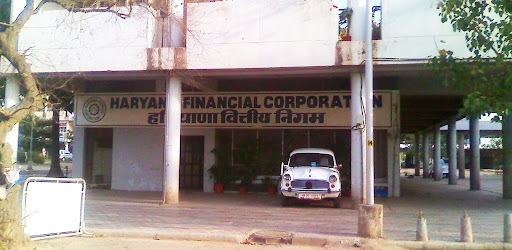
On 29 May 2026, the board approved FY26 results and formally recommended winding-up of the corporation to the Haryana State Government. The State Government, as promoter, accepted the recommendation. SEBI has granted relaxation on delisting procedures. A merchant banker has been appointed. A registered valuer has valued the equity of HFC itself at ₹19.50 per share. The process of liquidating a non-operating entity is now in motion.
The stock ticks on the BSE at ₹66.2 as of June 11, with negligible daily volume. Promoter holdings stand frozen at 99.36%.
3. Business Model: WTF Do They Even Do?
There is no business model anymore. There is an estate.
For 59 years (1951–2010), HFC sanctioned loans to micro, small, and medium industries in Haryana. These loans carried credit risk, market risk, and execution risk. Bad borrowers defaulted. Properties got auctioned. Recovery was messy.
In May 2010, the board decided: no new sanctions.
What remained was a liquidation portfolio: outstanding loans (most now classified as non-performing or loss assets), equity stakes in dead or half-dead companies, a corporate office building that was leased out, and state government subsidy money held in trust.
Today the corporation collects recovery receipts, manages a portfolio of equity investments (mostly unquoted), holds ₹33.22 crore in cash, sits on real estate, and processes court cases filed by ex-employees and auction purchasers who claim the corporation owed them money.
The ₹10.1 crore in FY26 revenue came almost entirely from rental income (₹9.99 crore) on the corporate office building in Panchkula, leased to the Haryana Parivar Pehchan Authority. Interest on staff loans added ₹0.1 crore. Every other stream was noise.
Calling this a financial corporation is like calling a bankruptcy trustee a bank. The legal form persists. The function is collection, reconciliation, and liquidation.
4. Financials Overview
Figures are consolidated, in ₹ crore.
Metric
FY 2025-26
FY 2024-25
FY 2023-24
Revenue
10.10
3.67
2.32
Operating Profit
6.23
(0.69)
(2.00)
Other Income
2.22
26.14
2.85
Net Profit
8.38
25.44
0.72
EPS (₹)
0.40
1.23
0.03
Revenue jumped 175% YoY from ₹3.67 crore to ₹10.10 crore. The jump was not from business recovery—the corporation stopped lending in 2010. It came from a one-time receipt: in FY25, the corporation sold an equity stake in M/s Devi Dayal Castings Pvt Ltd to auction purchasers. The auction had been hung up in the Supreme Court since 2019. The court dismissed the contempt petition in April 2025. Full payment of ₹10.05 crore arrived in FY26. The corporation booked interest on the delayed settlement (₹9.07 crore), recovery of principal (₹2.56 crore), and prior-period income items (₹0.62 crore).
Strip that out, and organic revenue is static: rental collections and staff loan interest. Other income of ₹2.22 crore reflects interest accrued on the deposits the corporation holds with the Life Insurance Corporation for employee gratuity and leave encashment trusts, plus dividend on equity holdings.
Operating profit expanded to ₹6.23 crore from an operating loss of ₹0.69 crore, mainly because expenses fell 10% from ₹4.32 crore to ₹3.87 crore (salaries and overhead shrank as the workforce dwindled). The company’s own cost of living a near-dormant business is ₹3.87 crore per year.
Net profit of ₹8.38 crore meant EPS of ₹0.40 (calculated as ₹8.38 crore ÷ 20.8 crore shares). That figure is an audited number but rests on a one-time receipt. It will not repeat.
Wisdom line: The P&L is a photograph of an estate mid-liquidation, not a business. Every rupee is accounting for past misdoing or windfalls.
5. Market Expectations & Historical Multiples
This section describes how the market is currently pricing the company and how that compares with its own history and peer group. It is descriptive, not predictive.
Metric
Current
Historical Average
Peer Median
P/E
164.0x
195.0x
18.1x
EV/EBITDA
159.0x
N/A
~25x (approx)
P/B
6.13x
N/A
2.35x
ROE
3.74%
2.87% (5Y avg)
14.2%
ROCE
3.76%
N/A
8.55%
The market pays 164x earnings here, against the peer median of 18.1x. The stock’s own 5-year average P/E was 195x, so the current multiple is actually lower than historical. P/B of 6.13x sits well above the peer median of 2.35x.
The market appears to be pricing in the existence of an orderly liquidation process with a floor on asset values. HFC holds ₹149.51 crore in non-current equity investments and ₹45.14 crore in current fixed deposits. If these assets realized at book value, the per-share liquidation value would exceed the current trading price. The market may be betting that liquidation value is defensible—that the ₹149 crore in equity stakes in 16 companies will not evaporate entirely, and that