1. At a Glance
GSFC is that classic PSU uncle who has been around since 1962, owns half the house, pays dividends on time, and still somehow manages to surprise you once in a while. With a market cap of ₹7,257 Cr, a current price of ₹182, and trading at 0.58x book value, the market is clearly saying: “Nice assets, but show me excitement.”
Q3 FY26 delivered ₹2,941 Cr revenue and ₹158 Cr PAT, with QoQ profit growth of 18%, while the stock has still managed to give a –7.3% return in 3 months. Classic PSU behaviour: good numbers, bad sentiment.
The balance sheet is squeaky clean with ₹1.39 Cr debt, dividend yield is a comforting 2.75%, and EPS (TTM) sits at ₹17.38. Yet ROE remains a sleepy 4.77%, reminding us this is not a startup—it’s a fertilizer factory with a pension plan.
So the real question:
Is GSFC just a value trap in khadi, or a quietly compounding chemical-fertilizer hybrid waiting for its moment?
Let’s open the files.
2. Introduction
GSFC lives in two parallel universes.
Universe one:
A fertilizer PSU, dependent on government policy, subsidies, regulated pricing, and monsoons behaving like a disciplined adult.
Universe two:
A chemical company that makes caprolactam, Nylon-6, melamine, methanol, and quietly competes with private sector players who don’t need cabinet approvals to sneeze.
This dual personality explains everything about GSFC—stable revenues, uneven margins, excellent assets, low returns, and periodic bursts of profitability followed by long naps.
FY23–FY25 shows exactly this:
- Sales are flat to modest
- Profits swing wildly
- Other income quietly props things up (₹309 Cr TTM 👀)
And yet, GSFC is not sleeping at the wheel. The company is executing ₹4,100 Cr capex, commissioning plants, revamping urea units, and even flirting with green hydrogen like a PSU trying to look cool at a climate conference.
The story is not about speed.
It’s about whether scale + chemicals + capex + clean balance sheet can finally translate into respectable returns.
3. Business Model – WTF Do They Even Do?
If GSFC were a thali, fertilizers are the rice, chemicals are the paneer, and nylon is the surprise dessert.
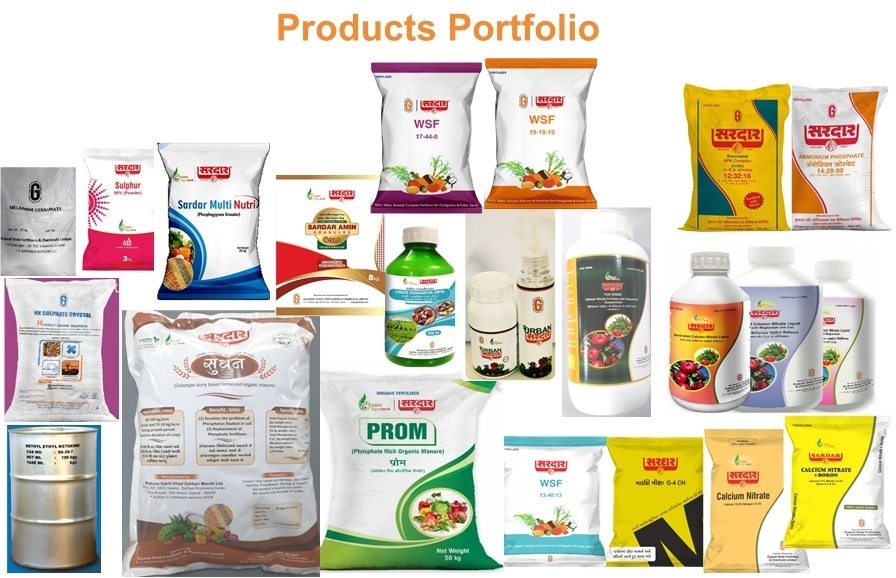
Fertilizers (78%)
This is the government-regulated, subsidy-dependent engine:
- Urea
- DAP
- Ammonium Sulphate
- NPK
- APS
Margins here are controlled, volumes are policy-driven, and ROCE is… let’s say emotionally unavailable.
Industrial Products (22%)
This is where GSFC earns its street cred:
- Caprolactam
- Nylon-6 & compounds
- Melamine
- Methanol
GSFC is a market leader in the caprolactam → Nylon-6 chain, supplying downstream applications in automobiles, consumer durables, and engineering plastics.
This segment is:
- Less regulated
- More cyclical
- More margin-sensitive