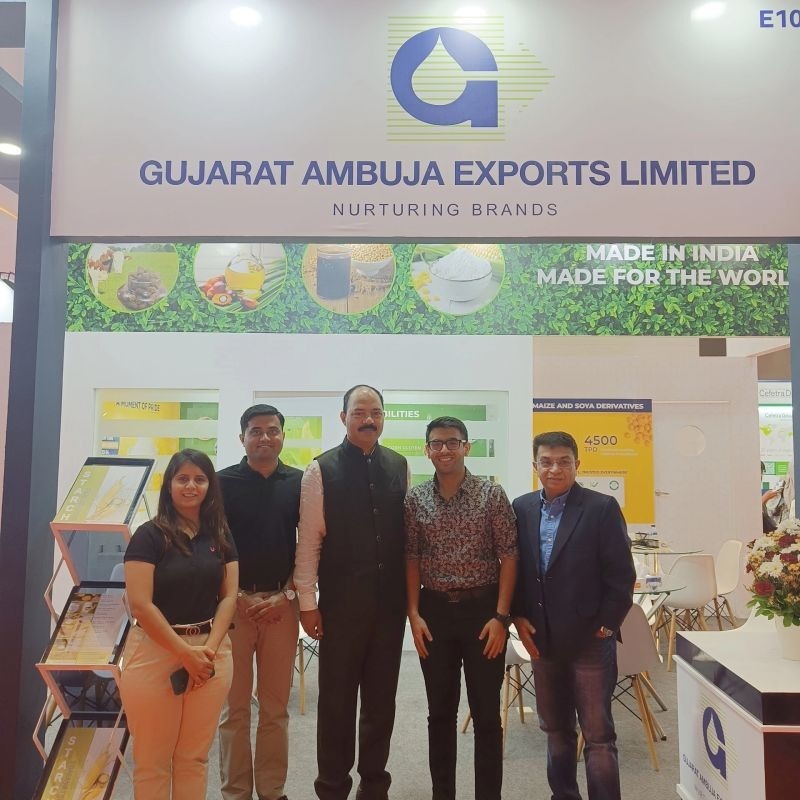
Gujarat Ambuja Exports Limited (GAEL) has just released its audited financial results for the full year and quarter ended March 31, 2026. The numbers reveal a company mid-transition—battling raw material headwinds in its core maize segment while aggressively pushing into high-margin specialty chemicals. With a consolidated net profit of ₹304 crore for FY26 and a massive ₹1,000 crore investment plan for the fermentation business, the scale of ambition is clear, even if the current margins are feeling the squeeze.
1. At a Glance
The agro-processing giant is currently walking a tightrope between legacy volume and futuristic value-addition. GAEL is the undisputed king of the Indian maize processing sector, holding a 20% domestic market share. However, being at the top of the food chain in the agro-commodity space means you are the first to get hit when the weather or government policy changes.
Investors are currently staring at a peculiar situation: Revenue is up, but margins are being tested. For the full year FY26, the company clocked a top line of ₹5,729 crore, a significant jump from ₹4,927 crore in FY24. Yet, the Operating Profit Margin (OPM) has settled at 8.14%, down from the double-digit glory days of FY22 (15%).
The Red Flags to Watch:
- The Maize Price Trap: Domestic maize prices remained elevated throughout FY25 and early FY26, largely because the crop is being diverted for ethanol production. This “ethanol-pull” makes the raw material expensive for starch makers like GAEL.
- Segmental Margin Erosion: In H1FY26, the PBIT margin of the maize processing segment crashed to 3% compared to 10% in the previous year. While it recovered in Q4, the volatility is enough to give any conservative auditor a headache.
- Inventory Risks: Agro-processors are essentially professional hedgers. Any sudden correction in soya or maize prices leads to immediate inventory losses, which we saw play out in the previous fiscal cycles.
The company is currently doubling down on its Maize Processing Capacity, aiming to hit 6,000 TPD by Q2 FY26. They aren’t just selling starch anymore; they are moving into Liquid Glucose, Sorbitol, and Sodium Gluconate. The goal is simple: move away from commodity pricing and towards pharma-grade premiums.
2. Introduction
Gujarat Ambuja Exports Ltd is a diversified powerhouse that has evolved significantly since its inception in 1991. It operates across four distinct verticals: Maize Processing, Soya/Agro Processing, Cotton Spinning, and Renewable Energy. While it started as a pure agro-trading and solvent extraction house, the last decade has been defined by its transformation into an ingredient supplier for the biggest FMCG and Pharma names.
The company’s footprint is massive, with 10 manufacturing facilities spread across Gujarat, Madhya Pradesh, Maharashtra, Uttarakhand, Karnataka, and West Bengal. This geographic spread isn’t accidental; it’s a strategic moat to ensure proximity to both the raw material (maize/soya belts) and the end-customers, drastically reducing logistics costs which can make or break an agro-business.
In the current fiscal, GAEL has shown that it is no longer content with being a regional player. Its export contribution stood at 35% of revenue in FY24, shipping to over 100 countries. However, the recent quarterly data shows a pivot back to domestic demand as global markets faced “trade and political uncertainties.”
The management is currently betting the house on Fermentation. With a planned ₹1,000 crore capex over 5 years, they are entering a high-barrier entry market that serves the pharmaceutical and high-end food industries. This transition from a “Soya Crusher” to a “Specialty Chemical” company is the central narrative of the GAEL story today.
3. Business Model – WTF Do They Even Do?
To the uninitiated, GAEL looks like a confusing mix of agriculture and textiles. To the smart investor, it’s a Biorefinery.
1. The Maize Empire (68% of Revenue):
This is their bread and butter. They take corn and break it down into starch. But selling raw starch is for amateurs. GAEL processes it further into high-value derivatives like Sorbitol (the stuff in your toothpaste), Liquid Glucose (confectionery), and Dextrose. They recently commissioned