Goodyear India FY26: Margins Crushed, Margins Still Searching
General information and entertainment, not investment advice. The author is not a SEBI-registered adviser or research analyst. No recommendation, no promised returns. Markets carry risk including loss of capital. Figures may not be current. Consult a registered adviser before acting.
1. At a Glance
Revenue slipped to ₹2,476 crore in FY26 from ₹2,608 crore the year prior — a 5% decline. Operating margin compressed to 5.7% (₹141 crore operating profit) from 4.5% in FY25, but the business still feels like it’s running on fumes. Net profit eked out ₹61.5 crore (₹26.7 EPS) versus ₹55.1 crore a year back, a recovery buried under the noise of one-off labour code adjustments that added ₹198 lakhs of past service cost in Q4 alone.
The farm tyre market is a fortress that the company guards. Passenger car tyres remain small. The balance sheet holds ₹236 crore cash against ₹27 crore debt — truly debt-free waters. Promoters own 74% stone-locked.
A dividend of ₹26.50 per share (₹61.1 crore payout) was recommended: 99% of earnings vanished into shareholders’ hands. At current market price of ₹732, the stock trades at 22.2x FY26 annualised earnings. The central tension: a company mining cash from farm tyranny with margins that can’t catch their breath.
2. Introduction
Goodyear India runs two tyre plants — one in Ballabgarh (Faridabad, Haryana), one in Aurangabad (Maharashtra) — and sells every tyre in India. The parent is Goodyear Orient Company, a Delaware trust that holds 74% of equity, making this a subsidiary operation of a global tyre colossus.
In March 2026, the company’s board approved Rohitashv Sharma as Whole Time Director effective June 1, 2026, subject to shareholder approval at the August 12, 2026 AGM. An Internal Auditor resigned effective June 5, 2026, citing external growth opportunities. The machinery of governance churns on.
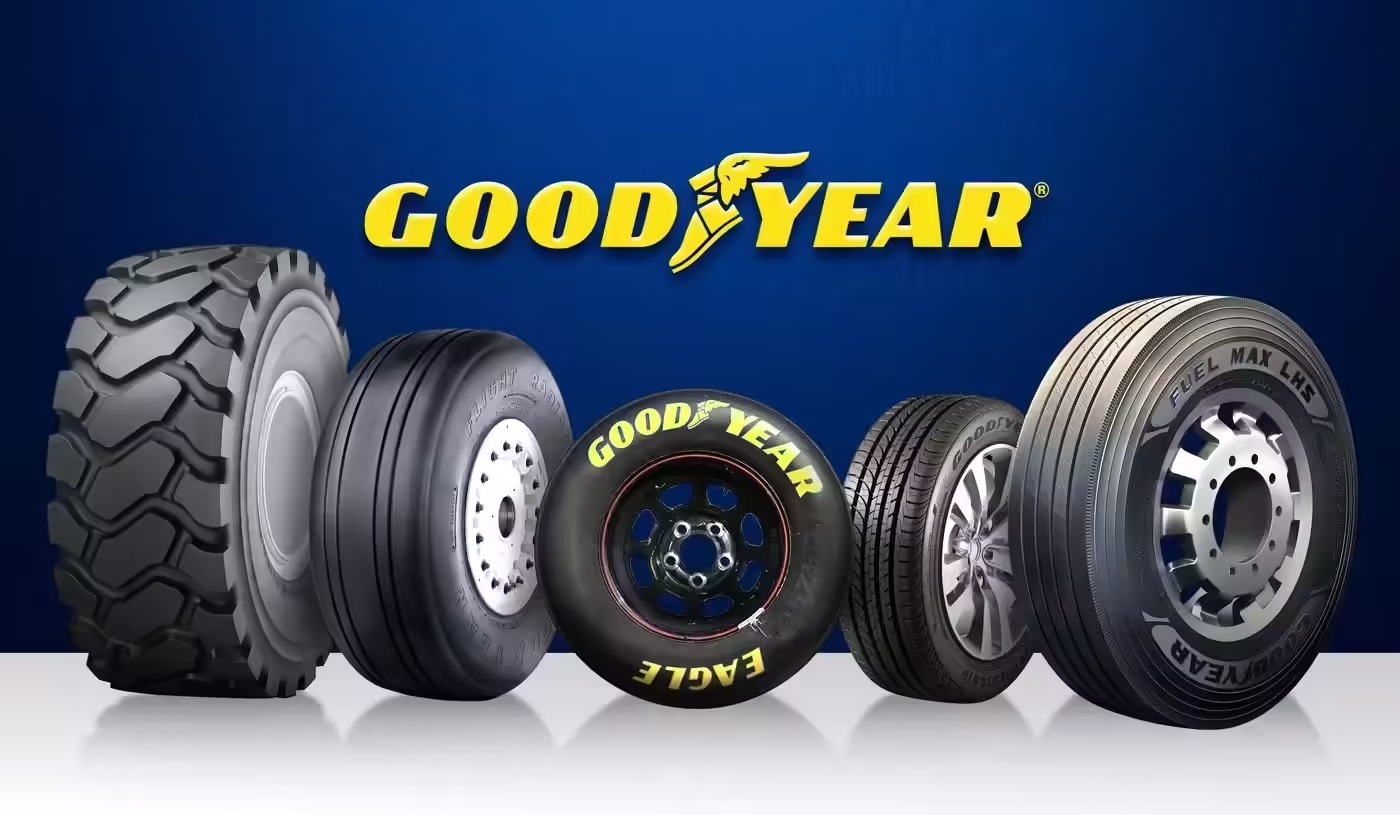
A new product — Ultra Grip farm tyre — launched June 5, 2026. The move signals intent to defend and expand the farm segment franchise. Earlier, the company had launched EfficientGrip Performance SUV in the luxury SUV space, chasing the fast-growing segment with premium positioning. The distribution network spans 4,159 dealers and distributors across India.
3. Business Model: WTF Do They Even Do?
Three buckets of revenue. Farm tyres dominate — these are the tyres that sit on tractors, and the company is the market leader. It supplies every major tractor OEM: Escorts, Mahindra Tractor, Tata Motors. This is a moat made of mud and iron.
Passenger car tyres are the second bucket, smaller and noisier. Commercial truck tyres follow. Together, they made 95% of revenue in FY23. Tubes and flaps — the afterthought — account for 5%.
One hundred percent of sales are domestic. No exports. No cross-border ambition. The company is India-only, prisoner and beneficiary of the domestic tyre cycle.
The business model is simple: buy steel wire and rubber, mould them into shapes, sell to distributors and OEMs. Margins depend on input costs (rubber, steel), capacity utilisation, and dealer negotiation. In FY26, input costs stayed stubborn while volumes didn’t surge. The operating margin of 5.7% is not a fortress. It’s a lean margin business running at lean capacity.
4. Financials Overview
Figures are consolidated, in ₹ crore.
Metric
FY26
FY25
YoY Change
Revenue
2,476
2,608
−5.1%
Operating Profit
141
117
+20.5%
Net Profit
62
55
+12.0%
EPS
₹26.7
₹23.9
+11.7%
The year ended March 31, 2026. Operating profit of ₹141 crore came from revenue of ₹2,476 crore after expenses of ₹2,335 crore. The operating margin is 5.7%. Other income fell sharply to −₹3 crore (labour code revaluation netting off prior gains) from +₹18 crore. Interest expense sat at ₹5 crore. Depreciation consumed ₹49 crore.
Profit before tax landed at ₹83 crore. Tax (26% rate) took ₹22 crore. Net profit: ₹62 crore. EPS: ₹26.7 on 2.31 crore shares. This is the reported, audited number.
Quarterly Snapshot (Q4 FY26):
Revenue in Q4 reached ₹616 crore (vs. ₹607 crore in Q4 FY25). Operating profit: ₹41 crore (6.7% margin). One-time labour code adjustments of ₹198 lakhs hit the quarter, dragging reported net profit to ₹10 crore (vs. ₹21 crore in Q4 FY25). Excluding the exceptional item, the quarter would have carried ₹11.7 crore net profit — a smaller beat but real.
5. Market Expectations & Historical Multiples
This section describes how the market is currently pricing the company and how that compares with its own history and peer group. It is descriptive, not predictive.
Metric
Current
Historical Average (5yr)
Peer Median
P/E
22.2
24.4
22.2
EV/EBITDA
9.29
—
—
ROE
12.6%
14.0%
12.5%
ROCE
17.4%
—
13.8%
The market currently pays 22.2x earnings here, the same as the peer median for the tyre cohort. Goodyear sits at the centre of the band — neither cheap nor dear on earnings alone. The 5-year P/E average sits at 24.4x, so current pricing sits below the long-term historical band. The ROE of 12.6% sits below its own 5-year average of 14%, hinting that capital is working less hard than it used to.
What appears to be priced in: a stable farm segment, low debt, and a reliable dividend. What does not appear to be priced in: margin recovery above 6% operating margin, or any export or premium segment thrust that could lift return on capital. The multiple reflects a company whose margins are pinned and whose returns are pedestrian.