GIC Housing Finance Ltd Q4 FY26: The ₹154 Crore Reality Check Behind the 5.2x Valuation Multiplier
Section 1 — At a Glance
GIC Housing Finance Ltd finished the fiscal year ended March 31, 2026, with an annual revenue of ₹1,082.23 crore, showing a marginal uptick from ₹1,079.15 crore in the previous year. Net profit for the full year settled at ₹154.49 crore, down from ₹160.17 crore in FY25, primarily impacted by a steep rise in other operating expenses which jumped to ₹143.16 crore. The headline numbers indicate a flattening revenue growth trajectory and an annual compression in net profitability.
Investor focus remains divided between structural strengths and operational warning signs. On the positive side, the stock trades at a deep discount of 0.38 times its book value of ₹391, and its Capital Adequacy Ratio has structurally climbed to a safe comfort zone of 34.92%. Asset quality metrics show structural resilience with a Gross NPA contraction down to 3.96% from the highs of earlier quarters. However, a low interest coverage ratio of 1.23, an annual decline in net profit, and historically weak multi-year sales growth continue to keep institutional appetite capped. Earnings visibility is further clouded by volatile provisions and a high cost-to-income profile during growth periods.
Financial leverage acts as a double-edged sword: it amplifies equity returns during macro tailwinds but severely tests capital preservation when interest spreads narrow.
The core question is whether the stock’s low P/E multiple of 5.22 reflects a cyclical bottom or a structural value trap. The upcoming sections dissect this balance sheet structure, operating asset trends, and real cash generation to evaluate the company’s baseline earnings capacity.
Section 2 — Introduction
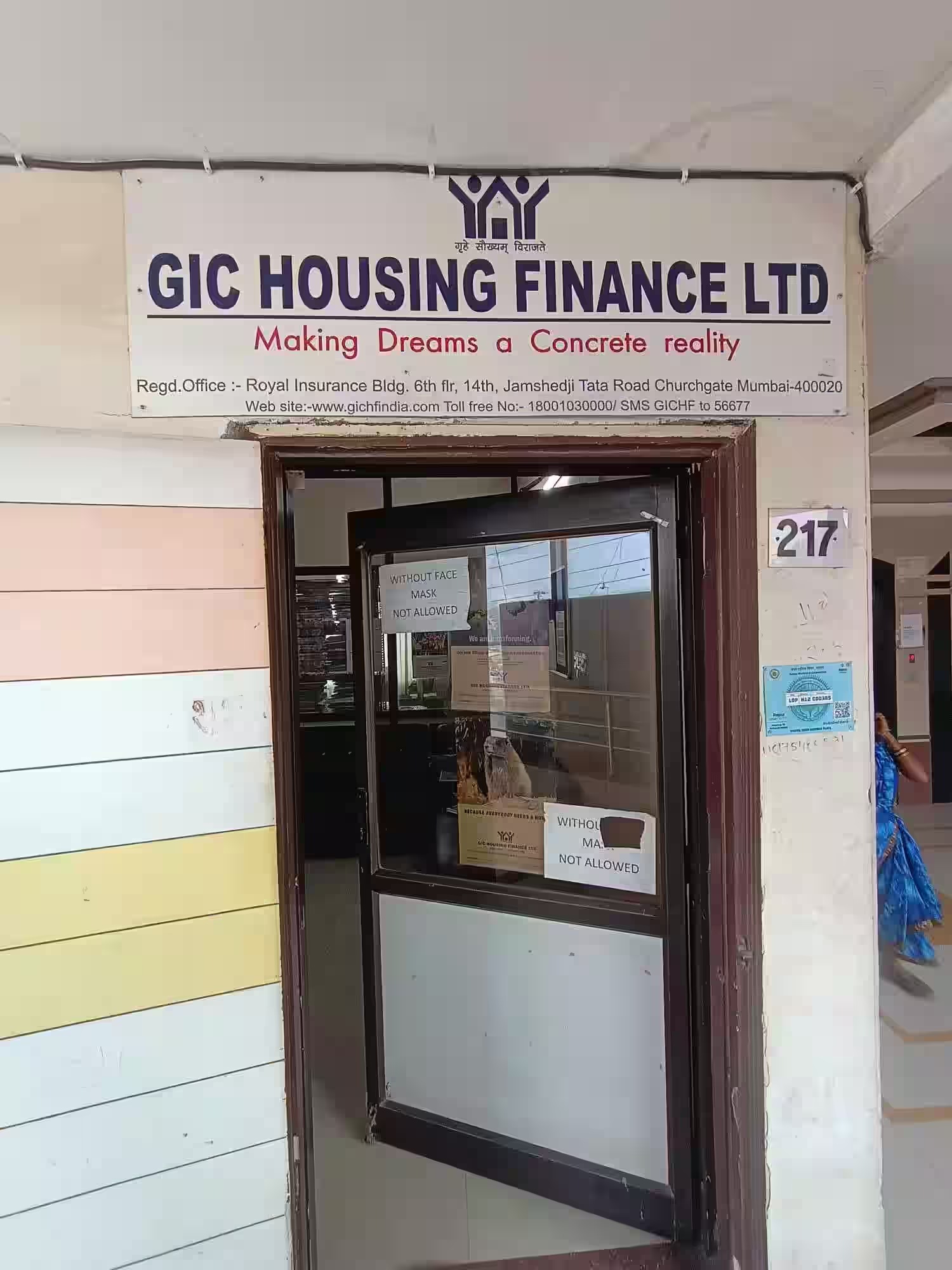
GIC Housing Finance Ltd occupies a specific niche in India’s retail non-banking finance landscape. Established in 1989 under its original banner of GIC Grih Vitta Limited, the company changed to its current name in 1993, backed by public sector insurance promoters including GIC Re, New India Assurance, United India Insurance, National Insurance, and Oriental Insurance. Operating via 72 full branches, 5 satellite offices, and 3 specialized hub offices, the lender focuses on catering to the middle-income retail segment.
The publication of the audited financial results for the fiscal period ending March 31, 2026, brings essential updates for institutional and retail stakeholders alike. With senior leadership changes taking effect—including the resignations of the Chief Compliance Officer and the Company Secretary in mid-May 2026—the organization is undergoing structural transitions alongside its balance sheet optimization. This analysis evaluates the baseline asset quality, interest income resilience, and real valuations behind this public sector-backed housing financier.
Section 3 — Business Model: WTF Do They Even Do?
GIC Housing Finance operates a straightforward balance-sheet model: borrow wholesale capital from public/private commercial banks and the capital markets, and lend it out as retail mortgages. The loan portfolio is heavily tilted toward low-risk individual buyers, with housing loans making up 90% of the aggregate book, while Loans Against Property (LAP) comprise the remaining 10% balance.
The underlying risk profile relies on a steady customer base, with salaried individuals comprising 78% of borrowers, while non-salaried profiles make up the 22% minority. Loan sourcing is driven by its wholly owned subsidiary, GICHFL Financial Services Pvt Ltd, alongside corporate direct selling agents (DSAs) and cross-selling partnerships. To generate capital-light fee income, the company acts as an insurance corporate agent, cross-selling credit-linked life, health, and general insurance products from partners like Kotak Life, Aditya Birla Sun Life, and Tata AIG to insure the underlying mortgage liabilities.
Section 4 — Financials Overview
Figures are consolidated, in ₹ crore.
Quarterly Performance Trend
The quarterly financial tables illustrate a steady operational run-rate with an expansion in sequential bottom-line performance.
Metric
Mar 2026
Mar 2025
YoY (%)
Dec 2025
QoQ (%)
Revenue
272.70
271.67
0.38%
272.63
0.03%
Operating Profit
233.66
241.80
-3.37%
230.51
1.37%
PAT
53.58
35.09
52.69%
43.61
22.86%
EPS (₹)
9.95
6.52
52.61%
8.10
22.84%
Note: All values sourced directly from quarterly financial filings.
The sequential performance shows consistent operating income stabilization, with quarterly sales holding flat at ₹272.70 crore. Net profit expanded to ₹53.58 crore during the March quarter, primarily aided by lower quarterly provisioning costs and optimized tax write-backs, compensating for the high-expense volatility seen in mid-FY26.
A sudden contraction in quarterly tax or credit provisions can create a short-term spike in net earnings that does not reflect structural top-line expansion.
What is Management Promising in the Coming Quarters?
Management commentary points toward a structural revival in disbursements and active credit risk mitigation. Total disbursements grew to ₹1,788.68 crore in FY25, with the growth momentum carrying into FY26 via an average ticket-size expansion to ₹31.50 lakh. To counter historical slippages, management is enforcing a revised “Collection & Recovery Policy 2.0” alongside board-approved One-Time Settlement (OTS) frameworks to systematically reduce sticky residual non-performing blocks.
How effectively can these new recovery mechanisms reduce credit costs if retail real estate