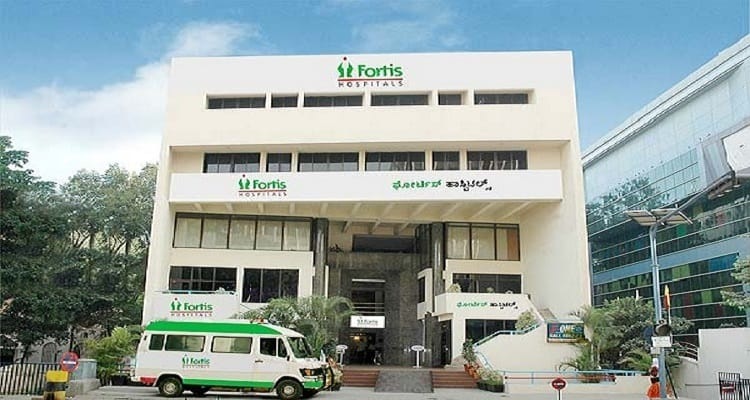
Fortis Healthcare Q4 FY26: A 66% Surge in Robots and 100,000 Outpatient Complaints later, the Price is Sickly High
Section 1 — At a Glance
A structural shift in operational control alongside aggressive capacity expansion has driven Fortis Healthcare Limited (FHL) to cross major top-line milestones in the financial year ended March 31, 2026. Consolidated revenue for FY26 reached ₹9,128 crore, representing a 17.3% year-on-year expansion from ₹7,783 crore in FY25. This growth was structurally anchored by the core hospital business, which expanded 19.1% to ₹7,773 crore, now accounting for 85% of total corporate revenues. Operating efficiency gains, including a 15.2% increase in occupied beds to 3,270 and a 3.4% rise in Average Revenue Per Operating Bed (ARPOB) to ₹2.51 crore per annum, expanded the consolidated operating EBITDA by 31.3% to ₹2,085 crore. Consequently, consolidated margins expanded 240 basis points to 22.8%, driving reported Profit After Tax (PAT) up 31.5% to ₹1,064 crore.
However, this capital-intensive expansion has fundamentally altered the company’s leverage trajectory. Consolidated gross borrowings rose from ₹2,475 crore in FY25 to ₹3,473 crore in FY26, driven by a ₹1,550 crore debenture program executed to increase ownership in its diagnostic subsidiary, Agilus Diagnostics, alongside debt-funded hospital acquisitions in Jalandhar and Bengaluru. This capital deployment raised net debt to ₹2,334 crore, elevating the net debt-to-EBITDA ratio from 0.45x to 1.09x. Furthermore, near-term operational constraints have surfaced via an asset-utilization bottleneck, with network-wide occupancy softening from 69% to 68%. This drop reveals an underlying volatility in high-margin international patient volumes and regulatory drug price caps affecting domestic micro-markets. Capital deployment efficiency remains a core structural headwind, as the broader entity continues to generate a low three-year average Return on Equity (ROE) of 9.88%.
Section 2 — Introduction
Fortis Healthcare Limited has evolved from a fractured, promoter-distressed entity into a highly institutionalized corporate medical network. Established in 1996 with its initial facility commissioned in Mohali in 2001, the company faced severe structural destabilization under its erstwhile promoters, whose leverage distress eroded their equity stake to below 1%. The governance vacuum was decisively filled in November 2018 when IHH Healthcare Berhad—Asia’s largest private healthcare operator—infused approximately ₹4,000 crore to secure a controlling 31.17% stake.
Today, Fortis operates an integrated network consisting of 36 healthcare facilities, managing approximately 6,100 operational beds across India, Nepal, Dubai, and Sri Lanka, alongside a 57% economic stake in Agilus Diagnostics. The group is in the midst of a multi-year brownfield and inorganic expansion cycle aimed at reaching 6,000 owned beds by FY28. This transition involves buying back institutional brands, converting operations and maintenance (O&M) assets into long-term lease structures, and scaling up technical intensity to capture premium pan-India tertiary and quaternary clinical volumes.
Section 3 — Business Model: WTF Do They Even Do?
At its core, Fortis operates a twin-engine medical fee extraction machine: one engine treats the sick in high-end urban beds, while the other charges the worried-well to prick their veins in local collection centers. The hospital segment generates 85% of revenue by positioning multi-specialty regional hubs to capture high-complexity therapeutic procedures. This business is priced via ARPOB (Average Revenue Per Operating Bed), which is essentially a five-star hotel room rate, if the room came with a standard ventilator and a team of cardiac surgeons.
The second engine is Agilus Diagnostics, a retail-heavy pathology network handling over 40.8 million tests annually through 405 laboratories and 4,445 customer touchpoints. Agilus runs on a balanced 52:48 B2C-to-B2B channel split, where profits depend on shifting consumer preferences away from routine blood counts and toward high-margin wellness panels and complex genomic sequencing.
Section 4 — Financials Overview
Figures are consolidated, in ₹ crore.
Headline Performance Metrics
Metric
Latest Quarter (Q4 FY26)
YoY (%)
QoQ (%)
Revenue
2,365
17.8%
4.4%
EBITDA / Operating Profit
531
22.2%
5.1%
PAT
271
44.2%
37.3%
EPS (Reported)
₹3.52
48.5%
37.0%
The final three months of the fiscal year delivered a sharp acceleration in earnings, with quarterly revenue reaching ₹2,365 crore. This line item was supported by a 17% increase in quarterly occupied beds, showing that clinical assets are being utilized more intensively despite overarching occupancy rate changes. Operating profit growth outpaced the top line, with EBITDA printing at ₹531 crore, translating to a quarterly margin of 22.5%. PAT grew 44.2% to ₹271 crore, though this includes a ₹12.5 crore exceptional drag from an associate company impairment.
What is Management Promising in the Coming Quarters?
During the May 2026 analyst conference call, the Chief Financial Officer explicitly guided for a base hospital revenue growth of 15%+ for FY27, stating that any incremental M&A activity will be “over and above” this baseline. On the margin front, the executive team is targeting an additional 150 basis points of EBITDA expansion in FY27, keeping their longer-term roadmap to a 25% standalone hospital margin by FY28 entirely intact. Meanwhile, the diagnostic division is projected to hold steady with