01 — At a Glance
The Niche King That Just Posted Numbers So Wild They Triggered SEBI Queries
- 52-Week High / Low₹26,486 / ₹7,000
- Q3 FY26 Revenue₹2,110 Cr
- Q3 FY26 PAT (Standalone)₹245 Cr
- Quarterly EPS₹308.21
- 9M FY26 PAT₹779 Cr
- Book Value₹2,661
- Price to Book7.76x
- Dividend Yield0.19%
- Debt / Equity0.00x (Debt-Free)
- TTM EPS₹1,038
Auditor’s Opening Note: Force Motors delivered ₹2,110 crore revenue in Q3 FY26 (+13% YoY), ₹245 crore PAT (+91% YoY), 30% ROCE, and a 16% PAT margin. The stock shot up 170% in one year. SEBI noticed. On March 5, 2026, they fired off multiple intimations asking about the Feb 2024 Q3 results and the price movement that followed. Coincidence? Probably. Competence in communication? Definitely not.
02 — Introduction
The Vehicle That Moves India’s Forgotten Millions
Force Motors manufactures light commercial vehicles (LCVs), multi-utility vehicles (MUVs), and the occasional defence contract. Founded in 1958 (formerly Bajaj Tempo), it’s been making the same three-wheeled rickshaws and vans since independence — and somehow, this boring, unglamorous business model has compounded at 23% CAGR in stock price over 10 years.
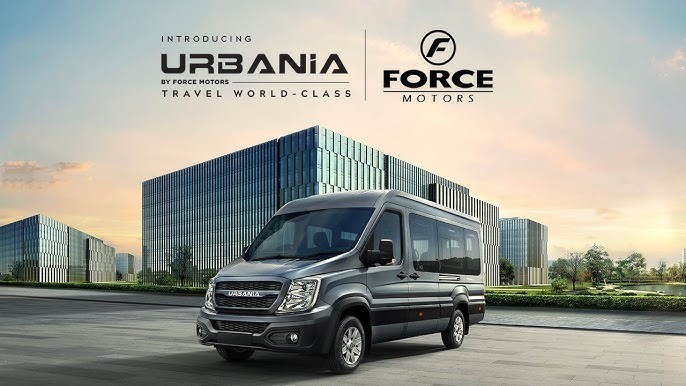
Let’s be clear on what they sell: Traveller vans (school buses, ambulances, delivery vans). Urbania (a premium monocoque van). Trax (a multi-utility flat-bed that caters to safari operators and village sarpanches). Gurkha (the off-roader that India’s defence purchases by the thousand). And now, through a JV with Rolls-Royce Power Systems, Series 1600 MTU diesel engines for global power generation.
Market dominance is not a stretch. Force owns ~70% of the domestic LCV passenger vehicle market. If you’ve ever seen a school bus or ambulance on an Indian road with yellow-and-black colours, odds are it was built by Force Motors. Their closest competitor? Tata Motors, with maybe 15–20% of the segment. The rest is noise.
The company is debt-free, generates ₹971 crore in annual operating cash flow, and maintains 30% ROCE — a figure most large-cap manufacturers would kill for. The stock has returned 152% over three years, 170% over one year, and yet trades at 28.4x P/E. Expensive? On absolute terms, maybe. But for a compounder in a niche oligopoly, the math has worked. Whether it continues is the real question.
Founder’s Legacy (1958 onwards): Shri N.K. Firodia literally invented the three-wheeler Tempo and coined the term “autorickshaw” in 1948. Force Motors was founded to commercialize this vision. Six decades later, the Firodia group (through Jaya Hind Industries) owns 61.6% of Force Motors, commands enterprise value exceeding $4 billion across the group, and still runs the company with founder family members at the helm.
03 — Business Model: What’s the Secret Sauce?
Niche Dominance, Vertical Integration, and a Dash of Defence Orders
Force Motors operates in the most unglamorous of segments and has turned it into a cash-printing machine. The business model is deceptively simple: build vehicles that India’s logistics, education, and healthcare sectors depend on. Rinse. Repeat. Collect cash.
Revenue breakdown: Light Commercial Vehicles (48%), motor vehicle engines (36%), parts & accessories (7%), others (9%). The tractor business — which used to contribute ~3% — was exited in March 2024 because “intense competition prevented scale-up.” Refreshingly honest exit rationale from management.
Vertical integration is extreme. Force owns the stamping dies, the welding bots, the paint lines, the gearbox manufacturing, and engine assembly. When Mercedes-Benz India wanted to source engines for their entire Indian fleet, they outsourced it to Force’s Chennai facility. When BMW India needed cooling modules, Force built a facility in Chakan, Pune. When Rolls-Royce wanted to produce Series 1600 MTU engines for global power generation, Force partnered to build the world’s only such production facility outside Germany.
Competitive moat? Bulletproof. OEM approvals take 3–5 years to obtain. Distribution depth in the school bus and ambulance segment cannot be replicated in under a decade. Cost structure per unit is unbeatable because of vertical integration. Brand recall in the niche is absolute.
LCV School Bus~70%Market Share
Ambulance MarketLeaderPreferred Maker
Defence Orders2,978Units (Mar 2025)
MTU EnginesGlobalOnly Facility Outside Germany
Watch Out: Cyclicality Risk. The LCV segment is tied to logistics demand and educational capex. Government spending on school buses; commercial fleet utilization; rural mobility initiatives — all discretionary, all subject to budget cycles. A prolonged economic slowdown would hit volume hard. It happened during COVID (school closures). It could happen again.
04 — Financials Overview
Q3 FY26: The Numbers That Made SEBI Sit Up
Result type: Quarterly Results | Q3 FY26 EPS: ₹308.21 | Annualised EPS (Q3×4): ₹1,232.84 | TTM EPS: ₹1,038
| Metric (₹ Cr) |
Q3 FY26
Dec 2025 |
Q3 FY25
Dec 2024 |
Q2 FY26
Sep 2025 |
YoY % |
QoQ % |
| Revenue | 2,110 | 1,889 | 2,081 | +11.7% | +1.4% |
| Operating Profit | 374 | 232 | 363 | +61.2% | +3.0% |
| OPM % | 18% | 12% | 17% | +600 bps | +100 bps |
| PAT (Standalone) | 245 | 110 | 141 | +122.7% | +73.8% |
| EPS (₹) | 308.21 | 138.55 | 177.66 | +122.5% | +73.5% |
P/E Recalculated & Annualised: Q3 FY26 EPS ₹308.21 × 4 = ₹1,232.84 annualised EPS. CMP ₹20,650 ÷ ₹1,232.84 = P/E 16.8x on annualised basis. Much lower than the screener’s 28.4x (which uses TTM EPS of ₹1,038). The OPM expansion is breathtaking — 600 basis points year-on-year. This is not operational accident. Management guided for 13–14% OPM; they’re delivering 18% by leveraging volume and product mix.
05 — Valuation: Fair Value Range
Is ₹20,650 a Fair Price or a Momentum Trap?
Join 10,000+ investors who read this every week.