Dwarikesh Sugar Industries Ltd Q4 FY26: Profit Jumps to ₹574.1 Million on Tax Transition, but Structural Cane Shortages and Sticky Debt Coverage Metric Signal Bitter Harvest Ahead
1. At a Glance
The sweet aroma of sugar can easily mask the bitter sting of underlying operational decay. Dwarikesh Sugar Industries Ltd (DSIL) has recently caught the market’s attention, reporting a headline Profit After Tax (PAT) of ₹574.1 million for Q4 FY26, showcasing a notable 23.9% year-on-year growth from ₹463.3 million in Q4 FY25. On the surface, the numbers look like a validation of a successful bio-energy transition.
However, a serious forensic look into the operational and structural matrix reveals severe cracks. The company’s revenue from operations dropped by 7.28% during the same quarter, coming in at ₹4,254.3 million compared to ₹4,588.5 million in the corresponding quarter of the previous year.
Why did profit expand while top-line revenue shrank? The growth was not driven by stellar operational efficiency or massive volumes. Instead, it was primarily due to a transition to the new tax regime, leading to a lower effective tax rate and reduced tax provisions.
The underlying operational core presents a tough reality. Total sugarcane crushing for the full fiscal year decreased by 8% year-on-year, dropping from 262.97 lakh quintals to 243.21 lakh quintals. The company faced massive agronomic headwinds, including an aggressive red rot infestation in Uttar Pradesh, excessive rainfall during critical crop growth phases that stunted yields, and intense localized competition from unorganized jaggery (gur) units that diverted cane away from formal mills.
Furthermore, credit rating agency ICRA has recently maintained a Negative Outlook on the company’s long-term rating of [ICRA]AA-. This reflects sustained pressure on operating margins, driven by high working capital intensity and sub-optimal capacity utilization. Debt coverage indicators have also weakened significantly, with the total debt-to-operating-profit ratio ballooning to 4.5x from 2.2x in the previous fiscal year.
Is the market pricing in a structural turnaround, or is it missing the systemic threats to cash generation? Let us unwrap the numbers.
2. Introduction
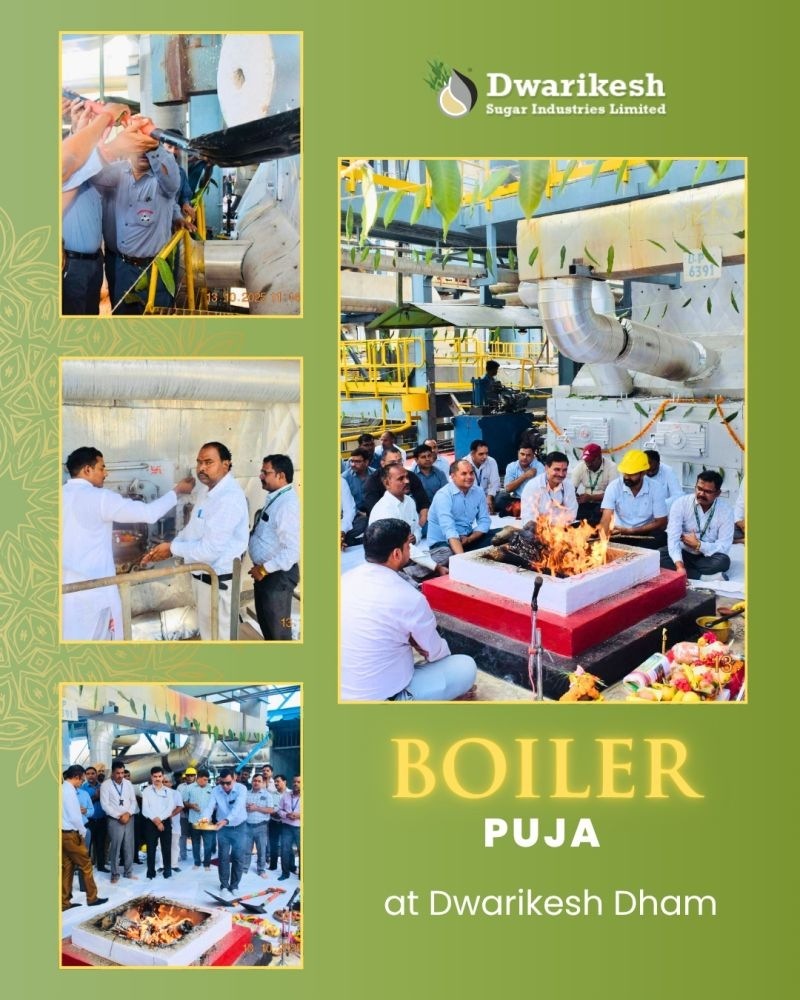
Dwarikesh Sugar Industries Ltd is an integrated sweetener and bio-energy player headquartered in Uttar Pradesh, India’s largest sugar-producing state. Over the last three decades, the company has scaled its operations across three automated manufacturing hubs: Dwarikesh Nagar and Dwarikesh Puram in the Bijnor district, and Dwarikesh Dham in the Bareilly district.
The business model relies on forward integration, linking traditional sugar milling with bagasse-based power co-generation and distillery units that produce ethanol and industrial alcohol. This integrated blueprint was designed to insulate the corporate balance sheet from the structural volatility of the Indian sugar cycle, where government-mandated cane prices often clash with free-market sugar supply dynamics.
The company is currently operating in a challenging macroeconomic environment. The phased withdrawal of the legendary high-yielding Co 0238 sugarcane variety in Uttar Pradesh has created a structural supply gap. Newer replacement varieties are still under stabilization, leaving the entire region vulnerable to yield shocks.
At the same time, the regulatory landscape has introduced unexpected complexity. The central government’s recent interventions—including temporary bans on using sugarcane syrup for ethanol production and stagnant procurement prices for sugarcane juice-derived ethanol—have disrupted production schedules.
Understanding this tension between regulatory mandates and agricultural realities is critical for assessing the company’s true value.
3. Business Model – What Do They Even Do?
At its core, Dwarikesh Sugar operates a commodity conversion pipeline. It aggregates sugarcane from approximately 1.54 lakh farmers across designated command areas in Uttar Pradesh and processes it through three primary processing segments.
Sugar Milling
This is the foundational segment of the company, commanding a combined crushing capacity of 21,500 tonnes of cane per day (TPD). The company refines multiple commercial grades of sugar, including L-31, M-31, and S-30.
Due to the cyclical nature of agricultural yields and the strategic shift toward alternative processing pathways, the sugar segment’s standalone revenue dropped by 30% between FY22 and FY24. This change was heavily influenced by the deliberate diversion of cane inputs into the distillery pipeline.
Distillery and Bio-Energy
The company operates a total distillery capacity of 337.5 kilolitres per day (KLPD), split between its Dwarikesh Nagar (162.5 KLPD) and Dwarikesh Dham (175 KLPD) units. This division converts sugarcane processing intermediates—such as B-heavy molasses and cane syrup—into fuel-grade ethanol and industrial alcohol.
While the distillery segment experienced a revenue growth of 55% between FY22 and FY24 as sales volumes grew, it faced utilization headwinds in FY26. Stagnant ethanol procurement prices set by Oil Marketing Companies (OMCs), combined with lower molasses availability, caused a 29% year-on-year drop in ethanol off-take volumes during Q4 FY26.
Co-generation
The company utilizes bagasse, a fibrous fibrous residue left over after crushing sugarcane, to power its high-pressure boilers. This setup generates a cumulative co-generation capacity of 94 megawatts (MW) across its three units.
Dwarikesh consumes a portion of this energy internally to run its automated mills and distilleries, while exporting a surplus of approximately 54 MW to the state grid via the Uttar Pradesh Power Corporation Limited (UPPCL).
4. Financials Overview
A precise assessment of performance requires looking past seasonal reporting changes. Dwarikesh Sugar Industries Ltd reports its official financial announcements on a Quarterly Results basis.
The table below presents a comparative breakdown of the company’s financial performance across key operating periods, utilizing original reported figures in ₹ million.
Financial Performance Comparison Table
Metric
Latest Quarter (Q4 FY26)
Same Quarter Last Year (YoY)
Previous Quarter (Q3 FY26)
Revenue from Operations
₹ 4,254.3 mn
₹ 4,588.5 mn
₹ 2,540.0 mn
EBITDA
₹ 878.8 mn
₹ 1,072.0 mn
₹ 339.0 mn
PAT
₹ 574.1 mn
₹ 463.3 mn
₹ 155.0 mn
Basic & Diluted EPS
₹ 3.10
₹ 2.50
₹ 0.83
Financial Commentary
The financial data highlights a clear divergence between operational cash generation and net accounting profits. Revenue for Q4 FY26 contracted by 7.28% on a year-on-year basis, driven by lower overall sugarcane crushing and weaker distillery volumes.
Similarly, quarterly operating profit (EBITDA) declined by 18.02% to ₹ 878.8 million, causing the quarterly EBITDA margin to shrink from 23.4% down to 20.7%. This margin contraction was fueled by a ₹30 per quintal increase in the State Advised Price (SAP) of sugarcane mandated by the Uttar Pradesh government, which raised raw material input costs across the board.
Despite these operational pressures, net profit (PAT) managed to rise to ₹574.1 million. This increase was driven by deferred tax adjustments as the company transitioned into the new lower-rate tax bracket.
Historically, management has consistently highlighted its focus on migrating toward a high-margin bio-fuel enterprise model. However, recent corporate filings reveal that external regulatory changes have complicated this strategy.
For instance, a sudden government directive halting the usage of sugar syrup for ethanol production forced the company to alter its production mix mid-season. This change reduced their