Crypto’s second life: not money, but infrastructure
Spotted a factual error — a wrong number, date, or fact? Tell us and we will check the source.
Crypto’s second life: not money, but infrastructure
Born from the wreckage of the 2008 financial crisis, cryptocurrency once promised to replace the global monetary system. Instead, it has evolved into something narrower but arguably more influential: a parallel layer of financial infrastructure operating in the gaps of a fragmenting world economy. Scott Rouse reports
July 30, 2026
Cryptocurrency, the champion’s champion of free market economists, has had a rollercoaster ride since Bitcoin’s inception in 2008. Its explosive growth in 2017 triggered a series of violent market cycles and drew intense regulatory scrutiny, including China’s blanket ban on all crypto-related transactions and mining. Based on a vision of an economic system beyond the reach of governments, immune to inflation, and frictionless across borders, Bitcoin promised to do what centuries of monetary experimentation had struggled to achieve: combine the scarcity of gold with the utility of the US dollar.
That moment seems to have passed. Crypto has not displaced the dollar, which remains embedded in global trade, finance and reserves. Nor has it meaningfully challenged gold, which continues to be a bellwether for perceptions of long-term value. Even in its most ambitious experiments, cryptocurrency has struggled to function as a stable medium of exchange. Volatility, regulatory resistance, and limited real-world adoption have all constrained its monetary ambitions.
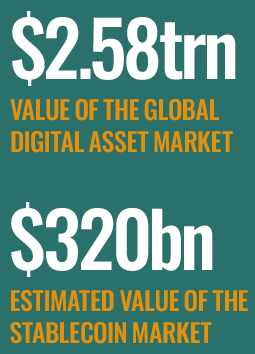
Yet to dismiss crypto as a failure would be to misunderstand what it has become. Far from disappearing, digital assets have evolved into a market worth roughly $2.58trn, increasingly functioning less as money and more as infrastructure. Cryptocurrency, rather than replacing the current system, has emerged as a form of financial infrastructure, most visible not at the centre of the global economy, but at its edges.
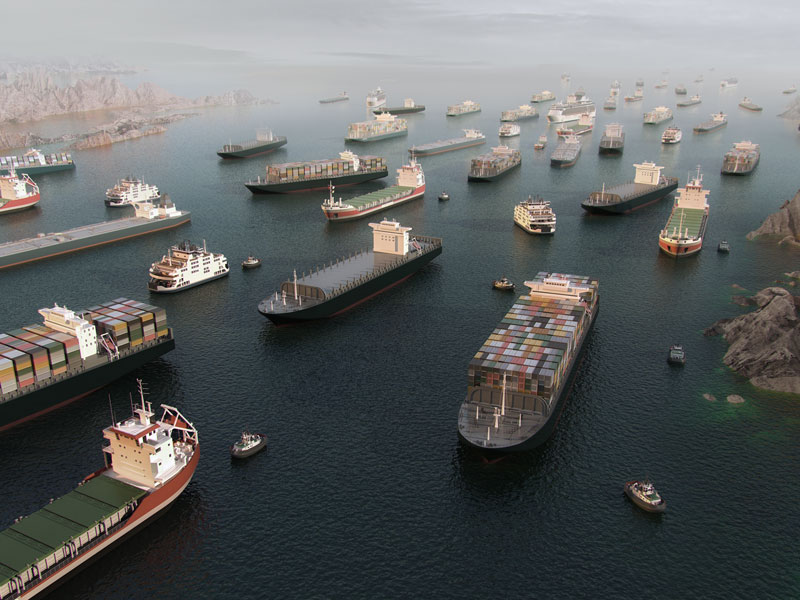
This has become particularly apparent in recent months with the evolving use of cryptocurrencies in geopolitically constrained environments. Amid the continuing fallout of the US–Israel ‘special operation,’ Iranian officials and state-linked industry representatives discussed proposals to collect a $1 per barrel tariff from tankers crossing the Strait of Hormuz, payable in bitcoin.
According to Hamid Hosseini, a spokesperson for Iran’s Oil, Gas and Petrochemical Products Exporters’ Union, “vessels are given a few seconds to pay in bitcoin, ensuring they can’t be traced or confiscated due to sanctions.”
This equates to a $2m fee per tanker transiting the strait and effectively embeds digital assets into one of the world’s most strategically important trade routes. This is not a move based on the adoption of a new financial doctrine. It is far more pragmatic than that. It is a method that serves to bypass the dollar-based system and creates a payment channel that is difficult to monitor or block. The failure of the currency thesis
Following the global financial crash of 2008, the overall sentiment towards banks was one of deep mistrust. It is out of this mistrust that cryptocurrency emerged; it was “a backlash against the failings of the conventional financial system,” writes Hyun Song Shin, economic adviser and head of research at the BIS, in a 2022 op-ed for the Financial Times. Cryptocurrency promised a self-sustaining peer-to-peer system that bypassed banks altogether.
In practice, however, cryptocurrency does use intermediaries: crypto exchanges such as Binance, Coinbase and Kraken. Shin goes on to say that while the banks are regulated, it is often “the founder and a small number of venture capital backers that are in charge” when it comes to the protocols governing cryptocurrency.
If bitcoin were a country, it would rank 23rd in terms of energy use
The jailing of Sam Bankman-Fried and subsequent collapse of his cryptocurrency exchange FTX is perhaps the most high-profile example of what can happen when there is a lack of governance and risk management. After a liquidity crisis at the exchange, it emerged that Bankman-Fried had defrauded customers at FTX to the tune of $8bn, taking their deposits and funnelling them to his trading firm, Alameda Research, for use on investments, loans, political donations and real estate.
The scale of the fraud also highlights the growth of cryptocurrency, something that simply would not be possible without the symbiotic relationship that these centralised intermediaries provide. They are the growth engine for the entire industry, so while a return to the original decentralised vision might be the ideal, it is fraught with problems. As Shin argues, “crypto would not have grown to its current size without these entities channelling funds into the sector.”
Sam Bankman-Fried, Founder of the cryptocurrency exchange, FTX
On a basic level, our financial system relies on money being a medium of exchange, a store of value and a unit of account. There is little evidence that crypto reliably performs any of these functions. As a medium of exchange, transactions are inefficient. Some of these bottlenecks are technical, with bitcoin transactions slow to confirm and transactions sometimes failing during contract execution. Other constraints are economic, with large fluctuations in price affecting real-time payments. This is before accounting for the substantial energy use and transaction costs involved. A 2025 report by Digiconomist found that if bitcoin were a country, it would rank 23rd in terms of energy use, with 204.44TWh (terawatt hours) per year.
As a store of value, cryptocurrency fails because its extreme volatility makes setting price difficult, with bitcoin price exacerbated by its typical four-year boom and bust cycles. In an article for Empirical Economics, Baur and Dimpfl write that “the volatility of Bitcoin prices is extreme and almost 10 times higher than the volatility of major exchange rates.” Finally, as a unit of account cryptocurrency never really escaped the gravitational pull of the dollar. Markets are priced in USD, and there is almost no real-world pricing in cryptocurrency.
Crypto on the edge
If crypto has failed as a basic form of currency, then where does it actually work? The answer lies at the fringes of the financial system. First and foremost, cryptocurrency is a way of getting around sanctions. Iran’s Strait of Hormuz bitcoin toll is a prime example. According to Virginia Pietromarchi in an article for Al Jazeera, “Iran’s crypto ecosystem was valued at more than $7.78bn last year, growing at a faster pace compared with 2024.”
The global financial order is becoming less universal and more regionalised
Its rapid growth in the country among citizens in recent years is due to higher inflation and a fading currency, but as Pietromarchi goes onto say, the IRGC have been prominent users of the in-country chain as well. “Harder to trace and easier to transfer than traditional bank payments, crypto offers a way to sell oil, buy weapons