Confidence Petroleum India Ltd FY26: ₹4,705 Cr Revenue, ₹2.80 EPS, 9% ROCE — The Margin Pressure Play
General information and entertainment, not investment advice. The author is not a SEBI-registered adviser or research analyst. No recommendation, no promised returns. Markets carry risk including loss of capital. Figures may not be current. Consult a registered adviser before acting.
1. At a Glance
FY26 delivered headline growth — consolidated revenue hit ₹4,705 Cr, a 74% jump from FY25’s ₹2,698 Cr — but the party had a gate-crasher: operating margin collapsed to 7.4% from 13.3%.
The company’s net profit barely moved at ₹97 Cr vs ₹105 Cr, and EPS stayed stuck at ₹2.80. The culprit? Low-margin bulk LPG trading now drives 88% of revenue, while higher-value cylinders retreated to 12%.
ROCE sits at 9.2%, down from 13.4% two years ago. The balance sheet carries ₹761 Cr debt — up 6x since FY22. Capex hit ₹275 Cr in FY25 alone, chasing 325 Auto LPG Dispensing Stations and CNG expansion in Bangalore.
The market prices it at 25.2x earnings, well above peers (median 15x), while cash conversion cycles stretched to 59 days from 48.
2. Introduction
Confidence Petroleum didn’t ask permission to pivot. In May 2022, after nearly three decades bottling gas and making cylinders, it opened import terminals and started bulk LPG trading with Middle Eastern suppliers — Iraq chief among them.
By H1 FY26, bulk and merchant trading accounted for ₹1,112 Cr of ₹1,216 Cr quarterly sales. That’s a 88% mix — a business that moves volume but whispers margins.
The company’s stated aim: 25,000 metric tonnes monthly throughput by FY25 (likely extended). It’s built 15 cylinder plants, 68 LPG bottling facilities pan-India, and 295 operational Auto LPG stations with 50 CNG pumps now live in Bangalore under a GAIL franchise. It supplies IOCL, BPCL, HPCL as job-work clients and runs a retail cylinder brand, “GoGas.”
In June 2026, BW LPG — a Norwegian entity that held 8.5% — divested. The rating agency Acuité flagged income tax raids in October 2025 targeting alleged unlicensed LPG storage and compliance breaches, but no demand notice has arrived.
The auditors issued a modified opinion on FY26 accounts, and a director resigned in June 2026.
3. Business Model: WTF Do They Even Do?
Strip away the trading volumes and three businesses live here.
LPG Division (88% of revenue, H1 FY26): Bottling, bulk import & sales, and auto-dispensing. The company imports propane and butane primarily from Iraq, blends to order, and sells to refineries, JSW Steel, Patanjali, Parle, and pizza chains (KFC, Burger King). The Auto LPG side runs 295 working stations branded GoGas across 22 states, each a low-margin fuel pump.
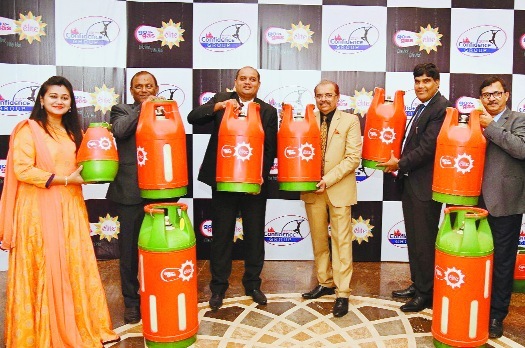
Cylinders are manufactured at 15 plants; some serve job-work (BPCL bottling contracts), others feed the GoGas retail brand (2 kg to 425 kg cylinders through 2,500+ dealers).
Cylinder Division (12% of revenue, H1 FY26): Manufacturing and retail. 15 units churn out 1.2–2.3 million units annually (wildly volatile, per historical data). Subsidiary Silversky Exim is building a Nagpur facility for Type-4 carbon-composite cylinders (green hydrogen, CNG, nitrogen) — 70% lighter, 3x capacity. It’s unproven, capex-hungry, and targets a space (alternative fuels) that doesn’t yet exist at scale.
CNG Retail (new, early loss-making): 50 stations operational in Bangalore; 100 total planned with GAIL. The company operates on a franchise model, paying gas tariffs to GAIL. New capex, new losses, unproven unit economics. The rating agency called this “initial lower profitability.”
The model is spread thin — old-line LPG assets mixed with high-capex expansion plays (Type-4 cylinders, CNG) and a trading business that’s cannibalizing returns. Trading moves the needle on revenue but not on rupees.
4. Financials Overview
Figures are consolidated, in ₹ crore.
Metric
Latest Year (FY26)
YoY Change
FY25
Revenue
4,705
+74.3%
2,698
EBITDA
347
-3.3%
359
PAT
97
-7.7%
105
EPS
2.80
-15.7%
3.32
What Happened
Revenue exploded on bulk LPG trading volume. But EBITDA fell ₹12 Cr despite sales jumping ₹2,007 Cr. Operating margin compressed to 7.4% from 13.3% — the mix shift did the damage.
Interest cost climbed ₹10 Cr (from ₹74 Cr to ₹84 Cr), dragging down profit before tax from ₹140 Cr to ₹125 Cr. Net profit fell ₹8 Cr to ₹97 Cr, and EPS dropped 15.7% despite shares outstanding rising only slightly (33.2 Cr at year-end).
H1 FY26 revenue was ₹2,095 Cr (vs ₹1,524 Cr in H1 FY25, +37% YoY). The quarterly pattern shows ₹1,394 Cr in Q4, ₹1,216 Cr in H1’s first quarter — a company riding a wave of trading volumes.
5. Market Expectations & Historical Multiples
This section describes how the market is currently pricing the company and how that compares with its own history and peer group. It is descriptive, not predictive.