At a Glance – The Strategic Pivot to a Multi-Billion Dollar Engine
Concord Control Systems is no longer just a “parts supplier” to the Indian Railways. If you are still looking at them as a company that just makes fans and battery chargers, you are missing the forest for the trees. The numbers from the latest FY26 consolidated results scream a different story: Revenue is up 69% YoY, hitting ₹210.47 crore (₹2,104.7 million), while Net Profit has surged by a massive 88% to reach ₹42.65 crore (₹426.5 million). This is a company that has successfully transitioned into a high-stakes technology platform.
The management has been busy building what they call the “Intelligence Layer” of modern railways. With the acquisition of Advanced Rail Controls (now merged) and a controlling stake in Fusion Electronics, Concord has grabbed the “brain” of the locomotive. They are now playing in the Kavach 4.0 arena—the high-margin, life-critical safety system that the Indian government is obsessing over. The order book has exploded to ₹697 crore, a 228% YoY increase, providing a visibility of 3.3x their current revenue.
But it isn’t all sunshine and high-speed rails. A deeper look at the balance sheet reveals a “heavy haul” of Trade Receivables, which have skyrocketed to ₹121.19 crore. Working capital is being stretched thin as they scale, and the Cash Conversion Cycle has bloated significantly. The company is betting the house on massive government tenders for Kavach and Hydrogen propulsion. If these tenders face bureaucratic delays or if the working capital stress hits a breaking point, the momentum could stall. They are operating in a “golden period,” but even the best trains can derail if the tracks of liquidity aren’t maintained.
Introduction
Concord Control Systems is positioning itself as the central nervous system of the Indian Railways. Established in 2011, the company has spent over a decade moving up the value chain—from simple electromechanical products to complex, software-led diagnostic and control systems.
The current environment for railway infrastructure in India is unprecedented. With the push for Mission 3000 MT (annual freight loading) and the rapid rollout of Kavach (Automatic Train Protection), Concord finds itself in the right place at the right time. The company operates through four strategic pillars: Green Sustainable Mobility, Smart Locomotives, Railway Safety, and AI-Driven Diagnostics.
What makes this story unique is their full-stack approach. They aren’t just selling a black box; they are designing the hardware, writing the IP (Intellectual Property), and securing 15-year maintenance contracts. This creates a “moat” that simple manufacturing companies can’t replicate.
Business Model – WTF Do They Even Do?
To put it simply, Concord makes trains smarter, safer, and cleaner. They have moved away from being a “hardware vendor” to becoming a Solution Provider. Think of them as the “Intel Inside” for Indian locomotives.
The Four Pillars of the “Railway Brain”
- Safety (The Instinct): They are one of the few players with Kavach 4.0 technical prototype clearance. This is the SIL-4 certified system that prevents collisions.
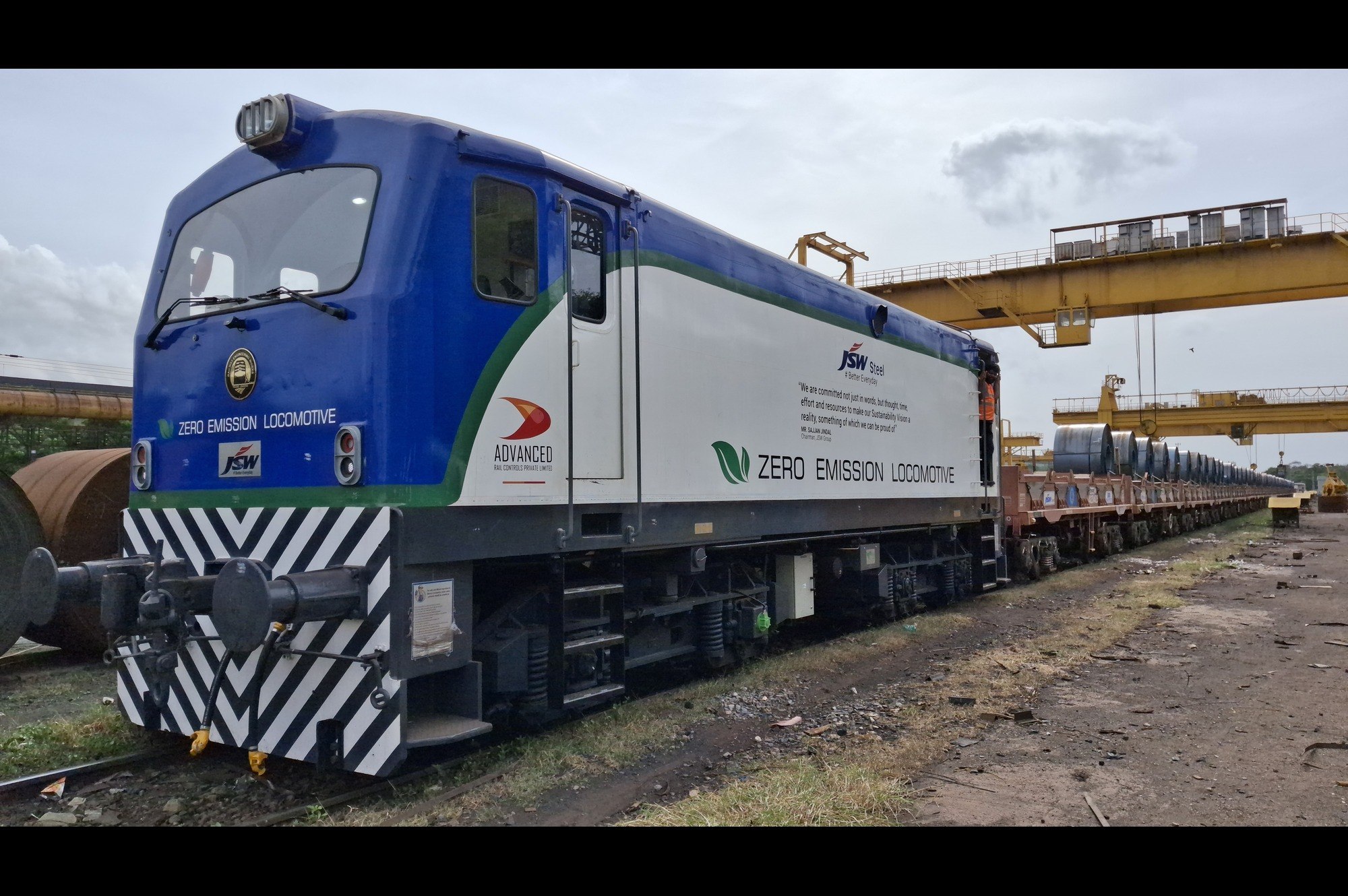
- Propulsion (The Muscle): They are retrofitting old, “end-of-life” diesel locomotives and turning them into Zero-Emission battery-powered units. It’s like taking a 20-year-old truck and giving it a Tesla engine.
- Intelligence (The Thinking): Their DPWCS (Distributed Power Wireless Control System) allows one driver to control multiple locomotives in a 2km long train (The “Super Anaconda”).
- Diagnostics (The Senses): Systems like WILD (Wheel Impact Load Detector) tell the station master if a train wheel is about to break before it actually does.
Financial Wisdom: A business model that shifts from one-time sales to AMC (Annual Maintenance Contracts) and IP Licensing is a gift that keeps on giving. High upfront engineering costs are replaced by long-term, high-margin annuity income.
Financials Overview
The consolidated results for FY26 (ended March 31, 2026) show a company in a massive growth phase. Note that since these are Full Year Results, we use the actual EPS without annualization.
Consolidated Financial Performance (₹ in Crore)
| Particulars | Mar 2026 (Audited) | Mar 2025 (Audited) | YoY Change (%) |
| Revenue | 210.47 | 124.46 | +69.1% |
| EBITDA | 62.06 | 29.66 | +109.2% |
| PAT | 42.65 | 22.65 | +88.3% |
| EPS (₹) | 42.00 | 22.44 | +87.2% |
Author’s Note on Management’s “Walk the Talk”:
In previous concalls, management aimed for a 40–50% CAGR. Looking at the 69% Revenue growth and 109% EBITDA growth, they haven’t just walked the talk; they’ve sprinted it. The EBITDA margin expanded from 23.8% to 29.5%, proving that their “tech-led” shift is actually translating into better pricing power.
Valuation Discussion – Fair Value Range
Valuing a high-growth SME-migrating-to-Mainboard company requires looking at both its current earnings and its massive order book.
1. P/E Method
The current TTM EPS is ₹42.00. The industry P/E for capital goods/railway tech is roughly 45x to 55x for high-growth players.
- Lower Band (45x): $42.00 \times 45 = ₹1,890$
- Upper Band (60x): $42.00 \times 60 = ₹2,520$
2. EV/EBITDA Method
With a consolidated EBITDA of ₹62.06 crore and an Enterprise Value (EV) of approximately ₹2,768 crore, the company trades at an EV/EBITDA of ~44.6x. While this looks expensive, the projected EBITDA growth justifies a premium.
3. DCF (Discounted Cash Flow)
Given the ₹697 crore order book and management’s aspiration to grow 5x in 3 years, we assume a high growth rate for the next 3 years followed by a terminal growth of 5%.
- Estimated Fair Value Range: ₹2,150 – ₹2,450.
Disclaimer: This fair value range is for educational purposes only and is not investment advice.
What’s Cooking – News, Triggers, Drama
The drama in Concord isn’t about boardroom battles; it’s about the Kavach land grab.
- The Kavach 4.0 Milestone: They finally got the RDSO technical prototype clearance. This was the “make or break” moment. They are now officially eligible to bid for the tens of thousands of crores in upcoming tenders.
- The “Super Anaconda” Opportunity: The DPWCS business for heavy-haul freight is estimated to be a ₹2,500 crore opportunity over the next 5-6 years. Concord is currently the alpha in this niche.
- Mainboard Migration: Management has explicitly stated they are “getting ready for the main board.” This usually triggers a re-rating as institutional investors (who often can’t buy SME stocks) finally get to join the party.
- Fusion Acquisition: They bought 80% of Fusion Electronics, India’s largest flex PCB manufacturer. They are hiding the acquisition price for two years like a state secret, but the goal is clear: Vertical Integration.
Does the massive jump in the order book (from ₹212 cr to ₹697 cr) make you wonder if they can actually execute it all on time?
Balance Sheet – The Weight of the Cargo
The balance sheet has expanded significantly, but it’s becoming a bit “heavy.”
Latest Consolidated Balance Sheet (₹ in Crore)
| Items | Mar 2026 (Latest) | Mar 2025 | Mar 2024 |
| Total Assets | 315.71 | 135.99 | 60.23 |
| Net Worth | 209.29 | 119.18 | 46.19 |
| Borrowings | 53.99 | 0.34 | 2.70 |
| Other Liabilities | 52.43 | 16.47 | 11.34 |
| Total Liabilities | 315.71 | 135.99 | 60.23 |
- Borrowings went from almost zero to ₹54 crore. Scaling isn’t free, and the debt-free tag is officially gone.
- Net Worth nearly doubled, thanks to a mix of massive profit retention and some share allotments.
- Inventories and Receivables are the elephants in the room. Trade Receivables at ₹121 crore (on a ₹210 crore revenue) is a red flag for any auditor.
Cash Flow – Sab Number Game Hai
This is where the story gets gritty. While the P&L looks like a Ferrari, the Cash Flow is a bit of a bumpy ride.
Cash Flow Table (₹ in Crore)
| Year | Operating Cash Flow (CFO) | Investing Cash Flow | Financing Cash Flow |
| Mar 2026 | -55.35 | -44.66 | 103.98 |
| Mar 2025 | -6.97 | -14.33 | 21.47 |
| Mar 2024 | 9.53 | -5.19 | -4.18 |
The Operating Cash Flow is negative ₹55 crore. Why? Because the money is stuck in Trade Receivables (₹84 crore increase) and Inventory (₹51 crore increase). The company is surviving on Financing Cash Flow (₹103 crore)—meaning they are using debt and fresh capital to fund their growth. In finance, we call this “burning cash to scale.”
Ratios – Sexy or Stressy?
The ratios tell a story of high efficiency but mounting working capital pressure.
| Ratio | Mar 2026 | Mar 2025 | Commentary |
| ROE (%) | 25.8% | 25.8% | Consistently high, very impressive. |
| ROCE (%) | 30.6% | 37.0% | Dropped slightly due to new debt, but still elite. |
| Debt to Equity | 0.26 | 0.00 | From zero-debt to manageable leverage. |
| Debtor Days | 210 | 110 | This is the “Stressy” part. Nearly 7 months to collect cash! |
| Working Cap Days | 228 | 194 | The business is becoming more cash-hungry. |
Financial Wisdom: High ROCE is the “Sexy” part that attracts investors, but high Debtor Days is the “Stressy” part that keeps CFOs awake at night.
P&L Breakdown – Show Me the Money
| Year | Revenue (₹ Cr) | EBITDA (₹ Cr) | PAT (₹ Cr) |
| Mar 2026 | 210.47 | 62.06 | 42.65 |
| Mar 2025 | 124.46 | 29.66 | 22.65 |
| Mar 2024 | 65.52 | 17.18 | 12.81 |
The P&L is essentially a ladder. Every year, they are doubling their bottom line. The Operating Profit Margin (OPM) at 29% is significantly higher than your average railway component maker (who usually languishes at 12-15%). This is the “Tech Premium” at work.
Peer Comparison – The Railway League
| Company | Revenue (₹ Cr) | PAT (₹ Cr) | P/E Ratio |
| Concord Control | 210 | 42 | 64.4 |
| Kaynes Tech | 1,242 | 91 | 61.1 |
| Syrma SGS | 1,465 | 119 | 61.7 |
| Jyoti CNC | 575 | 88 | 46.3 |
Concord is the “Smallest Big Player” here. While Kaynes and Syrma are EMS giants, Concord is a niche specialist. Its P/E is slightly higher than peers, suggesting the market is already pricing in the Kavach explosion.
Miscellaneous – Shareholding and Promoters
- Promoters: Gaurav Lath and Nitin Jain hold the reins with a combined ~65.6% stake. They are the original visionaries.
- Institutional Buzz: Mukul Agrawal and Ashish Kacholia—the big whales of the Indian small-cap space—are sitting comfortably on the shareholding list. When the “Smart Money” is in, the retail crowd usually follows.
- The Roast: Promoters decreased their holding by 1.23% last quarter. While they claim it’s for liquidity/strategic reasons, investors always prefer to see promoters “buying the dip” rather than trimming the top.
Corporate Governance – Angels or Devils?
The audit report for FY26 is clean, but there was a “calculation error” in the initial consolidated results that required a revised filing. While the company fixed it quickly, it’s a reminder that this is still a growing SME-grade organization maturing into a large-cap structure.
The appointment of three new independent directors suggests they are cleaning up the board for the Mainboard migration. No pledges on shares and an Interest Coverage Ratio of 27.8 mean they are far from any financial distress.
Industry Roast and Macro Context
The Indian Railway sector is currently like a high-speed Vande Bharat train with no brakes. The government wants to electrify everything, automate safety, and move 3,000 million tonnes of freight.
However, the industry is notorious for “L1 bidding” (lowest bidder wins). If the competition for Kavach gets too fierce, those juicy 30% margins could evaporate. Plus, the “Client” is the Indian Government—notorious for long payment cycles, which explains why Concord’s Debtor Days are hitting the roof. You are essentially lending money to the government for free while waiting to get paid.
EduInvesting Verdict – The Final Signal
Concord Control Systems is at a massive inflection point. They have the tech, the approvals, and the order book. The merger with Advanced Rail Controls has given them a formidable R&D edge (100+ engineers).
SWOT Analysis:
- Strengths: RDSO approved for Kavach 4.0; First-mover in Zero-emission retrofitting; 3.3x revenue order visibility.
- Weaknesses: Massive working capital cycle (210 debtor days); Negative operating cash flow; Reliance on government spending.
- Opportunities: DPWCS “Super Anaconda” market (₹2,500 cr); Mainboard migration; Global exports of propulsion tech.
- Threats: Delays in Kavach tender rollouts; Increased competition from larger players like Siemens or Alstom in the safety segment.
The company is no longer a small-time fan maker; it’s a serious contender in the high-tech railway safety space. If they can manage their cash flows as well as they manage their engineering, the journey ahead looks interesting.
Do you think a company can sustain a 30% margin once the “big boys” of global engineering enter the Kavach tenders?
Fair Value Range Disclaimer:
This fair value range and analysis are for educational purposes only. Investing in stocks involves significant risk. Always consult with a SEBI-registered investment advisor before making any financial decisions.