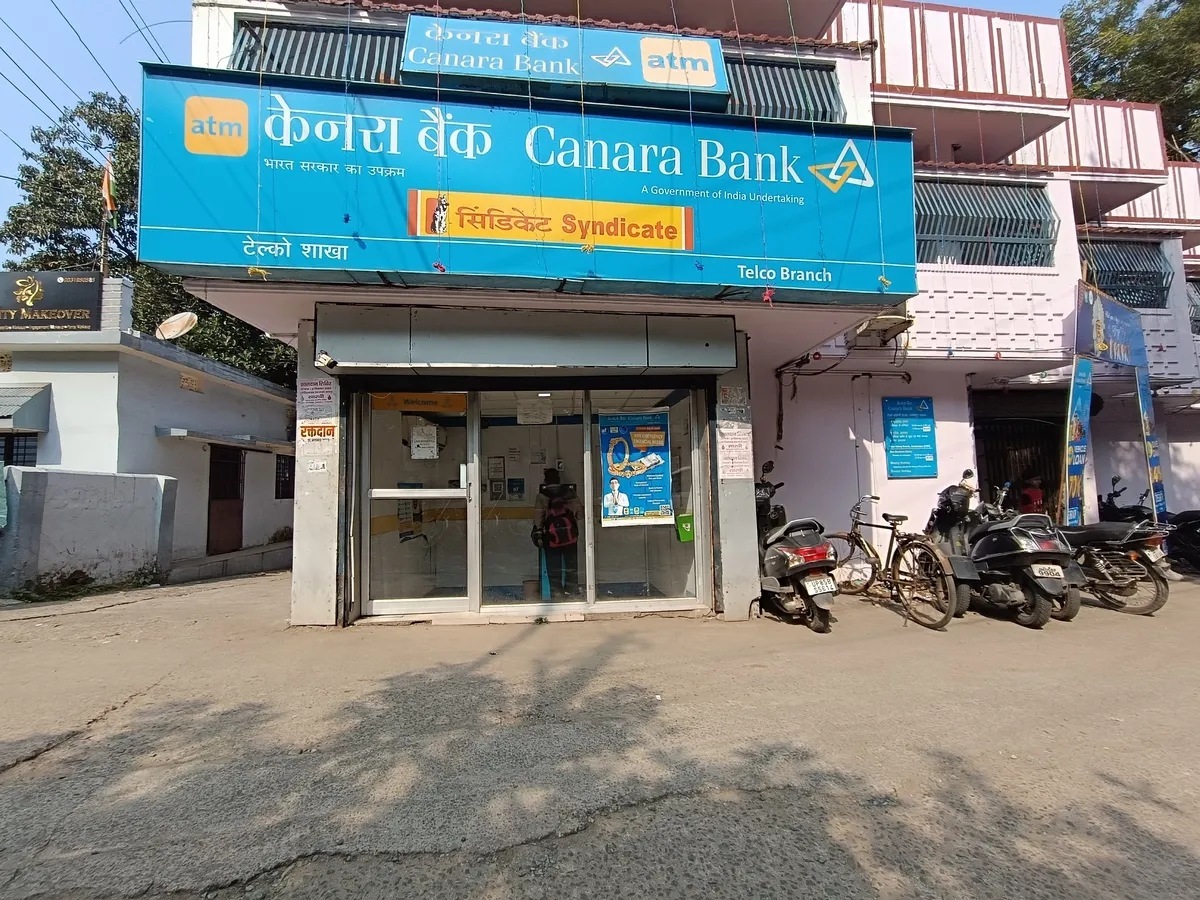
Canara Bank Q4 FY26: A Large Quiet Restructure, Not a Rally
General information and entertainment, not investment advice. The author is not a SEBI-registered adviser or research analyst. No recommendation, no promised returns. Markets carry risk including loss of capital. Figures may not be current. Consult a registered adviser before acting.
1. At a Glance
A ₹1,20,368 Cr bank—fourth largest by public sector title—closed FY26 with net profit ₹17,873 Cr, a +2% stumble that masks internal tilting. Q4 alone reported ₹4,574 Cr profit, down 9.78% QoQ, a dip management attributed to one-time gains in the prior quarter (₹1,930 Cr from subsidiaries’ dilution) and MTM bond losses (₹800 Cr). Strip those out and operating profit was mundane. The real story: a portfolio swing. Retail-Agri-MSME (RAM) now ₹7.30 lakh Cr (59% of advances), gold loans doubled to ₹2.45 lakh Cr, and the bank is chasing a 60-40 RAM-corporate split while guiding conservative 11-12% credit growth. That’s not a sprint—it’s a recalibration with guardrails.
The worry isn’t profits; it’s the twin bind of shrinking Net Interest Margin (down to 2.51% for FY, versus 2.60% prior year) and modest asset quality (GNPA 1.84%), both manageable but tightening.
2. Introduction
Canara Bank traces to 1906—a span of 120 years—and absorbed Syndicate Bank’s ₹8+ Cr branch network in April 2020, catapulting itself into scale. The Government of India holds 62.93%, providing the implicit safety net typical of a systemically important public sector bank (PSB).
In January 2026, a leadership transition: MD & CEO K. Satyanarayana Raju stepped off after superannuation, replaced by Hardeep Singh Ahluwalia. By June 1, Brajesh Kumar Singh took charge until April 2029, signalling continuity in strategy rather than a hard reset. The bank is mid-restructure—not fire-sale, not crisis—just intentional reshaping.
FY26 global business (deposits + advances) stood at ₹28.0 lakh Cr, +12.11% YoY. Deposits: ₹15.68 lakh Cr (+9.71%). Advances: ₹12.37 lakh Cr (+15.30%). The growth rates are in line with peer guidance but the mix is the tell: retail and MSME grew faster than corporate, a deliberate choice to anchor margin and credit risk differently.
3. Business Model: WTF Do They Even Do?
A bank. Boring answer: Canara takes deposits, lends to corporates, small businesses, farmers, and retail customers, earns the spread, recovers when stress happens. Less boring answer: the mix is tipping.
Corporate book ₹4,88,285 Cr (41% of total advances). The top industries: NBFCs (37%), Infrastructure (33%), Real Estate (6%), Textile (5%), Iron & Steel (4%), Engineering (4%), Food Processing (3%), Petroleum/Coal (3%), Construction (2%), Chemicals (3%). It’s a sensible diversification—no single sector is a blowup risk, though the NBFC concentration (₹1.8+ Cr) is a crowded trade.
Gold loans, the growth hijack: ₹2.45 lakh Cr outstanding, split Agricultural (₹1.54 lakh Cr) and Non-agricultural (₹91,000 Cr). Gold moved from a nice-to-have sideline to ~20% of the book. Management cited “traditional… branches… in South India… on asset side, we have this advantage of gold loans.” Translation: branch network + regional customer habit = a structural edge. Also translation: concentrate and scale it. After a compliance issue (fraud-related) in prior disclosures, the bank now reappraises in-quarter disbursals next quarter, uses panel valuers, insures the collateral, and has 24×7 security. Risk controls, at least on paper, tightened.
Deposits: ₹15.68 lakh Cr. CASA (current account + savings)—the low-cost stickiness—stands at 27.11% as of Dec 2025, a touch below peer median (30%+). Not a red flag; a perpetual nag. Retail term deposits (58% of domestic term deposits) are cheaper than bulk deposits but slower to grow. The bank has been hiking term deposit rates to shift bulk depositors into retail term products, a documented tactic in the May concall.
Geographical: 93% domestic, 7% overseas. Branch network: 10,066 branches (32% rural, 30% semi-urban, 19% urban, 19% metro), 7,048 ATMs, 12,000 BC points. Four international branches (New York, London, Dubai, Gift City).
Subsidiaries and associates post-IPOs: Canara HSBC Life (now 36.5% associate), Canara Robeco AMC (now 38% associate), CanFin Homes (~30%), Canara Bank Securities (100%), Canbank Factors (70%). The October 2025 dilutions of HSBC Life and Robeco AMC yielded ₹1,930 Cr (net of ₹76 Cr IPO costs), a one-time source of quarterly juice that won’t repeat.
4. Financials Overview
Figures are consolidated, in ₹ crore.
Metric
FY26
FY25
YoY Change
Revenue
126,371
121,601
+3.92%
Interest Income
89,138
82,681
+7.78%
Other Income
26,712
31,057
-13.98%
Net Profit
17,873
17,540
+1.90%
EPS (₹)
19.70
19.34
+1.86%
Metric
Q4 FY26
Q3 FY26
Q4 FY25
Revenue
31,839
32,072
31,496
Net Profit
4,574
4,896
5,111
EPS (₹)
5.04
5.35
5.59
Result type: Annual + Quarterly; Basis: Consolidated; Unit: ₹ Cr; Latest period: Mar 2026
Interest income growth (7.78%) lagged revenue growth because yields on advances compressed. At the same time, deposit costs rose faster than lending rates repriced downward—the classic NIM squeeze in a falling-rate environment. Full-year NIM: 2.51%. Q4 NIM: 2.54% (vs 2.50% in Q3 FY26).
Other income fell 14% because FY25 carried the ₹1,930 Cr IPO gain plus treasury MTM reversals. Strip that out and core non-interest income (PSLC sales, fee income, recovery from written-offs) is steady near ₹3,000 Cr per quarter, with management expecting continuation.
Operating profit (PPOP) grew only 5.19% despite credit growth at 15.30%, a sign that margin compression ate efficiency gains.
Concall insight (May 2026): Management expects NIM to “hover around 2.5 to 2.6” in FY27, implying minimal relief. The levers cited: avoiding “low-yield advances,” deposit repricing to shift bulk to retail, and PSLC income (expected ~₹3,000 Cr). If margins don’t expand but credit grows 11-12%, the profit engine is tied to credit cost (lower slippages/provisions) and operating leverage (not visible yet).
5. Market Expectations & Historical Multiples
This section describes how the market is currently pricing the company and