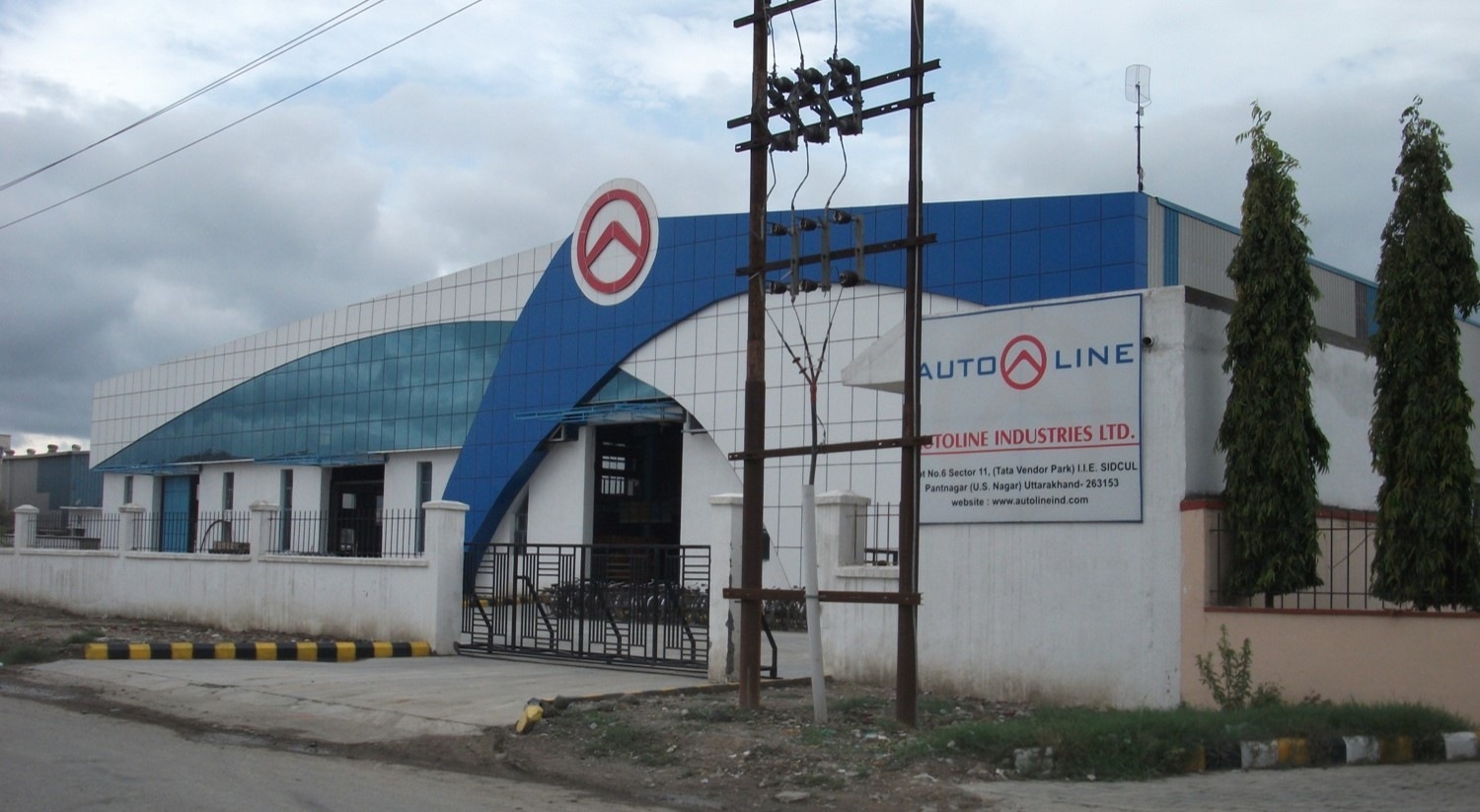
Autoline Industries Ltd Mar 2026 : Profit Explodes 112% as Monetsation Play Eraser-Splices a Leveraged Past
Section 1 — At a Glance
Autoline Industries has delivered an explosive top-and-bottom-line expansion for the fiscal year ended March 31, 2026, catching major market attention even as structural leverage continues to linger on its books. Headline consolidated revenue from operations for FY26 grew 25.13% year-on-year to ₹824.05 crore, up from ₹658.55 crore in the previous fiscal year. This top-line momentum was substantially reinforced by a spectacular 112.59% surge in net profit, which shot up to ₹38.50 crore from ₹18.11 crore in FY25. While operational efficiency improvements played a foundational role, the net earnings trajectory was amplified by a non-recurring exceptional gain of ₹6.28 crore stemming from the absolute monetization of its subsidiary, Autoline Industrial Parks Limited (AIPL).
The company’s performance has split investor consensus into two distinct camps. On one side, optimists are cheering the aggressive volume ramp-up across major automotive Original Equipment Manufacturers (OEMs) like Tata Motors, Mahindra & Mahindra, and Ashok Leyland, alongside the successful commissioning of an Industry 4.0 compliant plant at Sanand. On the flip side, skeptics are deeply focused on Autoline’s highly leveraged balance sheet, where consolidated borrowings expanded to ₹324.54 crore by March 2026, restricting its internal interest coverage buffer. Short-term fluctuations in raw material steel pricing continue to remain a major operational risk. Sudden windfalls from asset sales can temporarily beautify an income statement, but long-term equity survival requires core operating cash generation to outpace debt service obligations. The company now heads into the upcoming fiscal aiming for an ambitious structural transformation.
Section 2 — Introduction
Autoline Industries Limited has transitioned from its origins as a small local engineering partnership formed back in 1995 into an integrated auto-ancillary provider specializing in automotive sheet metal stampings, design prototyping, and assemblies. Headquartered in the manufacturing hub of Pune, Maharashtra, the enterprise today spans six specialized production facilities distributed across key domestic auto clusters, including Chakan, Sanand, Pantnagar, and Hosur.
The auto-component sector in India is experiencing a synchronized technology pivot driven by premiumization, strict regulatory safety frameworks, and systemic localization mandates. This financial review is catalyzed by Autoline’s latest full-year earnings disclosure, a newly initiated corporate restructuring involving the amalgamation of its engineering software arm, and a pivotal cash infusion from non-core asset sales. The primary objective is to slice through the exceptional gains, evaluate whether the underlying operational engine can sustainably power the business, and gauge if its balance sheet debt is manageable.
Section 3 — Business Model: WTF Do They Even Do?
Autoline behaves as a critical heavy-fabrication skeletal builder for massive automotive companies. It takes raw hot-rolled and cold-rolled steel sheets and processes them through massive press lines, robotic welding stations, and specialized tool rooms to supply over 3,000 distinct structural components. If an OEM is building a passenger commercial truck or an SUV, Autoline is likely fabricating the Body-in-White (BIW) panels, cross-car beams, complete load bodies, pedal control modules, or exhaust assembly lines.
The operational framework relies entirely on a “build-to-print” paradigm, integrated early with the OEM customer during initial vehicle product design cycles. The revenue structure is split across four core business segments: Concept Design Services, high-precision commercial Tool Rooms, Medium & Large Stamped BIW structural modules, and automated Mechanical Driver Control Assemblies. Operationally, the company is also attempting to scale a cash-and-carry retail distribution model for two-wheeler electric mobility solutions through its subsidiary, Autoline E-Mobility.
Section 4 — Financials Overview
Figures are consolidated, in ₹ crore.
Quarterly and Yearly Performance Analysis
The underlying performance highlights a sharp operational step-up, specifically in the final quarter of the fiscal year.
Metric
Latest Quarter (Mar 2026)
YoY (Mar 2025)
QoQ (Dec 2025)
Full Year FY26
Full Year FY25
YoY % (Full Year)
Revenue
₹289.31
₹194.99
₹209.46
₹824.05
₹658.55
25.13%
EBITDA / Operating Profit
₹28.46
₹20.21
₹19.68
₹78.70
₹68.47
14.94%
PAT
₹30.41
₹6.66
₹4.83
₹38.50
₹18.11
112.59%
EPS (₹)
₹6.70
₹1.47
₹1.07
₹8.48
₹4.29
97.67%
The top line grew 48.37% in Q4 FY26 on a year-on-year basis, coming in at ₹289.31 crore, showing strong seasonal volume execution. However, the astronomical jump in quarterly net profit to ₹30.41 crore was significantly inflated by an exceptional accounting entry of ₹15.56 crore taken in Q4, skewing the standalone quarter’s organic performance. Aggressive sales growth means very little if incremental margins are consistently swallowed up by fixed overheads and capital-servicing outlays.
Did Management Walk the Talk?
Reviewing the older targets, the company had committed to commercializing its high-tech Industry 4.0 facility at Sanand, Gujarat, and accelerating its monetization pathways to create immediate liquidity buffers. The audited financials validate this execution: the Sanand asset commenced commercial operations, and the long-delayed monetization of the industrial park subsidiary was closed. This unlocked a total transaction value of ₹98.50 crore, which directly supported their operational working capital requirements during