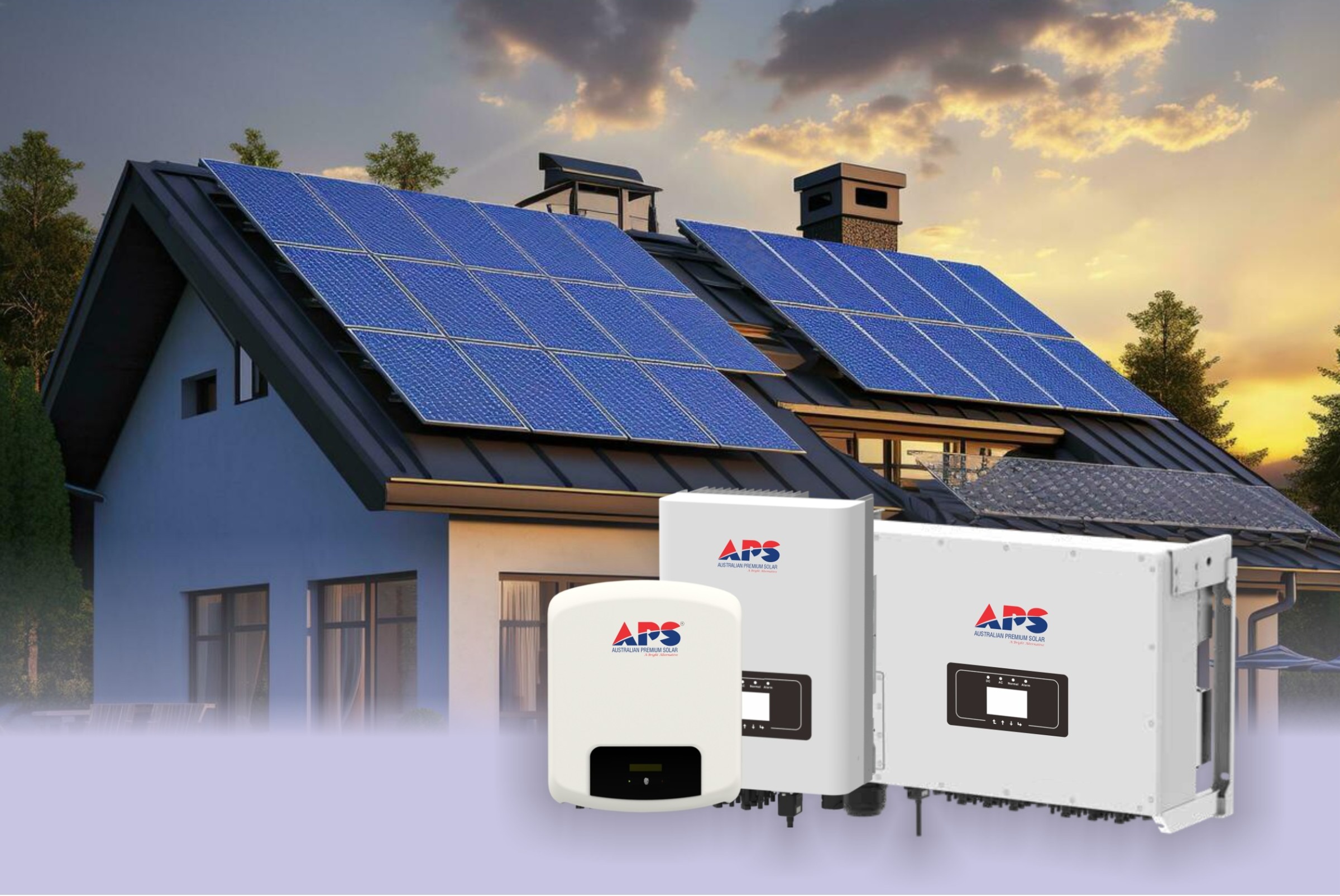
Australian Premium Solar (India) Ltd H2 FY26: A 47% Downstream Revenue Surge Paired with a ₹950 Crore Backward Integration Gambit
Date of Publishing -
Spotted a factual error — a wrong number, date, or fact? Tell us and we will check the source.
Section 1 — At a Glance
The financial performance of the company over the full year highlights an aggressive downstream expansion, culminating in a total consolidated revenue from operations of ₹707.96 crore for FY26, up 63.17% from ₹433.88 crore in FY25. Consolidated net profit for the same period reached ₹57.87 crore, representing a 44.33% growth over the previous year’s PAT of ₹40.10 crore. This scaling volume was supported by the mid-year commercialization of a new 400 MW TOPCon solar module line at Sabarkantha, Gujarat, expanding the total operating module capacity to 800 MW.
However, a closer look at the cash conversion structural metrics reveals operational strain. Working capital requirements surged significantly, driven by a sharp escalation in trade receivables, which climbed from ₹42.83 crore to ₹168.54 crore on a consolidated basis. This intensive working capital accumulation caused net cash generated from operating activities to reverse from a positive ₹24.40 crore in FY25 to a negative ₹5.06 crore in FY26. Concurrently, capital allocation is undergoing a major shift, with management committing to a ₹900 crore to ₹950 crore capital expenditure program to construct a 1 GW solar cell manufacturing plant by June 2027. This initiative introduces project execution complexities and structural leverage into what has historically been a low-debt capital structure.
Growth unaccompanied by free cash generation introduces significant liquidity dependencies on capital markets and banking lines.
Section 2 — Introduction
Australian Premium Solar (India) Limited, despite what the exotic geography of its name might suggest to an uninitiated reader looking for overseas exposure, is deep-rooted in Sabarkantha, Gujarat. Founded in 2013 and newly transitioned to the public domain via an SME listing, the company has capitalized heavily on the ongoing domestic solar infrastructure mandate.
The strategy has recently evolved from operating as an assembler of modules to embarking on an aggressive multi-channel integration journey. Over the last twelve months, corporate focus has explicitly shifted toward capturing downstream project margins through engineering, procurement, and construction (EPC) services for solar agricultural pumps and commercial rooftops. While this has unlocked massive top-line expansion, it has structurally modified the operating profile of the business from a clean manufacturing plant to a complex project execution machine, with all the working capital volatility that entails.
Section 3 — Business Model: WTF Do They Even Do?
To put it crudely, the company operates as a dual-engine vehicle: they build the hardware, and then they go out into the fields and onto the roofs to bolt it down. They are one of the few domestic small-cap players selling both solar panels and grid inverters under their own brand, using a hybrid retail-wholesale-EPC model.
The breakdown of how they find their money is highly telling. The core wholesale distribution segment acts as a volume aggregator, contributing approximately 52% of total operational scale, though it functions at thin margins. The retail and rooftop residential EPC vertical drives roughly 14% of revenue, leaving the remaining 34% to be brought in by government-backed agricultural solar water pump installations, largely driven by state tenders under the PM-KUSUM scheme. Management pitches this asset mix as a beautiful protective shield against volatility, arguing that when wholesale panel prices collapse due to Chinese dumping, the downstream EPC business eats up the cheaper raw material and smiles. However, when those same state project installations stall due to monsoons or regulatory gridlocks, the model faces severe cash collection bottlenecks.
Section 4 — Financials Overview
Figures are consolidated, in ₹ crore.
Metric
Latest Half (H2 FY26)
YoY (Same Half)
Previous Half (H1 FY26)
Revenue
405.49
47.38%
302.93
EBITDA / Operating Profit
52.32
119.33%
43.28
PAT
29.26
8.33%
28.60
EPS
14.52
6.14%
14.19
What is Management Promising in the Coming Quarters?
The trajectory of the half-year numbers exhibits sharp top-line acceleration, with H2 FY26 revenue printing at ₹405.49 crore, outstripping the first half’s ₹302.93 crore. Operating margins improved to double digits, fueled by economies of scale and a sequential drop in raw material inputs. During the latest earnings interactions, management exuded extreme confidence, explicitly reiterating a forward target of a “75% plus revenue CAGR for this year and the coming year.”
To back up this heavy promise, the Chairman noted that a secondary 400 MW module capacity line is scheduled to come online by July 2026, lifting total capacity to 1.2 GW. When quizzed about structural margins, the CEO calmly stated that the wholesale division’s margin might compress down to 10% due to hyper-competition, but the agricultural pump business would easily hold its 13% to 15% ground due to high entry barriers. Management called out their ₹310 crore solar pump order book as a secure runway for the next four to six months. Corporate swagger is great, but targets are written on paper while cash flows are written in stone. We will be watching closely to see if that 1.2 GW capacity translates into actual sales or just well-dusted factory space.
Section 5 — Valuation Discussion: Fair Value Range Only
To anchor the math, we use the reported consolidated full-year FY26 EPS of ₹28.70 and an annualized EBITDA of ₹95.60 crore. The stock trades at a current market price of ₹321, giving it a trailing price-to-earnings multiple of 11.18x.
P/E Multiples Band Method
Looking at the broader capital goods and heavy electrical sector, valuation multiples are heavily bifurcated. Large-cap giants like Hitachi Energy and ABB India float in the high stratosphere at 166x and 100x P/E, whereas the median for mid-to-small industrials sits firmly around 35x to 38x. Applying a conservative, heavily discounted peer multiple band of 15x to 18x to the company’s FY26 EPS of ₹28.70 yields an educational value band between ₹430 and ₹516.