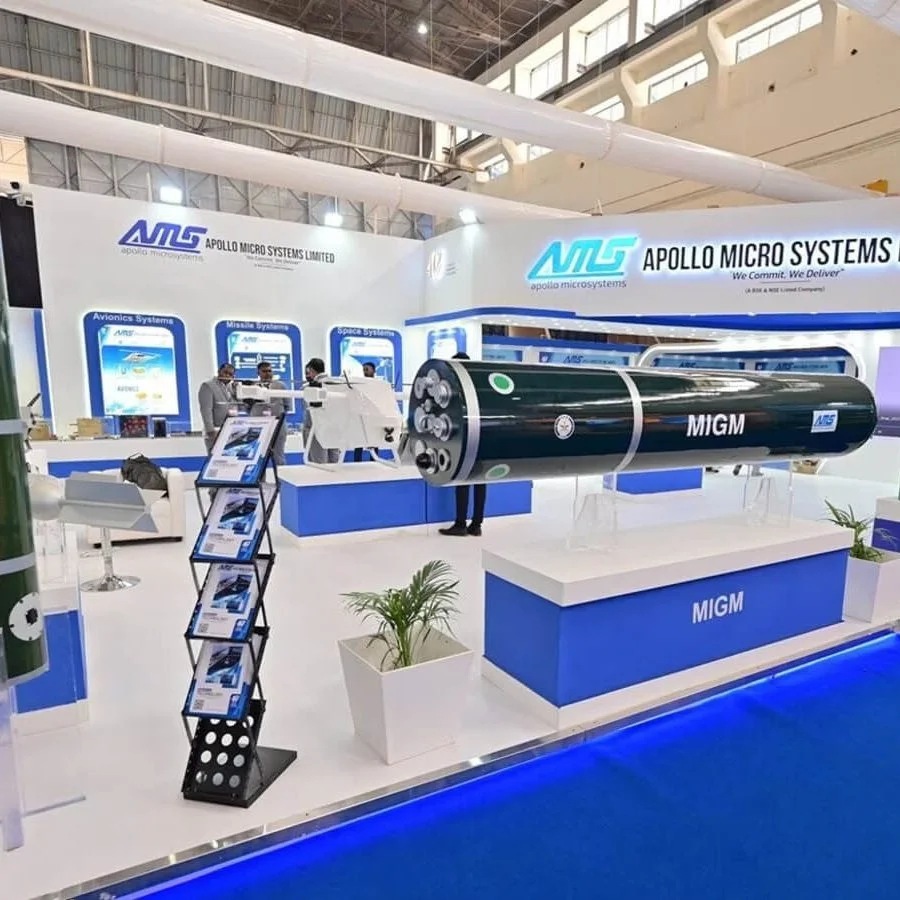
Apollo Micro Systems Ltd Q4 FY26 : The ₹1,432 Crore Defence Moat with a Missing Cash Flow Engine
Section 1 — At a Glance
Apollo Micro Systems Ltd has logged a record operational year, hitting a historic high with its full-year FY26 revenue landing at ₹904.32 crore and net profit scaling to ₹107.38 crore. The headline metrics have sent retail desks into a frenzy, driven by a blistering 81.3% YoY quarterly top-line expansion to ₹293.26 crore in Q4 FY26 alongside an unexecuted consolidated order book position of ₹1,432 crore. Investors are hooked on the structural shift from acting as a niche Tier-1 electronics designer for weapon components to capturing absolute platform-level real estate, fortified by its newly minted lifetime defense manufacturing licenses.
However, beneath the pristine veneer of expanding margins lies a working capital machine that devours raw liquidity. The company’s cash flow from operating activities sank deeper into the red at negative ₹1,297.60 million (approx. negative ₹129.76 crore) for FY26. This severe operating drain is paired with massive capital expenditures on its new weapon integration facilities and a continuous build-up of inventory that hit ₹795.29 crore. The operational performance is exceptional, but the balance sheet remains heavily dependent on dilutive equity financing and expanding bank borrowings to keep its delivery gears turning. In corporate finance, a scaling order book without a corresponding cash flow engine is simply an accelerated path to a leverage trap. Will the platform transition unlock structural cash flow, or will working capital friction remain a permanent ceiling on terminal value?
Section 2 — Introduction
Apollo Micro Systems Ltd has firmly established its presence within Hyderabad’s primary defense industrial belt. Long regarded as a quiet powerhouse that custom-builds the critical electronic architecture for indigenous missile systems, the company has recently thrust itself into the public spotlight. The current market environment—defined by urgent global defense inventory depletion and New Delhi’s aggressive structural mandates for domestic sourcing—serves as the ideal backdrop for the company’s bold expansion phase.
This review is prompted by the formal publication of its audited FY26 numbers alongside major corporate milestones, including the integration of IDL Explosives Ltd and massive multi-stage preferential capital raises. As the company moves from specialized low-profile research prototypes to highly visible high-volume platform production, analyzing its true financial stamina becomes essential for serious market observers.
Section 3 — Business Model: WTF Do They Even Do?
To the uninitiated investor, defence electronics looks like general contract manufacturing. In reality, Apollo Micro Systems functions as the custom architect of what management calls the “brain, eyes, and nerves” of modern munitions. They design, build, test, and integrate onboard computers, guidance, navigation, telemetry, and electronic warfare subsystems that give modern strike platforms their precision. If an artillery round flies blindly, Apollo’s internal systems are what make it smart.
The business model relies heavily on entering critical programs early during the R&D stage with the Defence Research and Development Organisation (DRDO) and Defence Public Sector Undertakings (DPSUs). Once an indigenous program qualifies and enters bulk production, Apollo retains proprietary intellectual property or exclusive vendor positioning across its 700+ onboard technologies. By acquiring IDL Explosives, they are vertically integrating their specialized electronics with raw energetic materials. The goal is simple: deliver fully integrated, complete indigenous weapon systems under one roof, expanding their addressable market from basic components to full platform ownership.
Section 4 — Financials Overview
Figures are consolidated, in ₹ crore.
Quarterly Performance Comparison
Metric
Q4 FY26
YoY (%)
QoQ (%)
Revenue
293.26
81.3%
16.3%
EBITDA / Operating Profit
67.65
88.0%
34.2%
PAT
36.79
163.5%
60.8%
EPS (₹)
1.05
110.0%
50.0%
(Note: Data derived directly from the consolidated quarterly tables; quarterly EPS figures are non-annualized).
The explosive top-line trajectory highlights that multiple developmental programs are successfully transitioning into multi-year commercial production runs. EBITDA margins showed strong improvement, expanding to 23.1% during the quarter. Accounting profits can show impressive short-term spikes during periods of peak factory shipments, but true operational strength is verified only when those revenues translate back into hard cash.
What is Management Promising in the Coming Quarters?
During the May 2026 earnings interaction, management expressed strong confidence regarding its forward pipeline. They indicated that the company is on the verge of securing major new orders, with substantial domestic and global project awards expected over the course of the fiscal