General information and entertainment, not investment advice. The author is not a SEBI-registered adviser or research analyst. No recommendation, no promised returns. Markets carry risk including loss of capital. Figures may not be current. Consult a registered adviser before acting.
Prices referenced are not live; figures are consolidated, in ₹ crore.
1. At a Glance
Revenue fell 13.6% year-on-year to ₹571 Cr in FY26, down from ₹661 Cr. Net profit dropped 11% to ₹37 Cr. The company’s P/E sits at 29.7x against a historical five-year average of 27.4x and a peer median of 20.5x.
Working capital has ballooned—debtor days stretched to 89 from 72 in FY25, and the cash-conversion cycle expanded to 109 days from 99. That’s the business asking for a loan from its customers to pay its bills.
ROCE fell to 16.7% from 20% in FY25. The equity isn’t pulling its weight. Yet the balance sheet remains sturdy: net cash of ₹26 Cr (borrowings ₹27 Cr, cash ₹53 Cr) after years of leverage reduction.
The sector is suffering—shipping delays across West Asia, feedstock shortages (ethylene oxide), and the company’s heavy export dependence (54% of revenue) mean the storm isn’t local. Credit rating downgrade to watch-negative from ICRA in March 2026.
Is a balance sheet with ₹26 Cr in net cash enough to outrun margin compression and working capital drag?
2. Introduction
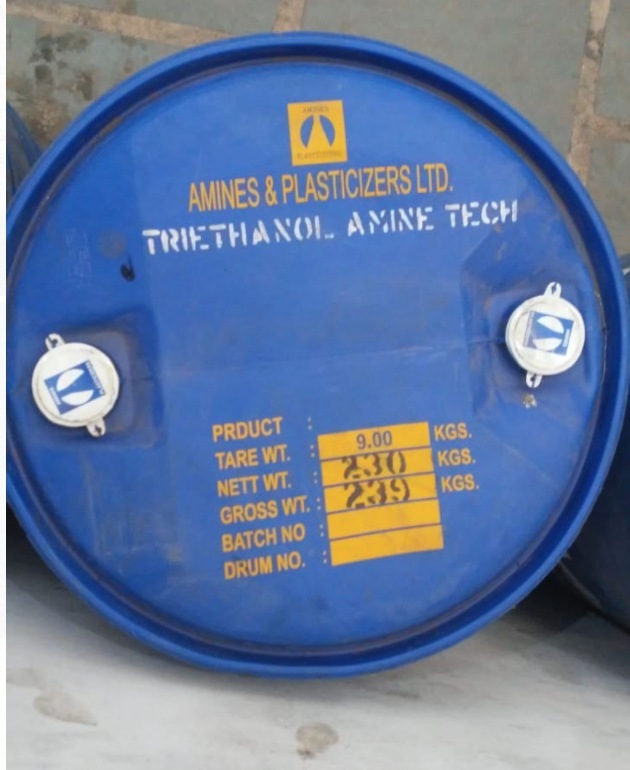
Amines & Plasticizers Ltd (APL), incorporated in 1973, evolved from a DOP plasticizer shop into a chemicals maker selling ethanolamines, morpholine derivatives, and gas-treating solvents to oil refineries, petrochemicals, pharma, and textiles.
The company owns manufacturing sites at Turbhe (Navi Mumbai) and Khopoli, plus a wholly owned offshore subsidiary in UAE’s Ras Al Khaimah. It is RIL-dependent for ethylene oxide (EO)—a major raw material vulnerability. In FY24, it signed a power-purchase agreement for solar at concessional rates.
Export intensity sits at 54% (up from 40% five years ago), tilting the profit cycle toward West Asia. The company is a captive supplier to Public Sector Oil Companies and exports to Fortune 500 buyers across refineries and specialty chemicals. Promoter Hemant Kumar Ruia controls 40% directly, with family vehicles holding another 34%.
Board-level moves: Hemant Kumar Ruia was reappointed as CMD for five years in August 2023. Auditors gave a clean unmodified opinion on FY26 results in May 2026.
3. Business Model: WTF Do They Even Do?
APL is a contract chemical maker—not a commodity house, but closer to it. The core portfolio: ethanolamines (70% of domestic market share per management), morpholine and derivatives, gas-treating solvents (methyl diethanolamine), and legacy plasticizers.
The product mix serves fragmented end-markets. Oil refineries buy gas-treating solvents; petrochemical plants buy ethanolamines for polyurethane; pharma and cosmetics take morpholine; agrochemicals and textiles take alkyl derivatives. No single customer is a backbone; the company sells to PSU oil majors and a scatter of Fortune 500 names.
Geographically, 54% of FY25 revenue came from exports—mainly UAE, Turkmenistan, US, Turkey. That export tilt has doubled over five years, which sounds like success until freight costs spike and West Asia turns hostile to shipping.
Capacity is modest: 24,670 MTPA of specialty amines at Navi Mumbai (Unit 01), running at 85% utilization. The other units (Industrial Gases, Engineering Services) are side projects. Production is input-constrained—ethylene oxide is rationed by Reliance, and there’s no way around that.
The business model is high-volume, margin-thin, and logistics-sensitive. You win when feedstock is cheap, shipping is free, and the refinery order book is fat. FY26 had none of those.
Quarterly Reality (FY26): Q4 (Mar-26) delivered ₹155 Cr revenue and ₹15 Cr net profit, a rebound from Q3’s ₹133 Cr and ₹6 Cr. The quarter-on-quarter swing flags the seasonality trap and raw-material availability shocks that dominate quarters.
FY25 Comparison: In FY25, the company posted ₹661 Cr revenue and ₹41 Cr PAT. Operating profit was ₹69 Cr (10.4% margin). FY26 margins compressed 40 bps to 10% OPM despite stable volumes—input cost inflation and freight headwinds did the damage.
Concall Colour: Management cited ethylene oxide (EO) supply constraints, geopolitical disruption to West Asia shipping (Houthi attacks on Red Sea lanes), and a delay in customer order placements. EO availability is expected to improve post-H1 FY27.
5. Market Expectations & Historical Multiples
This section describes how the market is currently pricing the company and how that compares with its own history and peer group. It is descriptive, not predictive.
Metric
Current
5-Yr Historical Average
Peer Median (42 Co.)
P/E
29.7x
27.4x
20.5x
EV/EBITDA
17.5x
—
—
ROE
13.3%
15.8%
6.6%
ROCE
16.7%
22.6%*
8.5%
*ROE and ROCE averages derived from five-year data in Screener (FY17–FY26). Peer median sourced from active peers in commodity chemicals (SRF, Deepak Fertilisers, GHCL, GNFC, Tanfac, Gujarat Alkalies).
The market currently pays 29.7x earnings here versus a peer median of 20.5x. Historically, APL has traded at a premium (27.4x five-year average), so the current multiple sits above its own median but well above the peer set. That premium reflects a perception that APL’s ethanolamines franchise and export scale deserve a higher earnings multiple—a bet that has not paid off in FY26.
Equity returns (ROE at 13.3%) have compressed from a five-year average of 15.8%. Return on capital employed (ROCE) fell to 16.7% from a five-year average of 22.6%. The market appears to be pricing in a recovery in ROCE once EO supplies normalise and freight costs ease, but that recovery has not yet arrived.
Peers with similar market cap (GHCL, GNFC, Tanfac) trade at 8–9x P/E despite weaker ROE and ROCE metrics, suggesting the market is either paying for APL’s brand equity or bracing for further earnings downgrades. The gap has not narrowed.
6. What’s Cooking
ICRA Credit Rating downgrade to watch-negative (March 2026): Ratings agency cited West Asian freight disruption and EO supply constraints as the trigger. The company’s bank lines (₹179.75 Cr) remain [ICRA]A/A1 for now, but the negative watch signals a 3–6 month flag if disruptions persist. No defaults yet, but the margin for error has shrunk.
Income Tax assessments and show-cause notices: The company received AY2013-14 demand of ₹3.14 Cr (appeal filed March 30); AY2014-15 demand ₹3.41 Cr and AY2015-16 demand ₹5.40 Cr, plus show-cause notices for disallowances. Total contingent liability: ~₹12 Cr. These are years-old but unresolved, and the company is fighting them.
Ethylene oxide supply shock: Management disclosed in the concall that 9M FY26 production was constrained by lower EO availability. Reliance Industries is the sole supplier. No alternative feedstock exists; the company either waits or shuts lines. This is a structural bottleneck, not a cyclical hiccup.
Subsidiary dividend moratorium: The UAE subsidiary (FZ LLC) is non-material but holds export logistics and trader relationships. No dividend or significant capital activity in FY26.
Related-party transactions: In FY24, the company approved ₹150 Cr in sales and purchases of goods with related parties. These are disclosed but not itemised in the public filing.
Freight cost inflation: The Red Sea route disruption added 15–20% to international shipping premiums in FY26, directly crunching export margins that account for 54% of revenue. Easing is forecast for H2 FY27 if the geopolitical situation stabilises.
The company has yanked debt from ₹77 Cr to ₹27 Cr in one year, a ₹50 Cr reduction. That’s aggressive deleveraging—the company is not borrowing, it’s de-risking. Net cash stands at ₹26 Cr (Cash ₹53 – Debt ₹27).
But here’s the smell: Other Liabilities jumped ₹22 Cr year-on-year to ₹103 Cr. That bucket includes payables, provisions, and deferred liabilities. Dig into it—much of that is likely trade payables to suppliers (the company is stretching payables to fund the debt paydown). Working capital deterioration masked by balance-sheet housekeeping.
Trade receivables grew to ₹139 Cr (FY25: ₹134 Cr) while inventory held flat at ₹83 Cr. The receivables-to-inventory ratio is inverted—the company is holding customer payment risk, not product risk. That’s a cash-flow warning.
Dividend payout remained steady at ₹0.50 per share (₹2.75 Cr total), an 8% payout ratio on FY26 earnings. Modest and safe, but no growth signal.
One wisdom: A balance sheet can look clean while the business is drowning in working capital. APL’s net cash is real, but it’s being consumed to fund the operating cycle instead of growth.
8. Cash Flow: Sab Number Game Hai
Year
Operating
Investing
Financing
FY24
₹47 Cr
-₹1 Cr
-₹16 Cr
FY25
₹29 Cr
-₹3 Cr
-₹20 Cr
FY26
₹66 Cr
-₹1 Cr
-₹58 Cr
Operating cash flow (₹66 Cr in FY26) looks solid until you see the composition. In the detailed cash-flow statement, the ₹66 Cr came from a ₹7.5 Cr operating profit before working capital changes, plus a ₹2.3 Cr addition from increases in payables and other liabilities. The company is literally paying off debt by delaying supplier payments—that’s not cash generation, that’s cash forestalling.