ALL SECTIONS
America first, global health last?
The US is reshaping global health aid through bilateral deals and stricter conditions – raising concerns over funding gaps, sovereignty and whether a transactional model can replace decades of multilateral cooperation
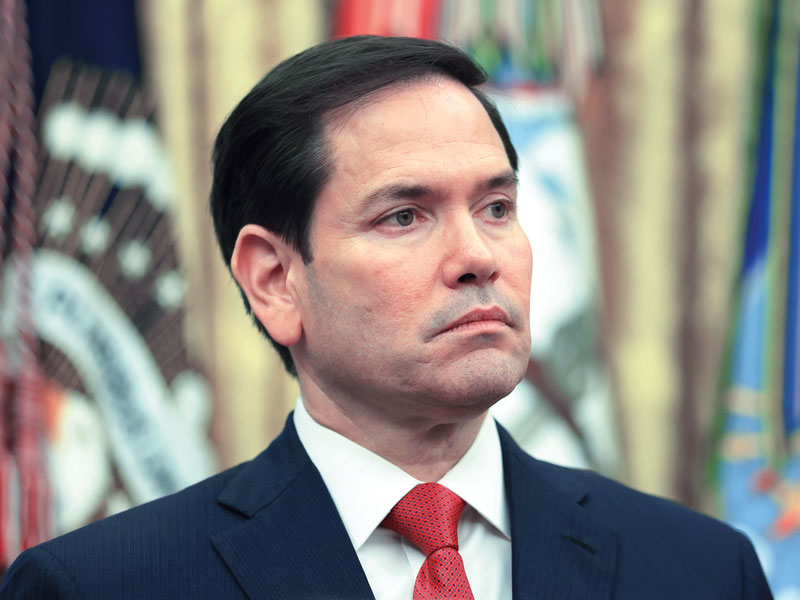 US Secretary of State, Marco Rubio 
Featured | Strategy
Author: John Muchira, Features Writer
Top 5
- Top 5 female-fronted fintech firms
- Top 5 Latin American tech hubs
- Top 5 sustainability pioneers in Europe
- Top 5 keys to global economic recovery
- Top 5 WFH habits, according to the world’s most successful business leaders
- Top 5 pandemic-proof industries
- Top 5 countries to be world’s next manufacturing hubs
- Top 5 most influential and inspirational US economists
- Top 5 ways to boost employee engagement and commitment
- Top 5 financial services that are ripe for automation
- Top 5 ways that GDPR has impacted digital banking
- Top 5 emerging fintech hubs across the globe right now
- Top 5 ways that the finance industry can prepare for AI
- Top 5 economic risk factors that must be considered
- Top 5 tips for retailers looking to sell into Chinese market
When US President Donald Trump reawakened the venomous ghosts of his ‘America First’ mantra during his second inauguration in January 2025, few could have foreseen the tsunami of disruptions and chaos that he intended to unleash on the global arena. “During every single day, I will, very simply, put America first,” he said with his characteristic bravado. True to his words, Trump has unapologetically caused widespread turmoil, with the US global health programmes being among the biggest casualties. To the administration, the programmes were deeply broken, had become inefficient, wasteful and had created a culture of dependency.
Simply put, they were not serving the interests of the US despite billions in annual budgetary allocations. Trump was clear that maintaining the status quo would not be an option. The outcome is a completely different approach to global health assistance, anchored on the largely controversial and divisive America First Global Health Strategy (AFGHS).
“We must keep what is good about our health foreign assistance programmes while rapidly fixing what is broken. This strategy lays out a plan to do just that,” said Marco Rubio, US Secretary of State. For countries that for decades have depended on the US for health assistance, particularly in dealing with infectious deadly diseases such as HIV, TB, malaria, smallpox, burdensome non-communicable diseases and maternal and infant mortality, AFGHS is an extremely bitter pill. Worse still, the road to its unveiling on September 18, 2025, was paved with painful spikes.
It started with the dismantling of the US Agency for International Development (USAID), which for decades had been the face of US foreign aid with missions primarily concentrated in Africa and Asia. In Africa alone, USAID had committed about $132bn across health systems, economic development and humanitarian relief from 2001 to 2024. The health funding gaps created since its shuttering are widespread and devastating. Nigeria and Botswana are cases in point. The former was left with a whopping $600m hole, while Botswana lost a third of its HIV response funding. Notably, USAID was a key implementing agency of the $110bn President’s Emergency Plan for AIDS Relief (PEPFAR) that has saved over 26 million lives since 2003.
Global shockwaves
While the dismantling of USAID was bad enough, the decision by the Trump administration to withdraw the US from the World Health Organisation (WHO) sent shockwaves across the global health systems.