Alkali Metals Ltd Q2 FY26: The Sodium Sultan’s Slippery Slide — Sales Fizzle, Pledges Sizzle, and Profit Goes Missing Again!
1. At a Glance
Alkali Metals Ltd (AML), the 57-year-old sodium and pyridine chemistry veteran, just dropped its Q2 FY26 results — and they’re not exactly explosive (unless you count the sodium). Revenue stood at ₹18.77 crore, down 8.26% QoQ, while the quarterly loss narrowed slightly to ₹0.91 crore from ₹1.15 crore in Q1. The share closed at ₹80.8, leaving the company’s market cap at ₹82.6 crore.
With a P/E ratio technically “N/A” because earnings are negative, a ROE of -7.28%, and ROCE of -4.87%, AML currently looks like that overenthusiastic chemistry student who accidentally burnt the lab table but still insists the experiment went well.
Promoters hold a chunky 69.6%, but here’s the twist — 30.1% of that is pledged. That’s like saying “Don’t worry, I’ve locked my money in… with my lender.” Meanwhile, exports account for 55% of FY24 revenue, proving that at least someone overseas still loves their chemicals. But the domestic investors? They’re probably busy Googling “how to neutralize alkali losses.”
2. Introduction
Once upon a time in Hyderabad, before IT and biryani became famous exports, a company called Alkali Metals Ltd decided that sodium, pyridines, and fine chemicals were the way to go. Founded in 1968, the company’s business model sounds like a chemist’s fantasy — sodium amide, sodium azide, and other words that can scare non-science investors.
Fast forward to 2025, and Alkali Metals is still doing what it does best: manufacturing niche chemical intermediates, exporting to Japan, Europe, the US, and Canada, while also occasionally exporting its profits — straight into thin air.
Despite its ISO 9001 & 14001 certifications and recognition from DGFT and the Department of Science & Technology, the numbers on its balance sheet look like they were written during a lab explosion. Over the last decade, sales grew at a meagre 2% CAGR, while profits went on a permanent sabbatical.
Still, this company’s story isn’t all gloom. The FY24 export ratio of 55% means it’s a globally integrated player. It just needs to figure out how to be a profitable globally integrated player.
And as if the numbers weren’t dramatic enough, the management saga added spice — with CFO changes, pledged shares, and board shuffles that could rival a corporate soap opera.
3. Business Model – WTF Do They Even Do?
Alkali Metals basically lives in the chemical equivalent of the nerd corner. It manufactures:
Sodium Derivatives like sodium amide, sodium hydride, and sodium azide — ingredients that go into pharmaceutical intermediates and energetic materials (read: “stuff that can go boom” if mishandled).
Pyridine Derivatives, which sound obscure but are used by pharma giants to make life-saving drugs.
Fine Chemicals & APIs, the kind of molecules that pharma companies depend on but never credit.
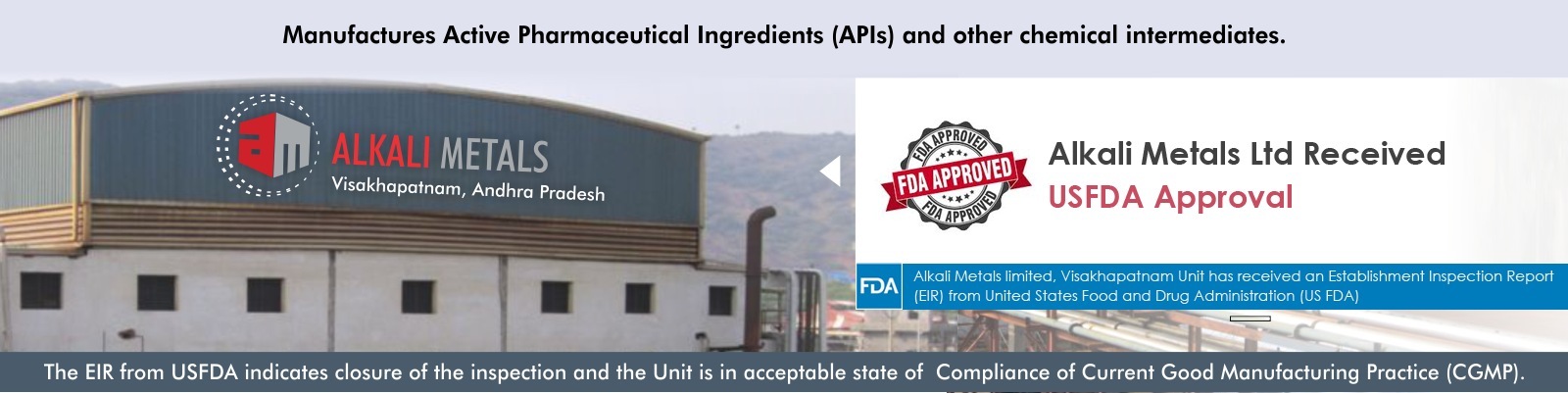
The company operates from three plants — at Uppal and Dommara Pochampally in Hyderabad, and one at JNPC Visakhapatnam, which handles bulk production.
Now, don’t confuse AML with those fancy specialty chemical firms making fluorochemicals or aroma compounds. AML is more like that old-school professor who refuses to retire: a bit dusty, stubbornly niche, but undeniably important for certain formulas.
However, the challenge is scale — the company’s FY24 turnover of ₹82.85 crore is smaller than what Deepak Nitrite spends on snacks. For comparison, Pidilite’s daily sales probably cross ₹40 crore. So yes, Alkali Metals is small. But sometimes, small caps hide big chemistry.
4. Financials Overview
Let’s look at the cold, hard numbers — no reactions, just reactions to them: