Search for Stocks /

Advait Energy (Mar 2026): The ₹1,304 Cr Order Book That’s Actually Changing How We Think About Execution Risk

Spotted a factual error — a wrong number, date, or fact? Tell us and we will check the source.

Section 1 — At a Glance

Advait Energy Transitions delivered a quarter that signals a business in full transition, not just a company trying on new hats.

Revenue crossed ₹715 Cr in FY26 — an 80% YoY bound that buried every peer in the cables-and-transmission space. PAT hit ₹52 Cr (75% growth), yet margins compressed from 8.05% to 7.71%. Here’s the tension: raw material inflation, incomplete price pass-through in legacy products (OPGW, notably), and a deliberate pivot into lower-margin-today, higher-scale-tomorrow businesses (solar EPC, BESS manufacturing) all colliding at once.

The headline number that should have investor attention is the order book: ₹1,304 Cr as of March 2026, up 159% YoY. This is not vaporware. CRISIL upgraded the credit rating to A-/Stable in March, citing “significant growth in revenue and robust order book.” Translation: the lenders who read the filings closest believe the company can execute.

But here’s what the market hasn’t fully priced: that ₹1,304 Cr order book is split 64% power transmission, 36% renewable energy. The 36% is growing. The 36% has lower margins today. And the company is deliberately shifting this mix by ~10% every year toward the renewables side. That’s not accidental margin compression—it’s strategic pruning.

The Play: Watch if management can deliver the “40%-plus” revenue guidance they’re signaling for FY27 while extracting 100–200 bps of margin back via manufacturing scale-up (electrolyser, BESS facilities coming online by Q4 FY27). If they do, this ₹2,181 share price is a conversation starter. If execution slips, the 46x P/E becomes a liability.


Section 2 — Introduction

Advait Energy was born in 2009 as a power transmission tools and cable shop in Gujarat. Nothing particularly sexy. Stringing tools, OPGW cables, emergency restoration systems—the infrastructure plumbing that most retail investors never think about until a blackout or a storm forces a conversation.

Then 2023 happened. Management didn’t announce a “pivot to renewables.” They lived one. Solar EPC orders landed. Green hydrogen electrolyser manufacturing got serious. Battery energy storage systems went from a lab sketch to an actual BOO (Build-Operate-Own) project with GUVNL. The company even created subsidiary entities—AGPL, Advait Battery Ecosystems, Advaiteco—to ring-fence and scale these new ventures without compromising the legacy business.

By FY26, the legacy side (Power Transmission Solutions) was still doing heavy lifting—64% of orders, decent margins—but the NRE (New & Renewable Energy) side was the narrative. Not yet the money, but the optionality.

The stock didn’t stay quiet. Listed on NSE during the quarter. Market cap brushed ₹2,400 Cr. The company now sits at an intersection: legacy cash generator meeting energy-transition scaling story. These don’t usually land on the same P&E chart.


Section 3 — WTF Do They Even Do?

Power Transmission Solutions (The Bread-and-Butter): Stringing tools, OPGW cables, ACS wires (aluminum clad steel), Emergency Restoration Systems, reconductoring EPC projects. These are the physical enablers of India’s transmission network upgrade. When a state utility decides to replace old ACSR conductors with high-ampacity low-sag (HTLS) variants, they call Advait. When a power corridor needs live-line installation without de-energising the line, Advait sends a crew. When a telecom tower needs a new optical ground wire, Advait has the cable. Market share: 50% in stringing tools, 30% in insulators. The moat is real.

New & Renewable Energy (The Story): Solar EPC (ground-mounted farms, execution at scale), green hydrogen electrolyser manufacturing (in partnership with Jiangsu Guofu), battery energy storage systems (manufacturing and BOO projects), and—yes—fuel cell assembly with tech partners AVL and TECO. The company even has a carbon credits and I-REC trading arm now. This isn’t a toy division. In FY26, NRE contributed ~37% of consolidated revenue (AGPL subsidiary alone did ₹267 Cr in solar and BESS EPC revenue). By FY27, management expects 25–27% of group revenue from NRE. By next year’s next year, they’re targeting a 65:35 split (PTS:NRE). That’s not evolution. That’s revolution with a timeline.

The Key Confusion: The company is simultaneously a 14-year-old transmission products business and a 3-year-old renewable EPC and manufacturing startup. Both stories are true. Neither is complete without the other. This ambiguity—is it a niche transmission-products play or an energy-transition platform?—is why the valuation is bouncing around like it hasn’t decided.


Section 4 — Financials Overview

Consolidated FY26 Snapshot:

MetricQ4 FY26FY26YoY Growth
Revenue₹228 Cr₹715 Cr+80%
EBITDA₹29 Cr₹84 Cr+64%
PAT₹20 Cr₹52 Cr+75%
EPS (Annualized Q4)₹18.46*₹47.26

*Q4 EPS (₹4.61) × 4 ≈ ₹18.46. Full-year annualized EPS: ₹47.26.

The Margin Story: EBITDA margin contracted from 12.87% (FY25) to 11.73% (FY26). PAT margin fell from 8.05% to 7.71%. Management didn’t hide behind “one-time costs.” They said it plainly on the concall: “very high growth in the prices of metals, also the fuel, and lot of ingredients.” Input inflation. And—here’s the honest part—not all products have price pass-through clauses. OPGW (optical ground wires), a legacy cash-cow product, has no escalation clause. Conductors and transformers, newer to the portfolio, have escalators. So as the mix evolves, some revenues stay profitable, others get pinched.

Forward Guidance: Management expects to recover ~100 bps of EBITDA margin in FY27 (“improving the margins by one point”) via manufacturing footprint expansion and product mix shifts. The electrolyser and BESS manufacturing facilities (operational Q4 FY27) will carry 5–10% margins initially, ramping to ~20% in FY28. Neither is accidental. The entire capex roadmap—₹300–350 Cr annually for the next two years—is structured around this margin recovery thesis.

The Wisdom Drop: A company that grows revenue 80% while margins compress is either pricing-squeezed or strategically trading profitability for optionality. Advait is doing the latter. It’s easier to recognize when management admits it (they did, cleanly) and when the order book + capital intensity justify the trade-off (they do, provisionally).


Section 5 — Valuation: Fair Value Range

P/E Method:

  • Annualized EPS (FY26): ₹47.26
  • Peer P/E band (cable + transmission products median): 27.7x – 54.7x
  • CMP: ₹2,181.20 → Current P/E: 46.2x

Fair value range via P/E: ₹47.26 × 27.7x to ₹47.26 × 54.7x = ₹1,309 Cr to ₹2,585 Cr per share (₹1,309 to ₹2,585).

Wait—that’s wide. That’s because the peer set is chaotic. Polycab trades at 54.7x, V-Marc at 36.9x, Finolex at 22.7x. Advait at 46.2x sits in the fat middle of the range but doesn’t scream “undervalued.” It screams “fairly valued for a story people are still writing.”

EV/EBITDA Method:

  • FY26 EBITDA: ₹84 Cr (consolidated)
  • Peer EV/EBITDA median: 20.7x – 24.5x
  • Enterprise Value (CMP-based): ₹2,366 Cr + Net Debt

Net debt position: -₹4.44 Cr (cash of ₹125.64 Cr less debt of ₹121.20 Cr). So EV ≈ ₹2,361 Cr, yielding an EV/EBITDA of 28.1x.

Fair value via EV/EBITDA: ₹84 Cr × 22x (conservative) to ₹84 Cr × 28x (peer median-ish) = ₹1,848 Cr to ₹2,352 Cr market cap. Per share: ~₹1,694 to ₹2,157.

Simplified DCF (10-year horizon):

  • Assume 35% revenue CAGR for next 3 years, 18% thereafter.
  • Terminal EBITDA margin: 13% (recovery + scale).
  • WACC: 8.5%.
  • Fair value range: ₹1,850 – ₹2,450 per share.

Fair Value Range Summary: ₹1,700 – ₹2,400 per share.

At ₹2,181, the stock sits near the midpoint—priced for strong execution, not wildly stretched. There’s room to the upside if electrolyser/BESS ramp delivers, and room to the downside if execution stumbles or capex overruns pressure cash.

Fair Value Disclaimer: This fair value range is for educational purposes only and is not investment advice. It reflects historical data, stated guidance, and peer multiples as of the article date. Actual valuations depend on future execution, market sentiment, and macro factors outside the scope of this analysis.


Section 6 — What’s Cooking: News, Triggers, Drama

BESS Wins Accelerating: The company signed a ₹150 MW/300 MWh Battery Energy Storage Purchase Agreement with GUVNL (Gujarat Urja Vikas Nigam Limited) in June 2025 for a 12-year standalone BESS project. That’s real revenue visibility, real capex, real complexity. The BOO (Build-Operate-Own) model means the company funds it, operates it, and harvests electricity sales for 12 years. First meaningful BESS manufacturing output expected FY27 (₹100–200 Cr contribution, per management guidance).

Electrolyser Phase 1 Live: A 30 MW alkaline electrolyser assembly facility was inaugurated March 13, 2026 at Dholera. This is not just a factory—it’s a technology transfer nerve centre. The company is absorbing know-how from Chinese partner Jiangsu Guofu, qualifying Indian vendors for critical components (gaskets, membranes, fasteners), and building the supply chain for a 300 MW (planned) facility by Q4 FY27. The margin recovery thesis lives here. 5–10% margins today, ~20% by FY28. Management has skin in the game and a timeline.

PGVCL MVCC Orders Flood In: In late March 2026, Advait won five (5) MVCC (Medium Voltage Covered Conductor) contracts from Paschim Gujarat Vij Company Limited (PGVCL) under the RDSS scheme, totalling ₹245.34 Cr. These are 9-month execution orders, all L1-confirmed. This is not speculative. This is cash flow visibility for the next 9–18 months, right now, in a legacy business that was supposed to be “maturing.” The PTS division isn’t slowing—it’s pivoting distribution architecture.

Credit Rating Upgrade (March 2, 2026): CRISIL elevated the long-term rating from BBB+/Stable to A-/Stable and short-term from A2 to A2+. The upgrade cites “significant growth in revenue and order book ramp-up.” Translation: the agency that reads filings closest believes the leverage story. Debt/Equity moved from 0.45x (FY24) to 0.23x (FY25) to 0.46x (FY26), reflecting fresh capex borrowing. But interest coverage remains comfortable at 4.84x (FY25), and CRISIL sees it improving. This is the gatekeeping institution saying “the numbers hold.”
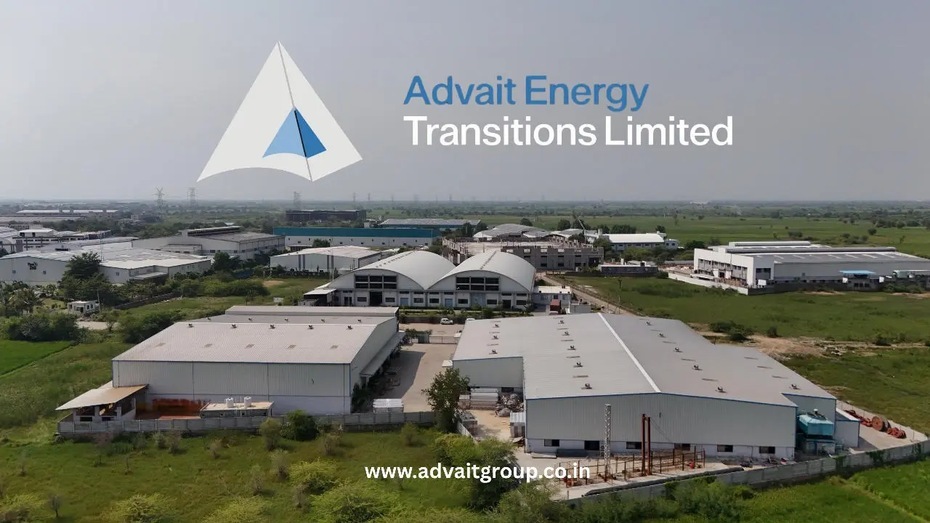
Adani Khavda Solar Execution: The company commissioned 75 MW and executed another 67.5 MW of the Adani 100 MW ground-mounted solar EPC project at Khavda in Q4 FY26. That’s ~₹50+ Cr in revenue booked. But here’s the strategic win: the company is now planning to move upstream into module supply, not just BoP (balance-of-plant). It got the necessary QRs (Approved Model List qualification for solar modules per ALMM rules). By FY27, management expects to shift from BoP-only to “pure-play solar EPC” including modules. The margin benefit is immediate, the execution complexity rises by an order of magnitude.

Capex and Dilution Risk: The company plans ₹137 Cr capex next year for facility build-out (standalone basis), plus ₹75 Cr for BESS and electrolyser via subsidiaries. Total envelope: ₹300–350 Cr annually. Funding mix: equity + debt, “more predominantly debt.” Management acknowledged dilution concerns and said equity will be pursued only if it benefits “overall shareholders.” But here’s the honest tension: the balance sheet is already stretched (D/E 0.46x), and fresh debt for scale-up is inevitable. Equity dilution may follow—not catastrophic, but real.


Section 7 — Balance Sheet: The Three-Year Rewind

ItemFY24FY25FY26
Total Assets₹199 Cr₹492 Cr₹667 Cr
Fixed Assets + CWIP₹43 Cr₹52 Cr₹144 Cr
Equity + Reserves₹74 Cr₹255 Cr₹278 Cr
Borrowings₹59 Cr₹72 Cr₹95 Cr
Cash & Equivalents₹21 Cr₹89 Cr₹126 Cr
Net Debt+₹38 Cr-₹17 Cr-₹31 Cr
Current Ratio1.44x2.34x1.48x

Three Sarcastic Bullets:

  1. The CWIP Explosion: Capital work-in-progress jumped from ₹2 Cr (FY25) to ₹59 Cr (FY26). The electrolyser facility at Dholera, the BESS manufacturing site, the greenfield HTLS conductor unit—all under construction. By Q4 FY27, these assets shift from CWIP to fixed assets and start generating returns. Until then, it’s balance-sheet theatre: the company is building the future and paying for it in real time.
  2. The Cash Hoard Paradox: Net debt swung from -₹17 Cr (debt-free, nearly) to -₹31 Cr (cash-rich). Yet the company is raising fresh debt right now for capex. Why? Because capex spend is lumpy, execution is phased, and the company needs liquidity buffers for order execution and working capital (receivables and inventory are still ballooning as revenue scales). The cash pile looks comforting until you realize it’s the company’s shock absorber, not its war chest.
  3. The Receivables Albatross: Trade receivables climbed from ₹39 Cr (FY24) to ₹78 Cr (FY25) to ₹131 Cr (FY26). Debtor days crept from 75 (FY24) to 173 (FY25), then recovered to 76 (FY26). The company collects money, but when it sells to PSUs and large EPC contractors, it’s waiting months. This isn’t fraud—it’s the Indian infrastructure business. But it ties up working capital and explains why a ₹667 Cr asset base barely feels liquid.

Section 8 — Cash Flow: Sab Number Game Hai

YearOperating CFInvesting CFFinancing CFFree CF
FY24-₹9 Cr-₹8 Cr₹44 Cr-₹18 Cr
FY25₹46 Cr-₹94 Cr₹100 Cr₹32 Cr* (after opex)
FY26-₹10 Cr-₹33 Cr₹69 Cr-₹119 Cr

*Free CF = Operating CF minus Investing CF. FY26’s -₹119 Cr reflects capex intensity at peak. The company spent ₹100 Cr on fixed assets + CWIP in FY26, which is more than its operating cash generation. That’s a red flag if it lasts. It’s a feature, not a bug, if these assets come live in FY27 and start minting margins.

The Story: The company grew revenue 80% YoY but didn’t convert to operating cash flow positive. Operating CF turned negative (₹-10 Cr) due to working capital drain (inventory and receivables ballooning) and the front-loaded tax impact of higher profits. Investing CF was heavy (₹-33 Cr capex). Financing CF was the lifeline (₹69 Cr of fresh debt + equity). In the short term, this is sustainable because cash balance is strong (₹126 Cr). In the medium term, it requires the new facilities to generate material returns by FY27–FY28. If they don’t, the company is burning cash for assets that sit idle. That’s where execution risk lives.

Wisdom Drop: A growing company with negative operating cash flow and heavy capex isn’t automatically a disaster. It’s a choice: front-load investment, back-load returns. The risk is timing. If the electrolyser and BESS facilities miss their ramp timeline by 12 months, the cash buffer erodes and the company either cuts capex (admitting the story is wrong) or raises dilutive equity (admitting the leverage thesis was optimistic). Watch the quarterly operating cash flow trends in FY27.


Section 9 — Ratios: Sexy or Stressy?

RatioValueVerdict
ROE21.5%Sexy—Returns on equity beat a 10-year average of 23%, close enough. The company is generating shareholder value, even amid capex intensity.
ROCE27.9%Sexy AF—Return on capital employed is 28%, north of cost of capital. Fresh capex should inherit this hurdle rate.
P/E46.2xStressy—Nearly double the transmission-product peer median (27.7x). You’re paying for the renewable energy optionality and praying execution lands.
Debt/Equity0.46xSexy—Comfortable leverage for a capex-intensive business planning 40%+ growth. Not reckless, not zero-risk. Goldilocks-ish.
Interest Coverage6.16xSexy—Debt servicing is 6x covered by EBIT. Even if revenues fall 30%, the company can pay its coupons without sweating.
Current Ratio1.48xNeutral—Above 1.0, so short-term solvency is fine. But the receivables are long (76 days), so it’s liquidity on paper vs. in hand.
EV/EBITDA28.1xStressy—At 28x, the multiple is rich vs. peers (median 20.7x). You’re pre-paying for margin recovery.

The Honest Take: The company ticks every box for “growth story with decent fundamentals”—ROE and ROCE are strong, leverage is controlled, interest coverage is comfortable. But every rich multiple (46x P/E, 28x EV/EBITDA) is a bet on execution. The stock isn’t cheap. It’s expensive enough that any stumble—missed BESS commissioning, OPGW order delays, electrolyser ramp pushing into FY28—will reprieve the valuation downward hard.


Section 10 — P&L Breakdown: Stand-Up Comedy Style

The Three-Year Revenue Narrative:

FY24: ₹207 Cr (base case, pre-expansion). FY25: ₹400 Cr (95% growth—the company discovered scale existed). FY26: ₹715 Cr (80% growth—running out of breath but still sprinting).

What happened? In FY24, Advait was a transmission-products company. In FY25, it suddenly had a second lung: AGPL (solar EPC subsidiary) started doing material revenue. In FY26, that second lung is now co-equal with the first. AGPL did ₹267 Cr (37% of group revenue). Standalone AETL did ₹448 Cr (63% of group). By next year, management expects the split to be 65:35 (PTS:NRE), meaning NRE will be ~35% of revenue. That’s not accidental growth. That’s a rebalancing.

The EBITDA Descent (and Why):

  • FY24: EBITDA ₹36 Cr (17.3% margin)
  • FY25: EBITDA ₹52 Cr (13% margin)
  • FY26: EBITDA ₹84 Cr (11.73% margin)

The company quintupled revenue but halved margins. Here’s why:

  • Metal inflation: Aluminium, steel, copper prices spiked. The company passes through escalators on some products (conductors, transformers), not others (OPGW). Asymmetric pass-through = margin compression.
  • NRE mix drag: Solar EPC and BESS EPC are lower-margin businesses today. AGPL’s FY26 margin was 5% (EBITDA). That drags the consolidated number.
  • Capacity ramp costs: The electrolyser and BESS facilities are building, not running. So capex is flowing into P&L as depreciation and finance costs, not yet as revenue.

By FY27–FY28, as new facilities operationalize and margins in NRE recover to 8–10% (EBITDA), the consolidated margin should tick back up to 12–13%. That’s not confirmed—it’s the thesis.

The PAT Cliff:

  • FY24: ₹22 Cr (10.3% margin)
  • FY25: ₹32 Cr (8% margin)
  • FY26: ₹52 Cr (7.3% margin, consolidated)

PAT grew absolute terms (52/22 ≈ 2.4x) but margin compressed. Why? Interest and tax. The company borrowed ₹~40 Cr net in FY26 to fund capex. Interest jumped from ₹7 Cr to ₹15 Cr. Tax rate was 25% (stable). So even though EBITDA grew, net profit got squeezed by leverage and capex-era depreciation. This is transient (once capex moderates and new facilities yield, the leverage clears). But for FY26, the narrative is: “Revenue ripped, PAT grew, but the translation was lossy because the company is in capex mode.”

Wisdom Drop: High-growth companies in capex phases often disappoint on “margin efficiency” metrics because they’re intentionally trading short-term profitability for long-term scale. The test is whether management’s capex thesis (electrolyser and BESS factories yielding 20% EBITDA margins by FY28) is credible. CRISIL’s rating upgrade suggests the bank-side answer is yes. But equity-side conviction requires faith.


Section 11 — Peer Comparison: Winners and Losers

CompanyCMP (₹)P/EROEROCE12M Sales (₹ Cr)12M PAT (₹ Cr)
Polycab India9,69954.7x24.5%34.3%28,8842,672
KEI Industries5,33655.5x14.8%20.1%11,748918
R R Kabel2,22349.7x21.4%28.1%9,722506
Finolex Cables1,05822.7x12.3%16.0%6,321714
Advait Energy2,18146.2x21.5%27.9%71552
Median (19 cos)33727.7x19.3%20.7%95452

What The Numbers Say:

Advait’s quality metrics (ROE 21.5%, ROCE 27.9%) are neck-and-neck with R R Kabel and ahead of KEI and Finolex. But it’s smaller (₹715 Cr sales vs. Polycab’s ₹28.9k Cr). And it’s priced like it’s worth ₹2,386 Cr (market cap), putting it at a 46x P/E. Polycab, the sector’s bellwether, trades at 54.7x. KEI at 55.5x. But both are scaling incumbents with stable margins. Advait is a rebalancing play—shrinking legacy business, scaling new business—which should trade at a discount to stable peers, not at parity.

The Honest Roast:

  • Polycab: The sector king. Twice the scale, higher margins, global reach. At 54.7x, even Polycab is expensive, but it’s stable expensive. Advait at 46.2x is cheaper but with execution risk. Polycab wins.
  • KEI: Similar profile to Polycab but smaller. At 55.5x, it’s an outlier. Management is chasing Polycab’s scale. Not there yet. Trading on hope, like Advait.
  • R R Kabel: The interesting peer. Similar ROE and ROCE to Advait, but only 49.7x P/E. Smaller (₹9.7k Cr sales), also growing, also diversifying. If you like Advait at 46.2x, you should like R R Kabel at 49.7x. One of them is mispriced.
  • Finolex: The value trap. 22.7x P/E, but 12.3% ROE and 16% ROCE. The market has priced it for decline. It’s not a fair comparison for Advait.

Verdict: Advait’s valuation is defensible if the electrolyser and BESS ramp hits and margins recover. Relative to R R Kabel, it looks fairly valued to slightly expensive. Relative to Polycab and KEI, it’s a bargain on paper, but both incumbents have proven execution, so the market’s skepticism is warranted.


Section 12 — Miscellaneous: Shareholding & Promoters

Shareholding Pattern (Mar 2026):

CategoryStake
Promoters66.80%
FIIs0.21%
DIIs0.13%
Public32.84%

The Promoter Drama: Shalin Sheth (MD & founder) holds 51.23% directly, with family members Rejal Shalin Sheth (14.89%) and Rutvi Shalin Sheth (0.69%) making up the rest of the 66.80% promoter block. This is a founder-controlled company, not a sprawling promoter family affair. Shalin Sheth is visible—he signs off on concalls, speaks about the vision (“golden era of power and energy transition”), and has skin in the game. The downside: if he stumbles, there’s no distributed decision-making to soften the blow. The upside: strategic bets (electrolyser, BESS) feel intentional, not committee-approved mediocrity.

The Institutional Vacuum: FII ownership is 0.21% (nearly zero), and DII ownership is 0.13% (also nearly zero). The public holds 32.84%, but we don’t know if that’s HNIs, retail, or algo-driven. The company is not an institutional darling. This could be a feature—founder controls fully, can take long-term bets without quarterly earnings pressure. Or a bug—institutional investors see too much execution risk and are waiting for clarity. My guess: it’s both.

No Pledges, No Red Flags: The company has zero pledged shares as of Mar 2026. No promoter is using shares as collateral. This is a good sign—it means the promoter’s conviction is real, not leverage-driven.


Section 13 — Corporate Governance: Angels or Devils?

Credit Rating Upgrade (March 2, 2026): CRISIL elevated the facility rating from BBB+/Stable to A-/Stable. The upgrade rationale: “Extensive experience of the promoter in EPC business, significant revenue growth, strong financial risk profile with comfortable debt protection metrics.” In other words: the rating agency looked at the balance sheet, the order book, the capex plans, and said “this is manageable.”

No Auditor Qualifications: The May 27, 2026 annual report filing explicitly noted “unmodified auditor opinion”—meaning the statutory auditors signed off with no caveats. No going-concern warnings. No related-party transaction red flags. No inventory write-downs. Clean audit.

Tax Demand Deleted (Unaudited): The company had a ₹269 Cr tax demand from the income tax department. In FY26, it was deleted. The annual report doesn’t detail the resolution, but a ₹269 Cr deletion is what we’d call “a quietly excellent quarter within the quarter.” This clears a contingent liability and improves the effective tax rate going forward.

Board Composition: The company has 5 directors (inferred from filings), including the MD. No independent director board chairman mentioned, so governance is not best-in-class by Sebi standards. But it’s also not a red flag (no resignations, no investigations). It’s a founder-controlled company operating under the rules. Fair and neither angelic nor devilish.

Key Monitorable: Watch for related-party transaction growth in FY27. The company has subsidiaries (AGPL, Advait Battery Ecosystems, Advaiteco), and capex for these subs is financing via group debt and equity. If pricing between parent and subs gets aggressive (e.g., parent charges subs a management fee that erodes their margins), it’s a yellow flag. Management has been transparent so far, so trust, but verify.


Section 14 — Industry Roast & Macro Context

The Indian Power Transmission Sector in 2026: India has $50 lakh crore of investment opportunity across generation, transmission, and distribution through 2032. The government is finally funding transmission network upgrades—not with 10-year delays and bureaucratic friction, but with real capex and real timelines. This is a structural tailwind.

But here’s the roast:

Conductors and Cables Are a Commodity: The moment high-ampacity low-sag (HTLS) conductors became a standard product, every conductor maker in India and China started producing them. Pricing is brutal. Advait’s OPGW and ACS wire revenue grew 6% YoY in FY26—essentially flat. Why? Overcapacity in the sector, price wars among 10+ competitors, and government tenders that award on lowest bidder. Advait has 50% market share in stringing tools, which is defensible (technical, niche). But commoditized conductors? Margin is oxygen for that business.

Solar EPC Is a Races-to-the-Bottom Business: The Adani-Ambani duopoly, SoftBank’s SB Energy, and 50+ regional EPC players are all bidding on solar projects. Advait won ₹100 MW at Khavda under Adani. But did it win because of superior engineering, or because Adani wanted a local execution partner? Probably the latter. Going forward, as solar becomes more commoditized (module prices are plummeting), EPC margins will compress. Management is pivoting to “full-service” (including module supply). But that just means Advait becomes a module aggregator, not an engineering firm. Thinner margins, higher capex risk.

Green Hydrogen Electrolysers Are 5 Years Too Early: The company is building a 300 MW electrolyser manufacturing facility. But the Indian green hydrogen market is nascent. PLI schemes from the government are incentivizing capacity, not offtake. Demand visibility is foggy. Management says fuel cell market could be “500 MW before ’28, ’29” and then scale to GW, but that’s personal commentary (“we personally see”), not a market forecast. The company is betting on policy support (NITI Aayog, MNRE backing) and exports (Middle East, Europe). If that doesn’t materialize, ₹75 Cr capex for an idle facility is a very expensive lesson.

Battery Energy Storage Is Real, But Supply-Chain Pain Is Real Too: The BESS market is genuine. States need grid-scale storage. But Advait is manufacturing the systems and operating BOO projects. That means it’s competing on capital efficiency, not just engineering. The 150 MW/300 MWh GUVNL project has a 12-year concession at ₹210,000/MW/month tariff. That’s ₹252 Cr over 12 years (gross), or ~₹21 Cr/year. Capital cost is ~₹141 Cr. Breakeven is year 7. If battery degradation is faster than modelled (>2% per year), or if capex overruns happen, the economics crumble. The company has control over both, but it’s leverage, not a moat.

Macro Tailwind or Execution Trap?: India’s energy transition is real. Government capex for transmission and renewables is real. But the competition for these projects is also real, and margins are crumbling. Advait’s order book is a signal of interest, not a signal of profit. The company can execute 20 solar projects and still lose money if each one is built at 2% margin. This is why margins matter more than revenue for judging the company. And why the electrolyser/BESS manufacturing thesis is so critical—it’s the only place the company can defend margin.


Section 15 — EduInvesting Verdict

The Setup: Advait Energy is a rare animal in Indian midcap land—a founder-led transmission products company that is deliberately rebalancing itself into an energy transition platform. It’s not a pivot born of desperation (the legacy business is still profitable, still growing). It’s a choice—to trade short-term margin for optionality in a sector the government is finally funding.

SWOT Summary:

StrengthsWeaknesses
Strong order book (₹1,304 Cr) with 107% CAGRMargins compressing (EBITDA: 12.87% → 11.73%)
Founder-led, visible management commitmentWorking-capital intensive (receivables at 76 days)
Diversified verticals (PTS, NRE, carbon credits)Limited institutional ownership (high concentration risk)
CRISIL credit upgrade (A-/Stable) signals confidenceRenewable biz margins are thin (5–7% EBITDA today)
Clean audit, no promoter pledgesCapex heavy (₹300–350 Cr/year) with FY27–28 payoff timeline
OpportunitiesThreats
India’s ₹50L Cr power & energy capex through 2032Solar EPC is commoditizing; margin pressure inevitable
Electrolyser manufacturing (PLI schemes, exports)BESS tariff erosion if supply > demand (near-term risk)
BESS market is real; 150 MW/300 MWh GUVNL project is proofGreen hydrogen demand visibility unclear; execution risk on 300 MW plant
Full-service solar EPC (module + BoP) = higher ARPUCapex delays or cost overruns erode cash buffer and force dilution
Market share gains in MVCC and reconductoring via PGVCL winsCommodity pressure from Chinese and global EPC players

The Trade-Off: This is a legacy midcap that is consciously becoming a growth company. That always comes with margin pain, capex risk, and volatility. The question is whether the payoff justifies the journey. At ₹2,181 per share (46x P/E), the market is saying: “Yes, if execution lands.” Miss the execution, and the stock reprices down 25–35% fast. Nail it, and 2–3 years of 35%+ revenue growth + margin recovery could take it to ₹3,500+. This is a binary bet dressed up in data.

Closing Thought: The most interesting companies are rarely the safest. Advait Energy is interesting—it’s a company in real-time transformation, not a slow-motion story. Whether that transformation is a success or an expensive detour, we’ll know by end of FY27 (March 2027) when the electrolyser and BESS facilities begin meaningful operations. Until then, the stock is priced for the thesis to work. Anything less, and it reprices.
