Aditya Infotech FY26: Surveillance Market’s New Monopoly Moves
General information and entertainment, not investment advice. The author is not a SEBI-registered adviser or research analyst. No recommendation, no promised returns. Markets carry risk including loss of capital. Figures may not be current. Consult a registered adviser before acting.
Prices referenced are not live; figures drawn from FY26 audited results as of May 27, 2026. CMP ₹3,502 as of June 5, 2026.
1. At a Glance
Aditya Infotech closed FY26 having captured 45.4% of India’s video surveillance market—a 20 percentage-point jump from the IPO’s forecast of 36% by this time. Revenue hit ₹4,221 crore, up 36%, while profit after tax landed at ₹368 crore, up 166%. The market rewarded the stock with a 136% return over six months.
The numbers smell right, but they also smell temporary. Management’s own margins—EBITDA at 13.7%—are 430 basis points below Q4’s 18%, a pullback they attribute to exhausted low-cost inventory and lagged pricing pass-throughs. FY27 guidance of 14–15% EBITDA margin sits lower than Q4 by design: the outlier is being normalized away.
Behind the share grab is a regulatory chokepoint. India’s newly implemented STQC (Security Testing and Quality Certification) standard forced smaller, uncertified competitors offline. The vacuum sucked share to the brands that could afford the test suite—and AIL’s scale made it the default land grab.
The tension: Does 45% market share hold, or does it compress as the industry stabilizes and supply chains normalize?
2. Introduction
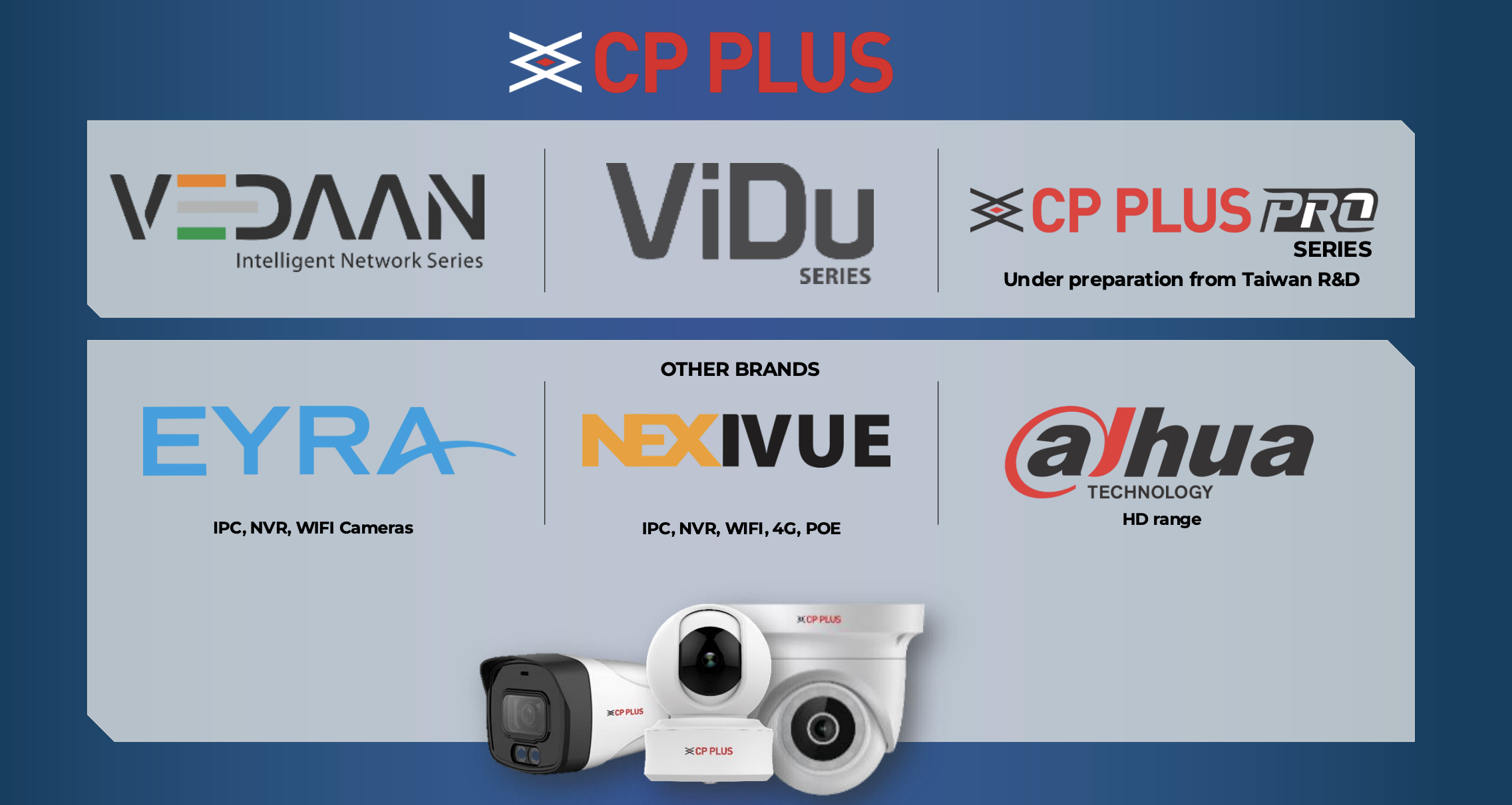
Aditya Infotech manufactures CCTV cameras, recorders, and ancillary surveillance kit under the CP PLUS brand, plus distributes China’s Dahua equipment under license. The company’s been in the hardware game for three decades, founded by the Khemka family.
The IPO landed in August 2025 at ₹1,300 crore raised. In the nine months post-listing, the stock has surged 240% trough-to-peak, on both regulatory tailwinds and operational execution.
In FY26, three things moved the needle: STQC certification knocked rivals offline, component shortages gave AIL’s procurement muscle a structural moat, and ASP (average selling price) inflation from supply stress allowed margin accretion despite lower volumes. The company shipped 13.25 million surveillance units, up 33% YoY, while revenue per unit rose—a dual tailwind that management says will split 50-50 in FY27 (25% units, 25% ASP).
The capex plan is aggressive: ₹200–300 crore in FY27, targeting a doubling of production capacity by FY28. Backward integration—housing, lens, cable—is underway. Qualcomm is a new design partner for AI-powered edge analytics. Taiwan got an R&D hub.
The stock’s valuation is stark: P/E of 112, P/B of 22. The market has priced in not just FY27 growth, but a structural rerating of margins and market share sustainability.
3. Business Model: WTF Do They Even Do?
The Core Product: Cameras, Recorders, Bundled Brains
CP PLUS sells CCTV cameras (both analog and IP-based), digital video recorders (DVRs), network recorders (NVRs), and edge AI boxes that handle facial recognition and intrusion detection in real time. The portfolio runs 2,986 stock-keeping units—a menu deep enough to serve consumer, SME, enterprise, and government buyers.
Revenue mix by brand: CP PLUS owns 69% (nearly 86% in Q4), Dahua sits at 24.5%, and a small portfolio of other brands fills 6.5%.
By channel, distributors are the beast: they pull 79.5% of revenue. System integrators (the project-led, installation-heavy segment) grab 16%, retail and e-commerce are rounding errors at 2.5% and 2% respectively.
The Margin Funnel: Commodity Meets Certification
CCTV hardware sits on a commoditized cost curve, but AIL’s 45% market share is now a pricing lever. The company pays raw material costs denominated mostly in USD (sensors from Sony and SmartSens; chipsets from Ambarella, Qualcomm, Realtek, and Chinese makers). When semiconductor supply tightens, AIL’s 1,012 distributors can absorb quarterly price hikes because there’s no alternative with scale.
The STQC chokepoint has already killed dozens of smaller competitors. Those who survive must invest in testing labs and certification—a ₹50–200 lakh capex per SKU. Management explicitly stated: “nobody plays in all the vertical market segments”—meaning even competitors who did get certified only hold narrow niches (biometric doors, access control, etc.), not full-portfolio surveillance.
Geography & Channel: Distributors as Moat
The 1,012 distributors span 550 Indian cities and towns. The company operates 69 dedicated CP PLUS Galaxy stores (co-branded retail) and 5 flagship experience centers. This network didn’t emerge overnight; it’s 30 years of relationship capital. New competitors can’t replicate it in a decade.
System integrators (2,178 of them) handle large tenders and government projects. Government/PSU/tender work clocks 15–20% of revenue—steady but not a growth lever, per management.
New Brands: Nexivue & Eyra
The company is launching two sub-brands aimed downmarket: Nexivue (already certified, shipments started end-April) and Eyra (delayed due to supply disruption, targeting certification “in two months” from the May concall, hence ~July 2026). Both are designed to capture share from unbranded and gray-market vendors. But they also dilute CP PLUS’s brand premium. Management’s bet is that volume upside outweighs margin dilution.
The Dahua Tail Risk
Dahua is a Chinese state-adjacent vendor. Its 24.5% revenue contribution makes AIL a custodian of a geopolitical chokepoint. Any move by India to restrict Chinese CCTV imports would crater this channel overnight. Management hasn’t disclosed contingency plans.
4. Financials Overview
Figures are consolidated, in ₹ crore, quarterly results basis.
Metric
Latest Q (Mar ’26)
YoY
QoQ
Revenue
1,422
+45.5%
+54.4%
EBITDA
258
+162.4%
+86.8%
PAT
169
+207.7%
+75.8%
EPS
14.36
—
—
The latest quarter (Q4 FY26, Mar 2026) saw EBITDA margin swell to 18.1%, a jump of 800 basis points YoY. Profit margin hit 11.9%. Yet management flagged this as unsustainable: “we have almost exhausted all our low-cost inventory,” and pricing pass-throughs lag cost inflation by 1–2 quarters.
Concall Insight: Why The Margin Jump, And Why It Won’t Repeat
Management attributed the Q4 OPM swing to three levers:
Price rises taken in Q4: Monthly incremental price hikes, tapered to avoid demand shock.
Low-cost inventory benefit: Products manufactured in FY25 at lower component costs, sold in FY26 at higher price points. This well is now dry.
The full-year picture: FY26 revenue ₹4,221 cr (+35.6% YoY), EBITDA ₹579 cr (13.7% margin), adjusted PAT ₹368 cr (8.7% margin, excluding a ₹213 cr exceptional gain on the AIL Dixon acquisition writeup).
Adjusted PAT growth was 166.1% YoY—robust but front-loaded by exceptional items and low-cost inventory. Going forward, management guided FY27 EBITDA margin at 14–15%, a 130–180 bp normalization from FY26’s reported 13.7%.
5. Valuation Discussion: Fair Value Range (Educational Only)
What follows is a walkthrough of how three valuation methods work, using this company’s numbers as the example — not a target, not a forecast, not advice.
Method 1: P/E on Annualized EPS
Latest quarter EPS (Q4 FY26) is ₹14.36. Because Q4 is the full fiscal year’s final quarter (March), this