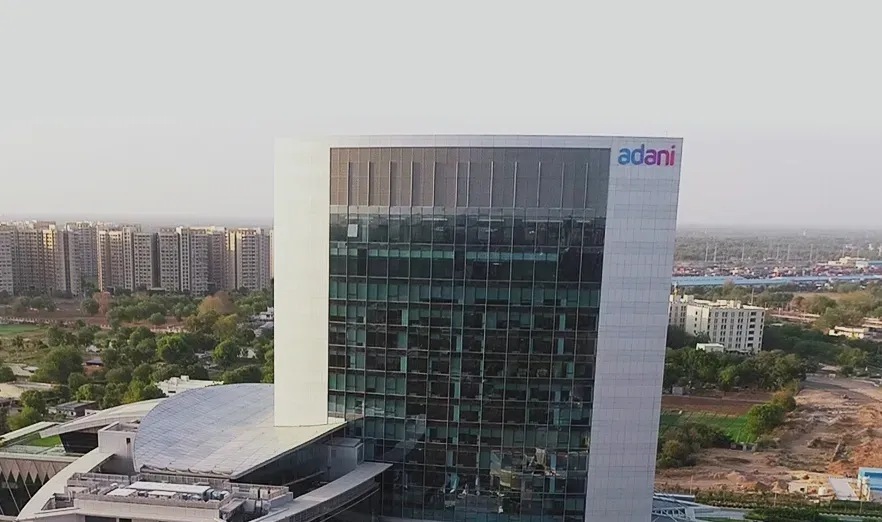
Adani Enterprises FY26: The Incubator Flexes Its Operating Leverage
General information and entertainment, not investment advice. The author is not a SEBI-registered adviser or research analyst. No recommendation, no promised returns. Markets carry risk including loss of capital. Figures may not be current. Consult a registered adviser before acting.
1 — At a Glance
FY26 delivered a textbook shift: revenue crawled 2.6%, but operating profit jumped 22.6% to ₹13,991 Cr. The company published net profit of ₹9,339 Cr on the P&L, but the bottom line hid a landmine. Other income surged to ₹11,688 Cr—a non-operating bonanza that inflated reported PAT by 65%. Strip it out, and the operating earnings picture looks less fairy-tale.
Debt hit ₹1,06,623 Cr, up 63% since FY24. Capital work in progress swelled to ₹51,753 Cr—airports, roads, data centres, all under construction. The company claims a run-rate EBITDA of ₹19,000 Cr, well above the reported ₹16,464 Cr from the concall framing. That gap—₹2,536 Cr—is the difference between fully commissioned assets and quarterly averages on partial-period operations.
Q4 FY26 alone took a ₹220 Cr net loss. Commercial mining weather damage and ₹600 Cr of non-cash FX MTM losses will not repeat. The platform is ramping.
Reader question: Does ₹19,000 Cr of run-rate EBITDA against ₹1,06,623 Cr of debt mean leverage at 5.6x, or do you scale it by the guided FY27 addition of ₹3,000 Cr?
2 — Introduction
Adani Enterprises (AEL) arrived in 1993 as the Adani Group’s incubator. Every major listed subsidiary—Power, Transmission, Ports, Gas, Green Energy, Wilmar—hatched here first. Today it owns the rest: airports, roads, mines, solar manufacturing, data centres, and a hand in defence, agro, and hydrogen plays.
The portfolio has spent FY25 and FY26 knitting together newly commissioned mega-assets. Navi Mumbai Airport (NMIA) opened December 2025, still in ramp-up mode. Ganga Expressway completed a record 3.5-year build in FY26; traffic is normalizing post-launch. Kutch Copper, freshly built, started operations. Six airports undergoing expansion or new terminal work. These are not one-quarter fixes. They are multi-year value plays.
Management reframed the narrative in April 2026: the “incubator-to-utility” portfolio shift is real. ~80% of EBITDA now sits in contracted, regulated, or long-term concession assets—airports (50-year tenures), roads (27-year tenures), mining services (long-term MDO contracts). The other 20% sits in trading and manufacturing, where volatility remains but scale has locked in.
Board approved a ₹15,000 Cr fundraise for FY27. OFAC settlement of $275 million was paid in May 2026. Acuité withdrew the commercial paper rating in May 2026 due to zero outstanding amount, not credit concern.
3 — Business Model: WTF Do They Even Do?
On a standalone basis, the parent does almost nothing. Consolidated, AEL is a hydra with four thick heads.
Integrated Resource Management (IRM) is the cash machine. FY26: ₹29,112 Cr revenue, ₹2,767 Cr EBITDA—coal imports from Indonesia, Australia, South Africa sold to Indian power plants, steelmakers, and utilities. FY26 volume: 44.6 MMT. Margins compress in volatility, but the business recycles capital: buy, move, sell, repeat. No capex starvation. IRM contributed ~28% of consolidated revenue but only 17% of EBITDA. The economics say “not premium, but essential.”
Mining Services (MDO) is the growth story. AEL develops and operates coal/iron ore mines for third-party operators. FY26: ₹4,536 Cr revenue (+20% YoY), ₹1,986 Cr EBITDA (+18% YoY). Portfolio: 18 MDO service agreements, peak capacity 145 MMTPA. Seven are operational, currently hitting 50 MMT run-rate. Gare Palma II came online in Q4; dispatch volume +14% YoY to 49.4 MMT. FY27 guidance: high double-digit volume growth, “close to 20%” off a 50 MMT base. This is a long-duration assets play—each mine ties AEL into 10–25 year service contracts.
Airports. AEL operates eight airports (including NMIA, which opened mid-Q4 FY26). FY26: ₹13,081 Cr revenue (+28% YoY), ₹5,394 Cr EBITDA (+55% YoY). Passenger traffic: 95.3 million. The growth came from both sides: tariff hikes and non-aeronautical revenue momentum (non-aero +31% YoY, aero +26% YoY). Non-aero—parking, retail, advertising—is the margin engine. New acquisitions (AGHPort ground handling, SKYIWAVE advertising) are strategic thickeners of this moat. NMIA is still ramping (management: “about 18 months”), but the demand signal is hot: the airport authority expects NMIA to saturate on MMR traffic alone within 12–18 months, forcing acceleration of Phase 2. This is the crown asset for value unlock; demerger window is “’27, ’28” per the CFO.
ANIL (New Industries & Solar). FY26 solar module sales: 4.9 GW vs stated capacity 4 GW (tolling arrangements made up the gap). Revenue ~₹12,000 Cr, EBITDA ~₹3,700 Cr. Wind: ₹3,700 Cr revenue, ₹760 Cr EBITDA. Capacity ramp: next 6 GW of module+cell capacity expected to show “towards second half” of FY27, with meaningful volumes “from next year.” Margins are compressing near-term due to India focus (“lower ASP than EU”), but management expects recovery via productivity. This is the incubator within the incubator—ANIL itself may become a target for carve-out.
Data Centres via AdaniConnex. New hyperscale order: 358 MW signed in Q4, ~40-month timeline. Google, Jabil, and Adani announced a $15 billion AI hub in Visakhapatnam in April 2026. The company declined capex numbers on the call but guided “similar to FY26 capex” for FY27 at ₹40,000 Cr total, of which ~₹17,000 Cr goes to airports.
4 — Financials Overview
Figures are consolidated, in ₹ crore. Results are Annual.
Metric
FY26
FY25
FY24
Change YoY (FY26 vs FY25)
Revenue
100,469
97,895
96,421
+2.6%
EBITDA
13,991
14,252
11,377
-1.8%
PAT (Reported)
9,339
7,112
3,240
+31.4%
EPS (Reported)
₹72.31
₹55.02
₹25.37
+31.3%
The headline: revenue growth stalled while EBITDA margin compressed. Operating profit actually grew 22.6% (₹13,991 Cr in FY26 vs ₹11,377 Cr in FY24), but other income inflated the bottom line beyond operational merit. FY26 saw ₹11,688 Cr of other income versus ₹6,403 Cr in FY25—a ₹5,285 Cr jump that powered the net profit beat. Strip it, and core profitability is treading water against a debt load that climbed 63%.
Interest expense ticked up 0.7% to ₹6,019 Cr (FY25: ₹5,978 Cr), signalling that debt service is eating into FCF despite lower absolute financing cost. Tax rate held at 28%, consistent.
Concall Framing (April 2026):
Management guided that FY26 EBITDA will rise to “run-rate ₹19,000 Cr” once commissioning effects wash out. They cited FY27 EBITDA additions of “over ₹3,000 Cr” from Navi Mumbai Airport + Kutch Copper + Ganga Expressway, noting this is “close to 100% probability” and “not peak EBITDA.” By end-FY28, the combined contribution from those three assets is guided to “somewhere between ₹6,000 Cr to ₹6,800 Cr.”
This forward guidance is not forecasting; it is the company’s own disclosed trajectory. The arithmetic produces a chain: ₹16,464 Cr (FY26 reported) → ₹19,000+ Cr (run-rate, all platforms ramped) → peak platform contributions of ₹6–6.8 Cr by FY28-end.
5 — Market Expectations & Historical Multiples
This section describes how the market is currently pricing the company and how that compares with its own history and peer group. It is descriptive, not predictive.
Metric
Current
Historical Average (10Y)
Peer Median
P/E
—
~27x
66.2x
EV/EBITDA
29.6x
—
—
Price to Book
4.70x
—
—
ROE
-3.38%
4%
—
ROCE
5.80%
9%
—
The P/E cannot be reported here because the company carries negative EPS in Q4 FY26 (₹-1.71 Cr net loss that quarter; ₹-220.71 Cr before that was annualised). Using FY26 reported EPS of ₹72.31, the P/E would be ₹2,942 ÷ ₹72.31 = 40.7x. Historical 10-year average