General information and entertainment, not investment advice. The author is not a SEBI-registered adviser or research analyst. No recommendation, no promised returns. Markets carry risk including loss of capital. Figures may not be current. Consult a registered adviser before acting.
1. At a Glance
Zelio E-Mobility scaled revenue to ₹303.54 Cr in FY26 (up 77% YoY), with net profit reaching ₹28.03 Cr (up 75% YoY from ₹16.01 Cr). The company now claims 70,000+ two-wheeler units shipped in the fiscal year.
The headline tension is acute: the P/E sits at 42.3x while three-year ROE stands at 53% and ROCE at 38.4%. A 10.7x book-value multiple reflects IPO timing (October 2025) and the low-speed EV segment’s current narrative.
Capital intensity looms—four plants now operational, three came online in FY26 alone. Cash from operations turned negative (−₹7.39 Cr vs. −₹9.57 Cr prior year), though net cash flow swung positive at ₹25.69 Cr after financing inflows of ₹42.37 Cr.
The question: Does the company’s growth rate and emerging scale justify the valuation, or is it purely momentum pricing?
2. Introduction
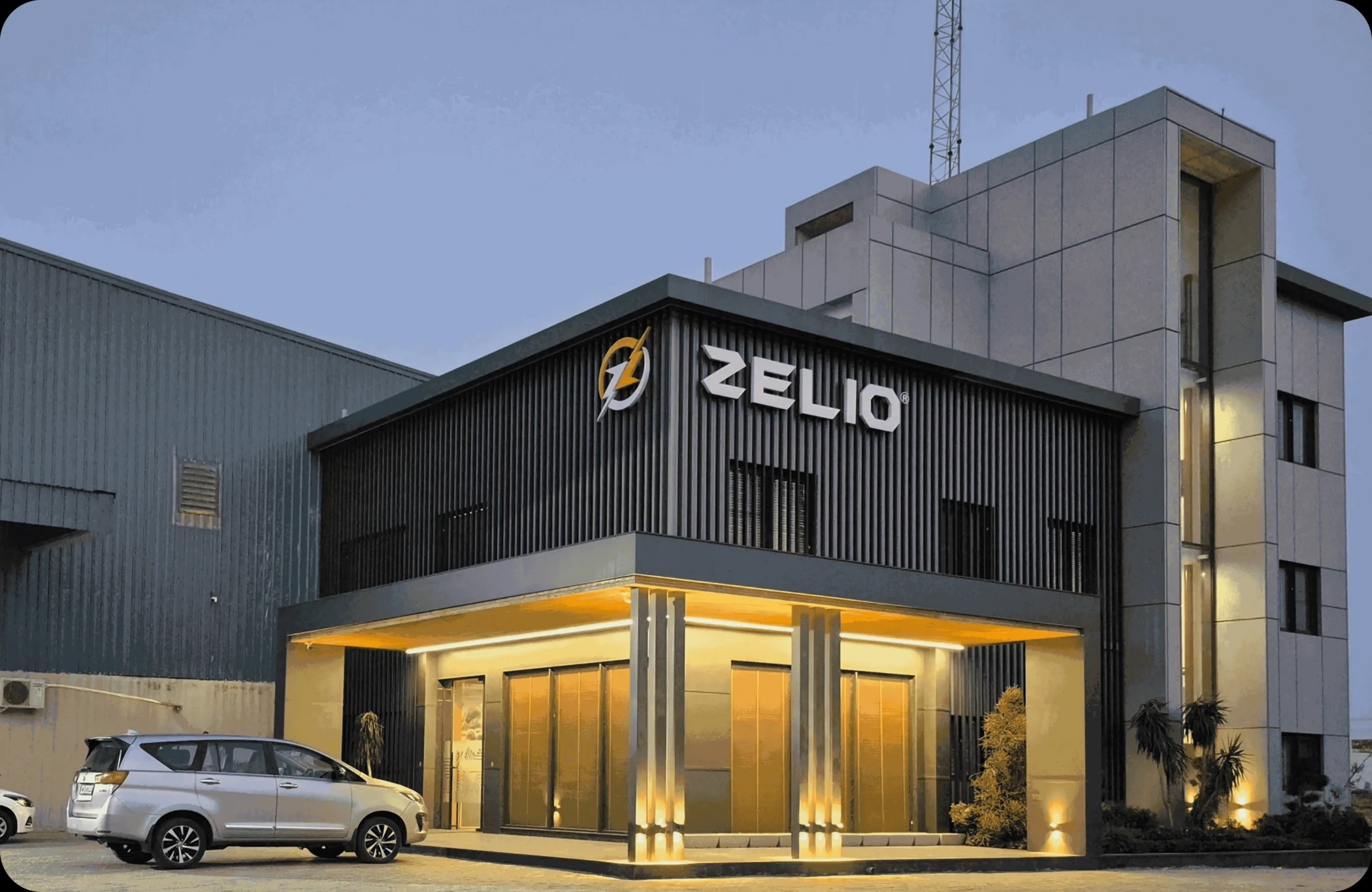
Zelio E-Mobility manufactures electric two-wheelers (Zelio brand) and three-wheelers (Tanga brand) across Haryana, Odisha, Tamil Nadu, and Gujarat. The business is just over a decade into profitability and four years into what management calls a “121% revenue CAGR” expansion from ₹12.89 Cr (FY22) to ₹303.54 Cr (FY26).
The company went public in October 2025 at a ₹75 Cr IPO (₹62.84 Cr net), listing on BSE SME with a ₹1,186 Cr market cap at current prices.
Zelio targets the low-speed two-wheeler segment (₹50–75k price band, no mandatory registration), which management characterizes as an “8–10 lakh units per year” category growing at 20–25% annually. The company claims 5% market share in this segment as of FY26.
Recent announcements: Divyanshu Agarwal took over as CEO in April 2026 (previously of Navi); the Odisha plant (60,000 units) commenced operations in February 2026; Tamil Nadu and a dedicated three-wheeler facility in Haryana both went live in July 2026.
3. Business Model: WTF Do They Even Do?
Zelio assembles electric two- and three-wheelers from imported and domestically sourced components, then distributes through 400+ dealers (targeted to expand to 550+ in FY27).
The two-wheeler product range spans EEVA, EEVAZX, Gracy, Legender, Mystery, and XMen—essentially positioning variants (speed, range, color) into user buckets: students, homemakers, gig workers, and Tier 2 town residents.
The three-wheeler line (Tanga, Tanga e-Loader) remains nascent—800 units sold in FY26, with a ₹2,000+ unit target for FY27.
Management’s localization play is ambitious: Zelio Auto Components Ltd (wholly owned subsidiary) now sources “bulk components 100% indigenous” with a goal of 70–80% Make-in-India content across 5–6 models by FY27/FY28. Battery assembly and technical imports remain external.
The dealer network is shifting toward 100% exclusive outlets (currently ~70%). Management cites this as a branding control lever.
The question is distribution depth: Zelio operates in 25+ states but has concentrated northern presence. South India penetration—enabled by the Tamil Nadu plant—is still nascent.
4. Financials Overview
Figures are consolidated, in ₹ crore.
Metric
FY26
FY25 YoY
FY24
Revenue
303.54
+77%
94.20
EBITDA
38.01
—
—
PAT
28.03
+75%
6.31
EPS (full year)
13.25
—
2.10
Concall notes (June 2026 earnings call):
Management asserted “not a single quarter of losses” and “not a single year of EBITDA burn” since inception. EBITDA for FY26 came to ₹38.01 Cr on a 12.2% margin. PAT clocked ₹28.39 Cr (management reported) with a 9.1% net margin, and management claimed PAT has compounded at “~124% CAGR since FY23.”
Operating leverage is cited as the margin driver going forward. Management committed to maintaining profitability without trading it for “vanity volume,” stating this is “the Zelio way.”
No dividend has been paid; the company reinvests all earnings into plant, working capital, and inventory buildup.
5. Market Expectations & Historical Multiples
This section describes how the market is currently pricing the company and how that compares with its own history and peer group. It is descriptive, not predictive.