Wanbury Ltd FY26: Turnaround in Progress, Leverage Still Unpaid
General information and entertainment, not investment advice. The author is not a SEBI-registered adviser or research analyst. No recommendation, no promised returns. Markets carry risk including loss of capital. Figures may not be current. Consult a registered adviser before acting.
1. At a Glance
Wanbury posted FY26 revenue of ₹650 Cr, up 8.5% YoY, with net profit jumping to ₹66 Cr from ₹31 Cr—a swing powered by margin recovery, cost discipline, and favourable tax write-backs. Yet the balance sheet still carries ₹224 Cr in debt against ₹110 Cr in reserves, a leverage story that hasn’t fully resolved. The company manufactures active pharmaceutical ingredients (APIs) in regulated export markets, where it holds 11% of global Metformin and 30% of global Sertraline capacity.
Metformin and Sertraline together account for 85–90% of API revenue—high concentration, and commoditised Metformin is vulnerable to input-cost whips. New product launches are underway: four molecules in FY27 promise ₹60–70 Cr of incremental annual revenue. The market pays 13.8x this year’s earnings; the 5-year average sits at 26.7x.
A company pulling out of structural distress, managing capex prudently, but saddled with medium-term debt servicing. The numerics say turnaround; the balance sheet says “not yet.”
2. Introduction
Wanbury was incorporated in 1988 and has spent the last four decades threading the needle between global APIs and domestic formulations. For much of the 2010s and early 2020s, it stumbled: leveraged acquisitions in Spain, price erosion in regulated Europe, and high-cost borrowings left it with negative net worth by FY23 (₹–183 Cr in reserves).
By FY25, a reset began. The company monetised non-core assets, raised equity and structured NCDs, and settled expensive bank debt. In February 2025, it refinanced ₹200 Cr of NCDs at 12.5%, locking in lower carry costs going forward. Infomerics upgraded its rating to IVR BBB-/Stable in March 2026, removing the issuer from non-cooperation status. The company now exports to 50+ countries, operates two USFDA-approved plants, and has started filing for approvals in regulated markets—the US, EU, Latin America, South Korea—where margins hold better and customer stickiness is real.
3. Business Model: WTF Do They Even Do?
Wanbury is 88% API, 12% formulations by revenue. The API side is a global shop: it manufactures Active Pharmaceutical Ingredients—the chemical bulk drugs that generic drugmakers buy to turn into pills.
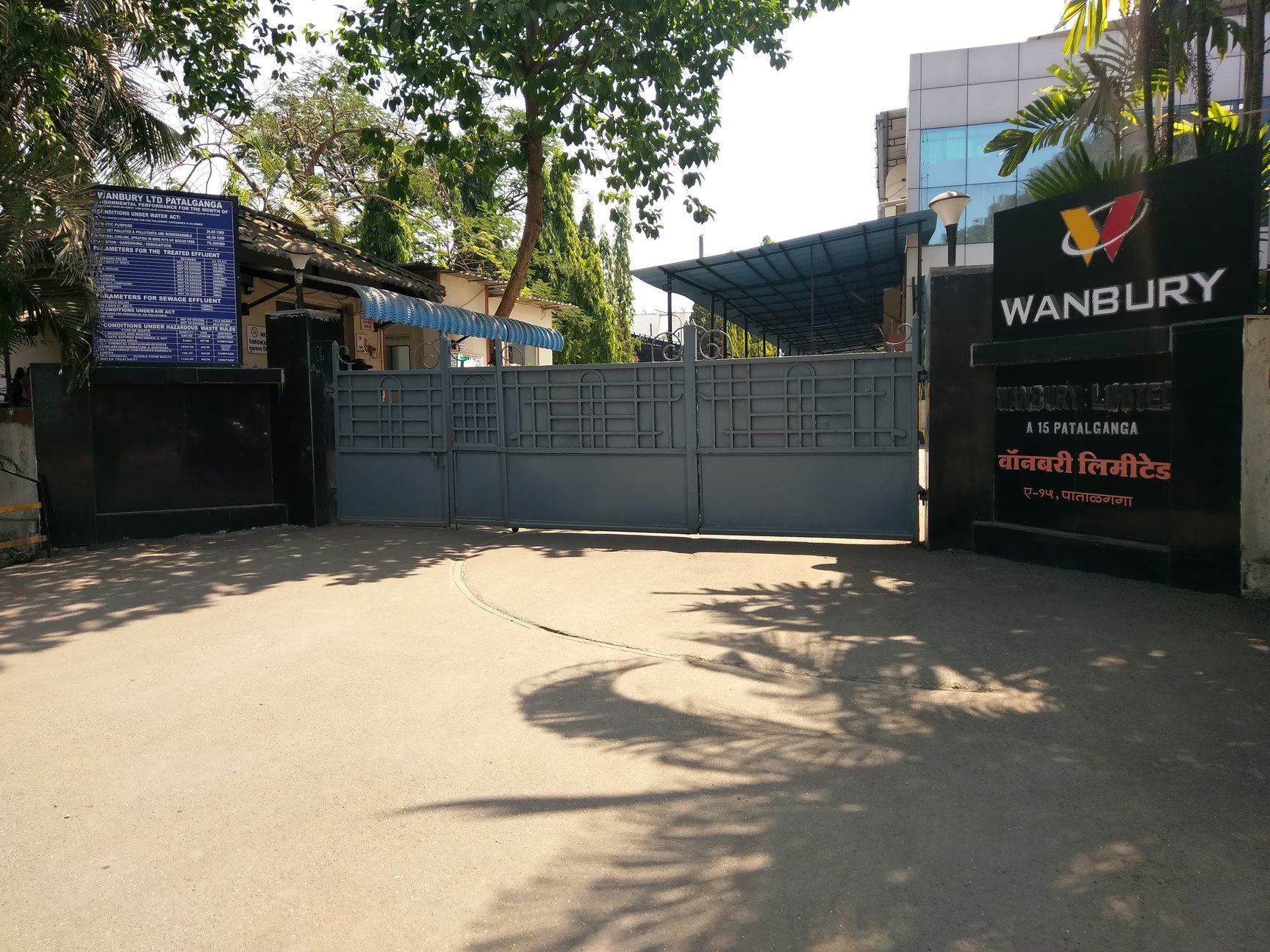
Two plants: Tanuku (Andhra Pradesh) runs 400 KL of reactor capacity and makes Metformin, Sertraline, Tramadol, Paroxetine, Mefenamic Acid, Diphenhydramine, plus a new anaesthetic API. Patalganga (Maharashtra) runs 96 KL and focuses on Metformin and its modified-release variant.
Revenue splits: Metformin ~50%, Sertraline ~40%, Tramadol, Diphenhydramine, and niche actives ~10%. Exports are ~70% of the top line, most bound for regulated markets (Europe, Latin America, South Korea) where pricing discipline beats the Indian generic wars.
The formulation business is a pan-India ethical shop with 70 brands: Clavcure, Rabiplus, Coriminic, Nock, Zeva, etc.—gynaecology, orthopedics, antibiotics, cough & cold, neutraceuticals. Small, steady, domestic cash generator. It’s not the growth engine, but it pays bills and keeps field forces busy.
The moat: global market share in niche APIs. Metformin is commoditised (huge capacity, many players), so margins are thin; Sertraline is tighter (30% of global capacity), so pricing power exists. The formulation business is a moat-free zone—it’s just another pan-India ethical box, crowded and low-margin. Management has been smart to let APIs lead.
The story: Revenues grew 8.5%, but margins surged. EBITDA jumped 40%, driven by three tailwinds: (a) process efficiencies (E&Y benchmarking, improved input–output ratios), (b) plant debottlenecking without major capex (10–15% capacity uplift), (c) solvent recovery yielding higher batch yields. PAT near-doubled, but carry unusual tax items: a ₹360 Cr exceptional charge (₹3.6 Cr in gross terms) for gratuity/leave liability under the new Labour Codes, offset by a ₹551.67 Cr deferred-tax write-off (₹5.5 Cr in net terms) due to transition to the concessional income-tax regime effective April 2026. Strip those, and the core operating earnings rose about 50%.
Operating profit rose from ₹76.3 Cr (FY25) to ₹107 Cr (FY26), a 40% gain. Interest expense fell from ₹37 Cr (FY25) to ₹30 Cr (FY26), thanks to refinancing of expensive ARC debt with cheaper NCDs. The company’s average cost of borrowing has declined.
One caution: debtor days at 80 are sticky (2-month average), inventory 67 days. Working capital is a drag that the company is managing but not curing. Free cash flow for FY26 was negative ₹28 Cr (investing activity ₹56 Cr, mostly capex).
5. Market Expectations & Historical Multiples
This section describes how the market is currently pricing the company and how that compares with its own history and peer group. It is descriptive, not predictive.
Metric
Current
5-Year Average
Peer Median
P/E
13.8
26.7
32.2
EV/EBITDA
10.9
—
—
ROE
68.4%
—
12.5%
ROCE
30.8%
—
15.1%
The market currently pays 13.8x earnings here, against a peer median of 32.2x and its own 5-year average of 26.7x. The variance is large: peers are expensive, history is expensive, this is not.
The multiple sits below both peer group and the company’s own history, suggesting the market is pricing in either recovery doubt or leverage risk.