General information and entertainment, not investment advice. The author is not a SEBI-registered adviser or research analyst. No recommendation, no promised returns. Markets carry risk including loss of capital. Figures may not be current. Consult a registered adviser before acting.
1. At a Glance
A luxury residential developer in New Delhi and Gurugram just booked its largest annual revenue on record: ₹330 crore.
But ₹342 crore of that came from “other income”—suspiciously high, and concentrated in Q4. Without it, sales were flat and PAT would have turned negative.
Three projects are underway with a stated GDV of ₹9,000 crore. The company has commenced handovers at one of them (TARC Tripundra), finally allowing revenue recognition to begin. For FY26, that accounted for ₹270 crore of the ₹330 crore sales number.
The debt pile sits at ₹1,895 crore against a market cap of ₹3,698 crore. ROCE is 2%, ROE is 2%. The multiple is 194x earnings—mostly because earnings were paper-thin.
Regulatory clouds: SEBI ordered a forensic audit for FY2020–23, and the Enforcement Directorate visited premises in April 2025. The rating agency kept its BBB- on watch with negative implications.
2. Introduction
TARC began as Anant Raj Global, a construction contracting outfit, and rebranded in 2021 as The Anant Raj Corporation. Its core business is luxury residential development in the NCR region.
The founding family—Anil Sarin (Chairman) and brother Amar Sarin (MD & CEO)—has over four decades in the trade. The company claims to hold ~550 acres of fully-owned land across Delhi and Gurugram, underpinning a stated pipeline of ₹9,000 crore GDV.
Three ongoing projects define the current story: TARC Tripundra (~1,000 crore GDV), TARC Kailasa (~4,400 crore GDV), and TARC Ishva (~3,600 crore GDV). All luxury, all positioned at high price points.
Presales (gross bookings) hit ₹1,373 crore in FY26, against ₹415 crore in FY25. Collections were ₹799 crore. The company projects ₹10,000 crore of cash inflows over the next five years—a broad claim resting on execution of ongoing projects.
In May 2025, Infomerics reaffirmed its rating at BBB- but placed it under watch with negative implications, citing the SEBI forensic audit directive and the Enforcement Directorate’s search. The company says neither has operational impact, but the rating agency disagreed publicly.
3. Business Model: WTF Do They Even Do?
TARC develops high-end residential apartments in central and south Delhi and Gurugram. The pitch is “differentiated luxury curated residences”—a branding umbrella covering three ongoing projects and a pipeline of ultra-luxury towers in architecturally constrained urban locations.
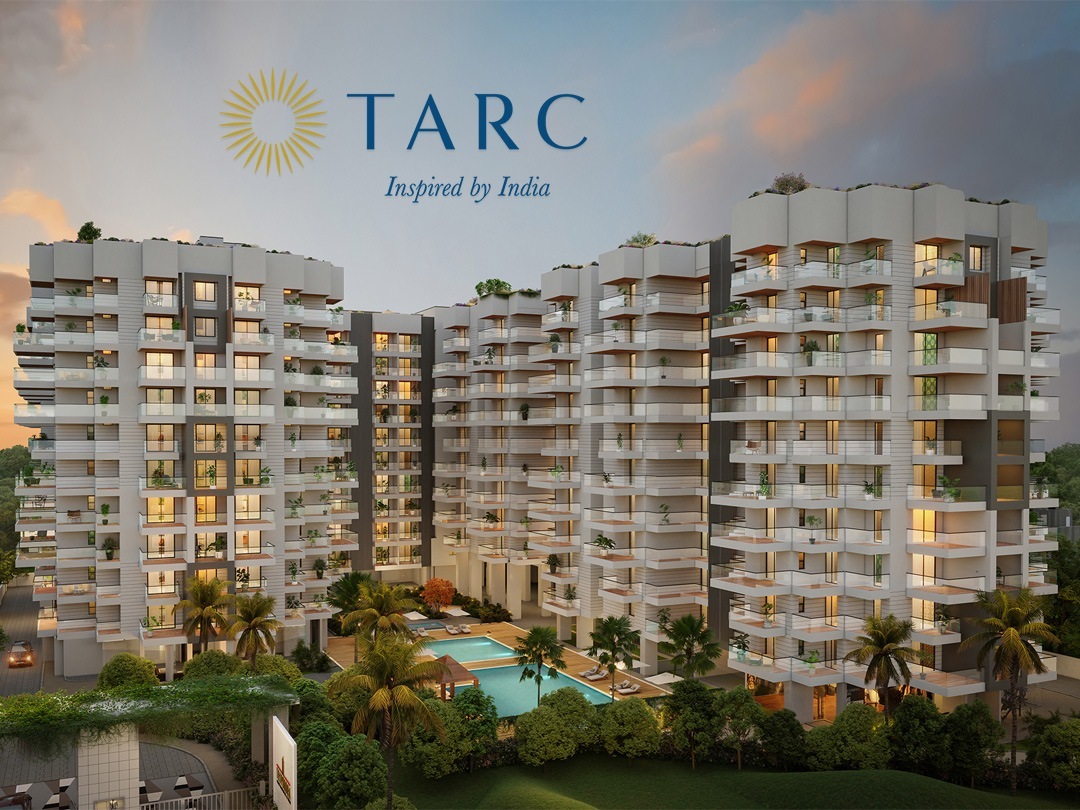
Product mix. TARC Tripundra: 3/4 BHK apartments in a ~3-acre plot, IGBC Gold-certified, with amenities (pools, gyms, gardens). TARC Kailasa: large-format luxury, “bespoke homes,” ~6 acres, pitched as four-side-open residences. TARC Ishva: four-side-open 3/4 BHKs in Sector 63A, Gurugram, spanning ~9 acres, with pools, cryo-sauna, fine dining curated spaces.
Pricing & realization. Average selling price per sq.ft. stood at ₹25,000 in FY24 (last disclosed point). Presales in Q4 FY26 suggest price appreciation—₹1,373 crore of presales across three ongoing projects with ~1.9 million sq.ft total saleable area works out to ~₹7,200 per sq.ft gross GDV, lower than reported project GDVs, likely because not all units are equally premium-priced and some projects are in early sales phases.
Geography & leverage. All projects sit in Delhi NCR. No diversification. The company holds land leases and full ownership across multiple parcels—a capital-intensive model that needs selling to unlock cash. A presales-to-collections ratio of 58% in FY26 hints at how much unsold inventory sits in projects.
Margin profile. Tripundra, the only project with handovers and revenue recognition, claims a 45% gross margin at project level. If that sticks across Kailasa and Ishva (no guarantee), then the three projects together could yield gross profit of ~₹4,050 crore on ₹9,000 crore GDV. Subtract land carry, capex, overheads, interest, and taxes—the company’s earlier track record (15–20 years ago) showed PAT margins in the low single digits. Luxury positioning and “curated experience” don’t defray debt service.
4. Financials Overview
Figures are consolidated, in ₹ crore.
Metric
FY26
FY25
FY24
FY23
Revenue
329.84
33.69
111.45
368.66
Other Income
341.94
5.20
4.18
1.66
Total Income
671.78
38.89
115.63
370.32
Operating Profit
(90.27)
2.30
3.48
2.94
EBITDA
77.51
(127.77)
(46.27)
10.63
EBITDA Margin %
11.54
(327.8)
(40.0)
2.9
Interest
52.61
106.45
61.76
117.22
Depreciation
10.10
8.99
6.49
7.19
PBT
14.80
(243.20)
(86.01)
(103.46)
Tax
(4.23)
(11.90)
(8.97)
(20.78)
PAT
19.07
(231.22)
(77.05)
(82.68)
EPS (₹)
0.65
(7.84)
(2.61)
(2.80)
Q4 FY26 split. Q4 posted sales of ₹208.7 crore against ₹11.82 crore in Q4 FY25—a 1,665% increase. Other income that quarter was ₹91.32 crore (against ₹2.08 crore in Q4 FY25). Without that other income injection, Q4 operating profit would have collapsed into the negative territory seen in most prior quarters.
The turnaround in EBITDA—from ₹(127.77) crore to ₹77.51 crore—is driven entirely by revenue recognition kicking off at Tripundra. The question is whether the three-project pipeline sustains that or whether “other income” was a one-time affair (it wasn’t in Q3, but was in Q4).