ASHAPURA MINECHEM FY26: GUINEA BAUXITE DOUBLED REVENUE, NOW WAITING FOR THE MARGIN RECOVERY THAT DIDN’T SHOW
General information and entertainment, not investment advice. The author is not a SEBI-registered adviser or research analyst. No recommendation, no promised returns. Markets carry risk including loss of capital. Figures may not be current. Consult a registered adviser before acting.
1. AT A GLANCE
FY26 saw Ashapura Minechem deliver its strongest revenue year — ₹5,237 crore, up 91% from ₹2,739 crore in FY25. Net profit climbed to ₹401 crore from ₹296 crore, a 35% jump. The driver was Guinea bauxite: 8 million tons exported in FY26 versus 3.5 million the year prior, a more-than-doubling of volumes from the company’s African mining and logistics arm.
But here’s the tension. The market cap sits at ₹6,561 crore on a trailing P/E of 16.2x. Meanwhile, PAT margin compressed to 7.7% in FY26 from 10.8% in FY25—a warning light that scale and speed did not translate to richer profitability. Guinea’s business mix, which now accounts for roughly ₹4,200 crore of FY26’s ₹5,237 crore revenue, carried EBITDA margins of just 13.3%, pressured by freight, fuel, and Guinean government taxes tied to aluminium spot prices.
The balance sheet ended unencumbered: ₹329 crore in cash against ₹1,444 crore in debt, a net debt position of ₹1,115 crore. Equity sat at ₹1,649 crore. The bet is simple: scale Guinea’s volumes to 10–15 million tons (phased over FY27–FY28), hope that a new bauxite quota system cuts freight costs, and let India’s ₹150 crore capex plan compound margins in the specialty minerals business.
The teaser: a company that doubled revenue in one year but is asking investors to wait for the quarter-by-quarter grind of margin recovery.
2. INTRODUCTION
Ashapura Minechem traces its roots to 1982 as a domestic mineral processor and trader. For decades it was known chiefly for bentonite, bleaching earth, and kaolin — workaday additives for foundries, oil & gas, and food processing. India represented the core of the business, with steady but unspectacular returns.
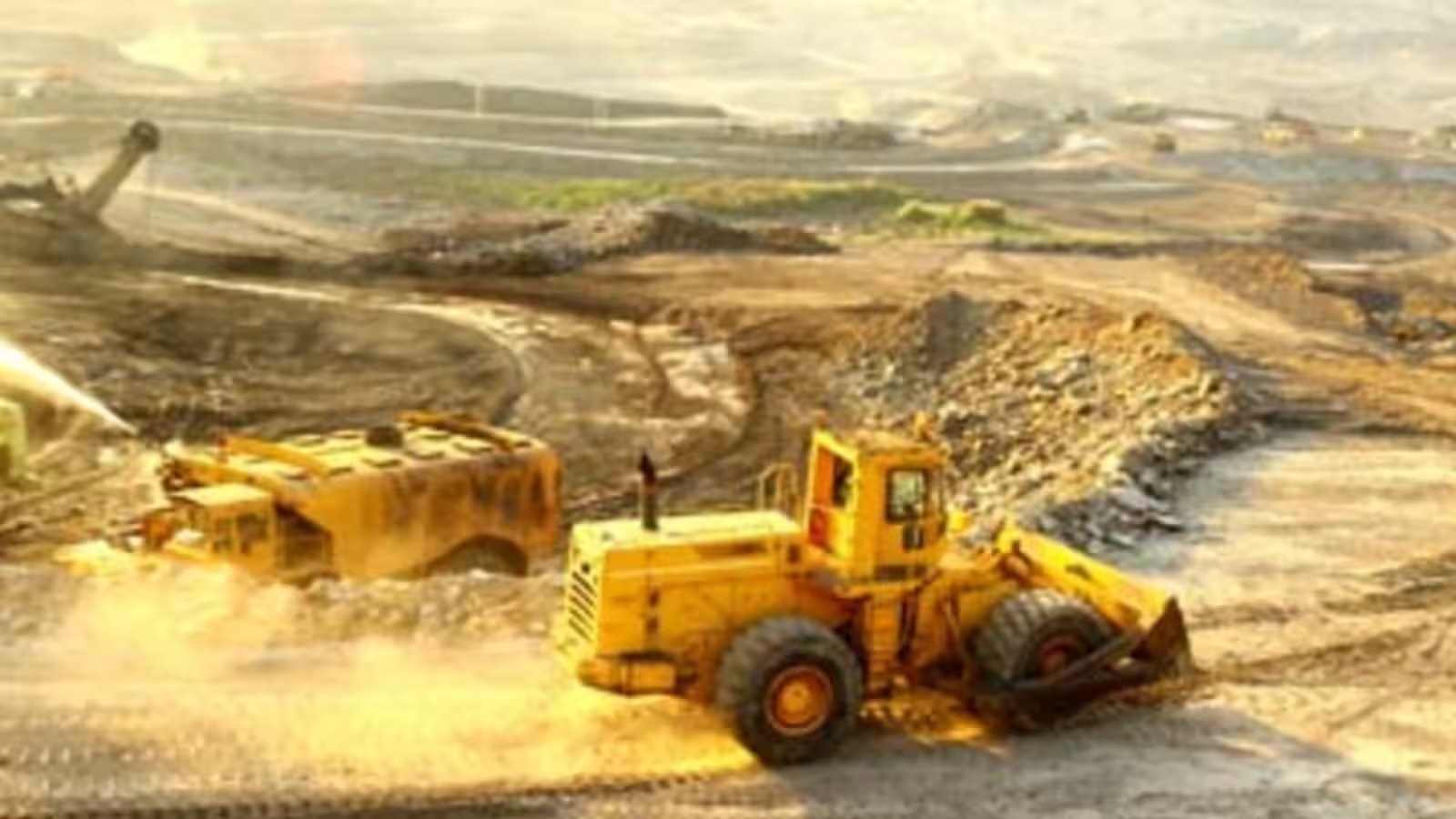
The inflection point came via Guinea. In 2017–2019, the company began exploring and permitting bauxite deposits in the West African nation. By FY25, the venture was exporting; by FY26, it had become the revenue engine.
The shift is real. Guinea bauxite now represents roughly 80% of FY26 revenue, whereas the India operations (Bentonite & Allied, White Minerals, Specialty Adsorbents, and Advanced Ceramics) account for the remainder. The company also maintains a 50% JV stake in Ashapura Perfoclay (specialty adsorbents) and a strategic investment in Orient Ceratech.
Recent moves underline the geographic and operational reorientation. In October 2025, founder Chetan Navnitlal Shah stepped down as Executive Chairman, transitioning to Non-Executive Director; a new executive took the helm. In December 2025, the Konkoure River bridge in Guinea was commissioned, enabling exports from the Boffa East deposit. In January 2025, management signed an MOU with China Railway for bauxite project development.
A restructuring disguised as growth — or growth finally releasing itself from domestic mineral constraints. Management’s framing on the June 2026 concall was unambiguous: “best year in the history of the company.”
3. BUSINESS MODEL: WTF DO THEY EVEN DO?
Strip away the noise, and Ashapura is a B2B commodities miner and logistics operator. It mines ore, processes it (crushing, washing, separation), and ships it—either to end-users or, increasingly, to traders and industrial consumers. The company has zero consumer brands; every product is an intermediate input to someone else’s final good.
Product portfolio (by strategic tier):
Tier 1: Guinea Bauxite. Mining, beneficiation, and export logistics for aluminium-precursor ore. FY26 volumes: ~8 million tons. The economics are ugly per unit but massive in aggregate: low-margin commodity extraction, heavily exposed to freight and spot-linked taxation.
Tier 2: India Minerals. A diversified domestic portfolio spanning:
Bentonite (world’s 3rd-largest producer, per company claim; 35% India market share by management’s estimate)
Bleaching Earth (used in edible oils, foundry dusts)
Kaolin (china clay, foundry and refractories)
Calcined China Clay and Ground Calcium Carbonate (specialty finishes)
White Performance Minerals (fillers, additives for ceramics, paint, polymers)
Tier 3: Specialty & JV Assets. A 50% stake in Ashapura Perfoclay (adsorbent solutions, raw material for drilling muds and refinery catalysts); an investment in Orient Ceratech (refractory ceramics). Both carry higher margins but lower scale.
The India business operates across foundry, metal processing, oil & gas, edible oils, petrochemicals, paints, coatings, and construction. Distribution is B2B, pan-India warehousing. The company claims ₹150 crore of capex planned for India upgrades and new product lines over the next year.
End-market exposure (FY26 concall disclosures): Guinea bauxite is exported to aluminium smelters globally, with growing demand signaled by customers pre-booking shipments ahead of price rises. India minerals feed foundries, refineries, and industrial additive blenders across Asia and Europe (exports account for ~53% of India revenue per FY26 concall).
The business model, then, is volume-driven commodity mining with a specialty tail. Margin comes from cost discipline, scale, and scarcity. Guinea bauxite proved the scale bet; India minerals prove the scarcity bet (leading market shares in bentonite, kaolin, bleaching earth in India imply pricing power, though FY26 showed that input cost shocks can overwhelm it).
The catch: freight, fuel, electricity, and regulatory taxes can wipe out the upside in a bad year. FY26 was a +91% revenue year with -230 basis point margin compression. That is the business.
Concall detail (FY26 consolidated, excluding exceptional items): Management stated EBITDA at ₹674 crore (inclusive of other income) and PBT at ₹450 crore before exceptional items. The tightness between reported PBT (₹445 crore in the data sheet) and management’s stated ₹450 crore reflects rounding and minor timing variances.
Revenue in FY26 scaled to ₹5,237 crore, driven by Guinea bauxite volumes of 8 million tons (versus 3.5 million prior year). Management attributed margin compression to “increase in fuel cost, freight cost, increase in tax and duty by the Guinean government because the tax and duty is connected with the LME aluminium metal.” Q4 specifically saw ₹1,969 crore in revenue (+105% QoQ) against PBT of ₹147 crore (+65% QoQ), implying operational gearing kicked in late in the year.
India operations contributed ₹998 crore in FY26 revenue with EBITDA of ₹112 crore per concall disclosure. This segment faced “logistics intensity,” “higher input costs,” and a “product-mix shift toward lower-margin products.” Specialty Adsorbents (Perfoclay JV) were hit hardest by “sharp increase in sulfuric acid prices,” a key raw material.
Wisdom drop: Revenue that doubles while profit merely trebles is a margin story masquerading as a growth story.
5. MARKET EXPECTATIONS & HISTORICAL MULTIPLES
This section describes how the market is currently pricing the company and how that compares with its own history and peer group. It is descriptive, not predictive.
Metric
Current
5-Yr Average
Peer Median
P/E
16.2x
14.8x
19.2x
EV/EBITDA
11.0x
—
—
ROE
28.0%
24.8%
14.7%
ROCE
20.7%
19.0%
15.6%
The market currently pays 16.2x earnings, near its 5-year average of 14.8x. This sits below the broader Nifty Metals & Mining peer median of 19.2x, suggesting the market is pricing in either near-term margin volatility or skepticism about Guinea scale-up.
ROE of 28% is elevated versus the peer median of 14.7%, reflecting the high-margin India specialty business and improving asset turnover from Guinea scaling. ROCE at 20.7% also exceeds the peer median of 15.6%, signaling that capital is working faster despite FY26’s margin compression.
The market appears to be pricing in a waiting story: volumes rising, margins recovering post-quota, and the India ₹150 crore capex plan beginning to compound returns. The current multiple is neither discounting a collapse nor pricing in a re-rating; it is neutral to the near-term noise.
Observation: The yield (inverse P/E) sits at 6.2%, meaningfully below the 5.4% cost of equity implied by the company’s WACC (rough estimate: 7% cost of debt on ₹1,444 Cr debt, 14% cost of equity, 48% debt/value weighting), suggesting the market is not penalizing execution risk heavily.
6. WHAT’S COOKING
Guinea bauxite quota system (imminent). The Guinea government is planning to implement a bauxite export quota system, “hopefully within this month” (per June 2026 concall). Management expects this to reduce national export volumes by 20–25%, with curbs landing on “three or four large players doing 70–80 million tons.” Ashapura, at 8 million tons, would benefit from reduced freight and logistics competition. No new bauxite licenses will be issued for 3–5 years, designed to force utilization of existing permits first. This is a material catalyst—management flagged it as prerequisite to giving firmer guidance on Q1 and beyond.
Boffa port expansion to 10 million tons. The company’s main export facility in Guinea, port capacity expanding from 5 to 10 million tons. Initially targeted for end of Q2 FY27 (Sept 2026); the Konkoure River bridge was commissioned in Dec 2025, enabling early access to higher-grade ore. Implication: 10 million tons annual nameplate by end of FY27 is feasible if volumes cooperate.
Guinea iron ore commissioning (slow-burn). Iron ore mining is in commissioning phase, “slower than expected.” Head grades are 40–50% Fe; management is targeting beneficiation to 60%+ Fe post-washing. Beneficiation plant sizing is “north of 1.5 million tons” capacity (not finalized). This is speculative and several years out, but management is exploring vendor-funded (BOT) capex structures to avoid balance-sheet loading. If realized, it adds a second commodity leg to Guinea.
Bauxite beneficiation plant (20k TPD). The company is installing a 20,000-ton-per-day bauxite washing plant to upgrade sub-grade ore into export-quality material. Purpose: monetize ore currently non-marketable and improve the overall cost curve. Expected to come online over the next 12–18 months, adding upside if realised.
India capex: ₹150 crore planned. Across Bentonite & Allied, White Minerals, and Specialty Adsorbents, the company plans “roughly ₹150 crores” of capex over the next year to upgrade plants and expand higher-value product lines. Management framed benefits as medium-term (“visible impact in a couple of years”). Seven new bentonite leases were granted in the quarter to secure India resource base.
Advanced Ceramic Materials delivering. The Orient Ceratech investment showed “encouraging growth” YoY, partially offsetting India margin headwinds. No hard numbers disclosed, but management signaled continued positive contribution.
Debt position stable. No plan to increase net debt; working capital may rise with volume ramp, but repayment focus is medium-term. With ₹329 crore cash and ₹1,444 crore debt, the company has ₹1,115 crore net debt — manageable against ₹555 crore EBITDA (net debt/EBITDA = 2.0x).
7. BALANCE SHEET
Item
FY24
FY25
FY26
Total Assets
3311
3931
4698
Net Worth
930
1242
1649
Borrowings
984
1163
1444
Other Liabilities
1397
1526
1605
Total Liabilities
3311
3931
4698
Assets validation: Total Assets (₹4,698 cr) = Total Liabilities (₹4,698 cr). Balance sheet balances.
Breakdown snapshot:
Net Block (fixed assets): ₹1,499 crore (up from ₹577 crore in FY24), driven by Guinea port and mining infrastructure buildout.
CWIP (capital work in progress): ₹51 crore, reflecting the bauxite beneficiation plant and India capex pipeline still under execution.
Current Assets (Cash + Receivables + Inventory): ₹1,915 crore.
Cash & Bank: ₹329 crore (up from ₹122 crore in FY25), a meaningful buildup.
Wit & Sarcasm: The balance sheet is growing assets faster than net worth, which means the company is levering up to fund Guinea’s expansion. Debt rose ₹281 crore in FY26 alone (₹1,444 vs ₹1,163 in FY25). That debt is not bankrolling a dividend; it’s bankrolling ore extraction in a country where the government taxes you based on aluminium spot