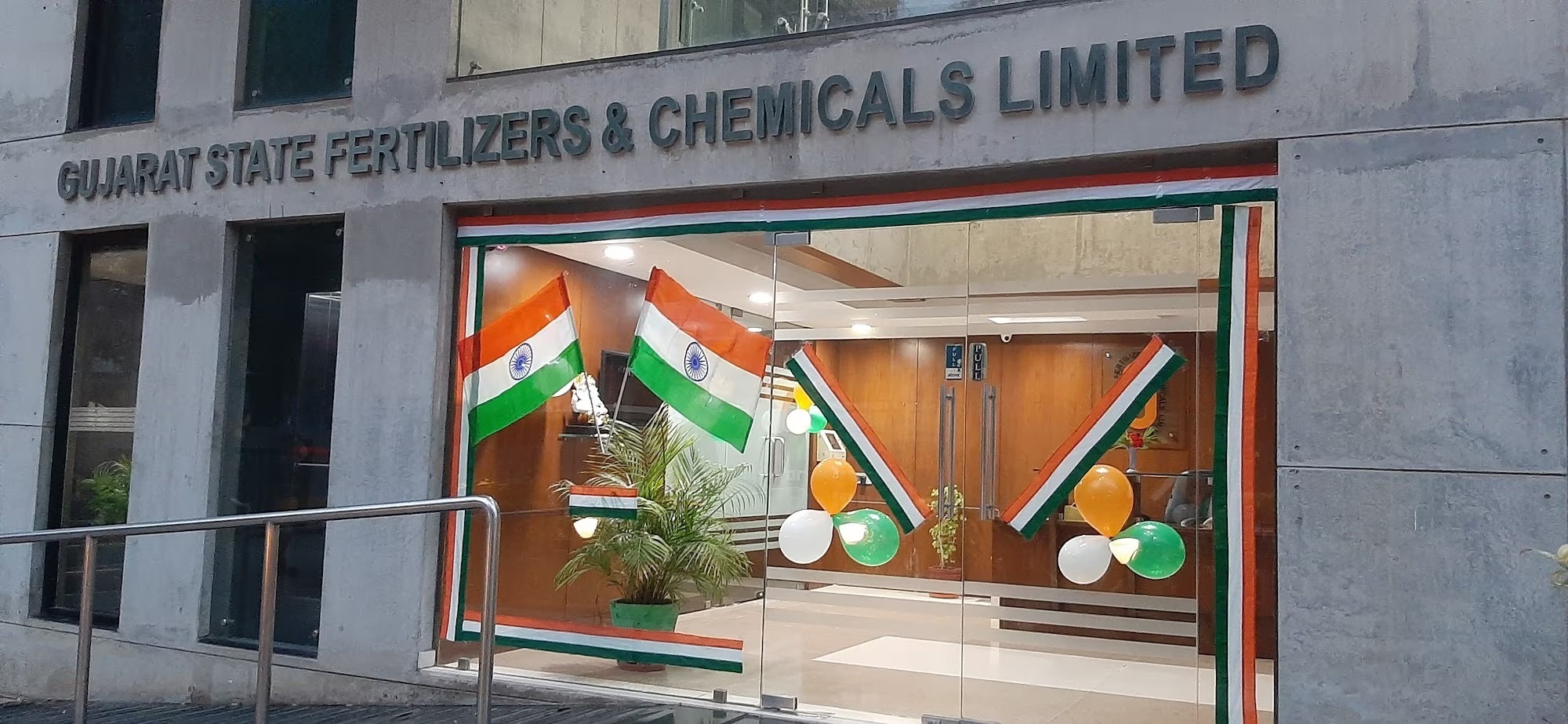
Gujarat State Fertilizers & Chemicals Ltd (GSFC) FY26: A ₹10,946 Crore Balancing Act Between Government Life Support and Geopolitical Drama
Date of Publishing -
Spotted a factual error — a wrong number, date, or fact? Tell us and we will check the source.
1. At a Glance
An analysis of Gujarat State Fertilizers & Chemicals Ltd (GSFC) reveals a multi-layered financial narrative where record topline achievements obscure underlying structural margin vulnerabilities. In the financial year ended March 31, 2026, consolidated revenue from operations crossed a monumental milestone, scaling to ₹10,946 crore—a compelling 14.8% expansion year-on-year compared to the ₹9,534 crore recorded in the previous fiscal year. This expansionary momentum was primarily anchored by a significant operational turnaround in the core fertilizer segment, where total sales volumes registered a 12% growth to hit 22.31 lakh metric tonnes, up from 19.88 lakh metric tonnes in the prior year.
However, beneath this aggressive volume progression lies an intricate framework of state dependency and commodity price volatility. The company’s operating profit margins (OPM) remained flat at 7.22%, compressed by severe geopolitical disruptions in the Middle East that drove international sulfur prices to an elevated $850 per metric ton and triggered widespread input cost inflation across ammonia and sulfuric acid. While absolute consolidated net profit advanced by 13.9% to ₹673 crore, matching an annual earnings per share (EPS) of ₹16.88, the quality of these earnings merits structural scrutiny. A substantial portion of the profitability buffer continues to be propped up by non-operating streams, with other income contributing ₹287 crore to the profit before tax (PBT) pool of ₹861 crore.
Furthermore, free cash flows dipped into negative territory for the third consecutive year, printing at a negative ₹172 crore as capital expenditure outlays of ₹675 crore collided with heavy inventory accumulations of ₹1,879 crore. True corporate financial autonomy is rarely achieved when structural cash generation is consistently outpaced by the capital expenditure demands of vintage legacy assets and volatile inventory cycles. Investors must now assess whether GSFC’s fortress balance sheet can withstand a transitioning subsidy regime.
2. Introduction
Gujarat State Fertilizers & Chemicals Ltd (GSFC), established in 1962 and headquartered under the bureaucratic wings of the Government of Gujarat, operates as a classic public sector enterprise straddling two starkly divergent commercial universes. On one side, it is a key implementer of national agricultural policy through its massive fertilizer business; on the other, it behaves as a core merchant chemical supplier, maintaining dominant domestic market shares across Caprolactam, Nylon 6 virgin polymers, and Melamine.
The structural dynamics of this business are caught in a perpetual tug-of-war. The fertilizer business provides predictable, state-guaranteed volumes but limits gross margin flexibility due to strict regulatory pricing mandates. Conversely, the industrial products division offers pure cyclical upside, but its performance remains highly vulnerable to global commodity chemical spreads and low-cost international dumping. Over the course of the fiscal year 2025-26, management has attempted to aggressively break out of this commodity trap by pivoting capital allocation toward high-value chemical variants, deep backward integration, and a strategic logistical transformation aimed at turning input liabilities into higher-margin merchant opportunities.
3. Business Model: WTF Do They Even Do?
At its core, GSFC is a corporate shape-shifter designed to convert complex chemistry into subsidized farm inputs and performance plastics. The company divides its operational architecture into two principal operating divisions:
The Fertilizer Segment (78% of Revenue): This is the high-volume, heavily regulated engine room of the company. GSFC manufactures and trades an extensive portfolio of crop nutrients, including Urea, Ammonium Sulphate (AS), Di-ammonium Phosphate (DAP), and Ammonium Phosphate Sulphate (APS). The economics here are entirely detached from free-market physics: GSFC sells these products to farmers at artificially capped retail prices, and the Government of India subsequently cuts a check to cover the remaining deficit via the Nutrient-Based Subsidy (NBS) mechanism.
The Industrial Products Segment (22% of Revenue): This is the high-beta, deregulated petrochemical play. GSFC leverages its upstream chemical capacities to act as India’s premier value-chain leader in Caprolactam and Nylon 6 chips—compounds that eventually find their way into everything from automotive components to consumer durables. It also enjoys a highly lucrative, sole domestic manufacturer status in Melamine.
The underlying irony of this dual model is exquisite: the company utilizes its own captive ammonia and sulfuric acid plants to insulate its fertilizer manufacturing from international supply chains, yet it simultaneously behaves as a merchant trader of those very same raw materials when international pricing spreads offer quick arbitrage profits. It is a business model that essentially treats national agricultural necessity as a baseline floor while using industrial chemicals to hunt for genuine alpha.
4. Financials Overview
Figures are consolidated, in ₹ crore.
Headline Results Table
Metric
Latest Quarter (Q4 FY26)
YoY (%)
QoQ (%)
Revenue
₹2,633
+34.0%
-10.5%
EBITDA / Operating Profit
₹83
-68.2%
+3.8%
PAT
₹52
-27.8%
+0.0%
EPS (Reported)
₹1.31
-27.8%
+0.0%
What is Management Promising in the Coming Quarters?
During the latest earnings call, the management team displayed significant operational optimism balanced by realistic warnings regarding input cost pressures. The core strategy moving forward relies on immediate logistical and asset flexibility. Management announced that they are in the advanced stages of executing a meaningful structural adaptation at their Sikka Unit, where a primary DAP train with a capacity of 1,300 to 1,400 metric tonnes per day is being converted into a fungible production facility capable of manufacturing other complex NPK grades like Ammonium Phosphate Sulphate (APS).
“We expect this train conversion project to be fully completed by July or August,” the CEO noted, highlighting that this specific operational pivot will allow real-time product-mix changes depending on which raw material spread is least toxic at any given moment.
On forward margins, management was explicitly cautious about providing exact per-tonne numbers