GMM Pfaudler FY26: The Global Glass-Lined Monopoly Wrestling with Luxembourg Intercompany Dramas
Section 1 — At a Glance
The narrative surrounding GMM Pfaudler Ltd has officially shifted from simple capital goods manufacturing to a complex geopolitical jigsaw puzzle. A cursory glance at the headline numbers reveals an empire in tension. On one end, the company logged consolidated operational revenue of ₹3,524 crore for FY26, marking a 10% expansion year-on-year. On the other end, reported profit after tax stands compressed at a minuscule ₹52 crore. This divergence between an expanding top-line and a shrinking bottom-line outlines the central drama: the core engineering business remains structurally dominant, but the financial architecture built to support its vast global footprint is leaking efficiency.
Market interest has naturally anchored to the company’s aggressive diversification away from cyclically sensitive chemical and pharmaceutical sectors. Non-traditional order wins from defense, semiconductors, and oil and gas now constitute nearly half of incoming business. However, structural friction is evident. While operating cash generation remains robust, the income statement is forced to absorb continuous non-recurring restructuring expenses from European operations alongside an elevated international tax rate.
Earnings quality cannot be measured solely by operational throughput when structural holding overheads begin to actively dilute the value created on the factory floor. With an expanding order backlog of ₹2,194 crore, forward operational visibility is secure. The immediate variable is whether corporate reorganization can plug the leakage before patient capital tires of sub-optimal conversions.
Section 2 — Introduction
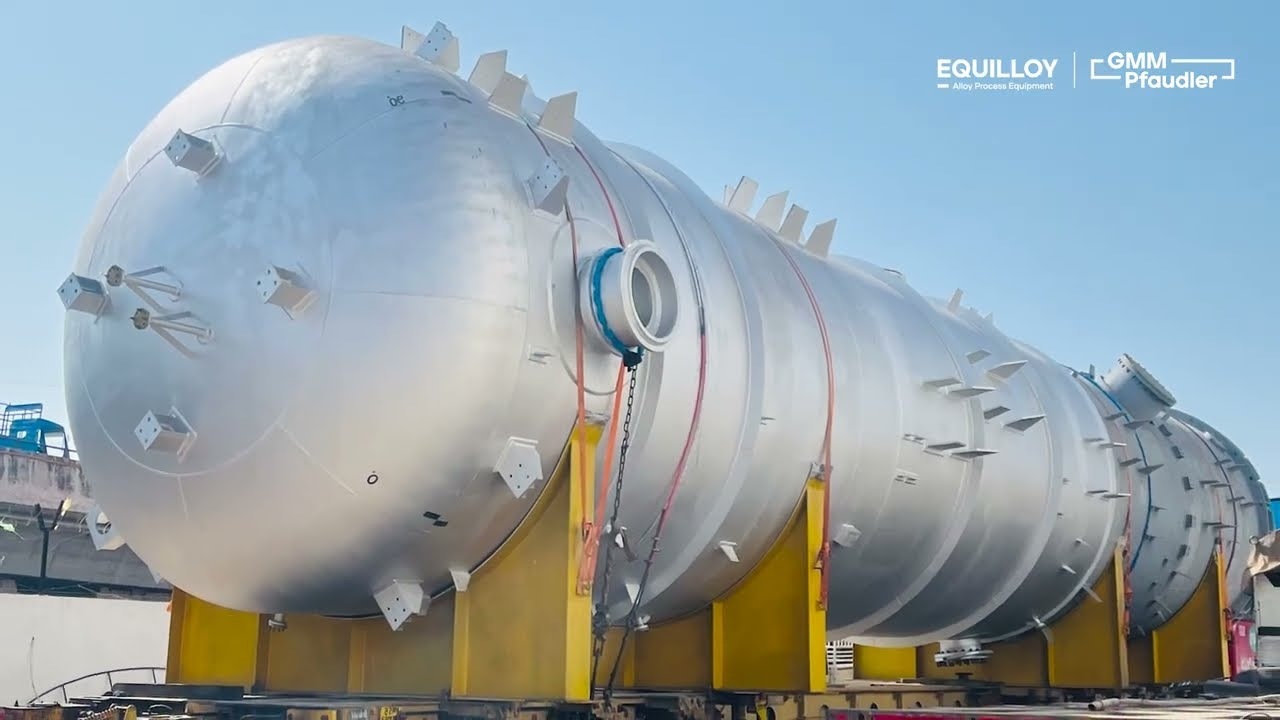
GMM Pfaudler is a legacy industrial giant that essentially serves as the chemical world’s premier blacksmith. The business specializes in corrosion-resistant glass-lined equipment—massive, sophisticated steel vessels lined with specialized technical glass designed to withstand chemical reactions that would eat standard metal for breakfast.
The company’s footprint transformed drastically through the cross-border acquisition of its former global parent, Pfaudler Inc. It transitioned rapidly from a dominant domestic player based out of Karamsad, Gujarat, into a sprawling multi-jurisdictional multinational operating twenty manufacturing facilities across the Americas, Europe, and Asia. Today, it operates across three major operational segments: Technologies, Services, and turnkey heavy engineering Systems. While operations span from the USA to China, the organizational mechanics have grown considerably more intricate than the straightforward business model of selling heavy industrial infrastructure would suggest.
Section 3 — Business Model: WTF Do They Even Do?
If you build an industrial facility intended to process volatile acids or highly sensitive pharmaceutical compounds, you cannot use standard equipment. GMM Pfaudler manufactures the heavy-duty infrastructure that keeps industrial processes contained.
Their primary product line is Glass-Lined Equipment (GLE). The market structure here is deeply lopsided. In small, commoditized vessels, the company faces local pricing pressure; however, in large-scale industrial vessels, it operates a practical global near-monopoly. The group commands a 50% market share in India, 50% in the Americas, 40% in Europe, and 20% in China.
The geographical composition is distinctly global, with international markets accounting for 74% of revenue, leaving India to bring in the remaining 26%. This creates an interesting defensive moat: even when global chemical investments drop, the Services segment—accounting for 28% of revenue and nearly 40% of international revenue—keeps generating margins because old industrial vessels require repair and maintenance whether or not the owner can afford to build a new plant.
Section 4 — Financials Overview
Figures are consolidated, in ₹ crore.
Metric
Latest Quarter (Q4 FY26)
YoY
QoQ
Revenue
944
17%
7%
EBITDA / Operating Profit
75
-10%
-28%
PAT
15
155%
235%
EPS (₹)
3.82
164%
266%
While the multi-year top-line shows steady resilience, individual quarters resemble an operational rollercoaster. Q4 FY26 revenue reached ₹944 crore, up 17% year-on-year, but the corresponding operating profit slid by 10% to ₹75 crore. This compression drove margins down to 8.0%, a sharp drop from the 11.9% logged just a quarter prior. Management noted that short-term performance was impacted by product mix, specifically the delivery of a large, lower-margin agrochemical system order, combined with transient spikes in European energy costs and raw material input prices.
What is Management Promising in the Coming Quarters?
During the post-earnings deliberations, management displayed a pragmatic posture, steering clear of near-term quantitative top-line guidance. The reason is structural: the order intake engine is strong—surging 20% to ₹3,714 crore for the full year—but an increasing portion belongs to heavy industrial “systems” projects. “Systems orders do not have a direct, immediate conversion into revenue,” management noted,