Eris Lifesciences Q4 FY26: The ₹1,242 Crore Biocon Bet and the Cost of Buying Your Way Into the Chronic League
Section 1 — At a Glance
Eris Lifesciences is undergoing a massive structural transformation, shifting from a pure-play, asset-light domestic oral formulation business to a debt-fueled, integrated chronic and injectable conglomerate. This aggressive metamorphosis is clearly visible in the headline financials: consolidated revenue for the latest period (Q4 FY26) reached ₹756.56 crore , bringing full-year FY26 revenues to ₹3,129.42 crore. Consolidated annual EBITDA for the fiscal year registered at ₹1,110.71 crore (calculated as PBT of ₹638.54 crore + Interest of ₹192.67 crore + Depreciation of ₹279.50 crore).
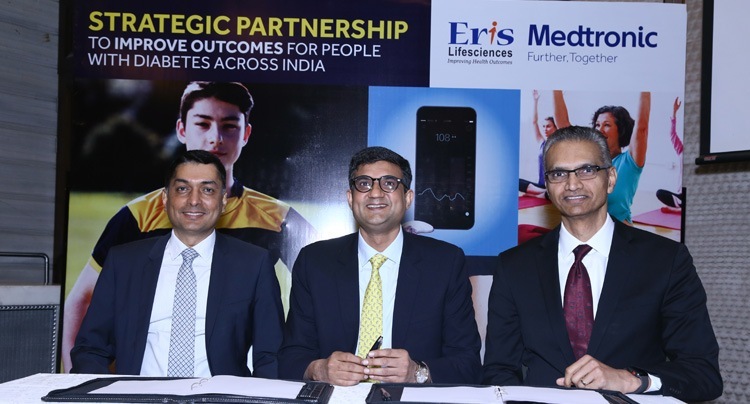
However, this transition has not been cheap. The aggressive acquisition spree—headlined by the ₹1,242 crore buyout of Biocon Biologics’ Indian branded formulation business and the complete integration of Swiss Parenterals—has fundamentally altered the company’s historical balance sheet dynamics. Borrowings remain elevated at ₹2,359.62 crore. Consequently, the company’s full-year operating cash flow (OCF) conversion dropped to 59% of operating profit , driven by structurally higher working capital requirements from the hospital and injectable supply channels. While investor attention is hooked by a massive 200% explosion in quarterly net profit to ₹281.61 crore , the numbers are heavily distorted by a negative tax write-back of -₹119.69 crore , masking a true quarterly profit before tax of ₹159.41 crore. Aggressive capacity expansions often masquerade as immediate strategic victories, but the real test lies in whether the cash flow can service the debt before the core portfolio growth tires out.
Section 2 — Introduction
Eris Lifesciences has historically positioned itself as the young upstart of the Indian Pharmaceutical Market (IPM), rapidly climbing to the 19th rank by laser-focusing on high-margin, specialist-prescribed lifestyle therapies like anti-diabetes and cardiac care. For over a decade, it operated as a lean marketing powerhouse, utilizing outsourcing to keep fixed costs negligible and return ratios in the elite tier.
The current era, however, is all about the long-term corporate drama of inorganic diversification. Over the last few years, Eris has transformed from an asset-light marketer into an asset-heavy manufacturer, expanding its production base to six facilities spanning Guwahati, Ahmedabad, Bhopal, and Chennai. The rationale behind this sudden flurry of deals is simple: building high-barrier entry platforms in insulins, GLP-1 agonists, and complex injectables that are insulated from generic erosion. But buying market share via the terminal value of other pharma giants is a double-edged sword. This article analyzes whether Eris is building a sustainable, fully integrated chronic powerhouse or simply running a treadmill of acquisitions to mask growth deceleration in its older legacy portfolios.
Section 3 — Business Model: WTF Do They Even Do?
At its core, Eris Lifesciences is a prescription collector. It deploys an army of over 3,700 medical representatives to pitch high-margin chronic therapies directly to specialists and super-specialists across India.
The therapy revenue mix highlights this extreme specialization:
Anti-Diabetes: 32% of revenues
Cardiac Care: 16%
Vitamins, Minerals, & Nutrients (VMN): 14%
Dermatology: 13%
The business model is essentially built on “mother brands”—its top 20 brands generate a whopping 70% of total branded formulation sales. The company recently added an Export Injectables wing via Swiss Parenterals to pitch generic sterile injectables across 70 emerging markets. Essentially, they find chronic niches where patients exhibit long-term brand stickiness, buy or launch a brand, and then try to squeeze out a 35%+ operating margin from it.
Section 4 — Financials Overview
Figures are consolidated, in ₹ crore.
Quarterly Trend Performance
Metric
Q4 FY26
YoY (%)
QoQ (%)
Revenue from Operations
756.56
7.27%
-6.30%
EBITDA / Operating Profit
272.37
83.50%
-3.28%
Profit After Tax (PAT)
281.61
296.47%
182.40%
Reported EPS (₹)
20.33
289.46%
177.67%
The absolute trajectory looks stellar on paper, but the quality of earnings reveals severe structural friction. The massive spike in reported quarterly Net Profit to ₹281.61 crore is entirely an accounting mirage driven by a massive negative tax adjustment of -₹119.69 crore during the quarter.