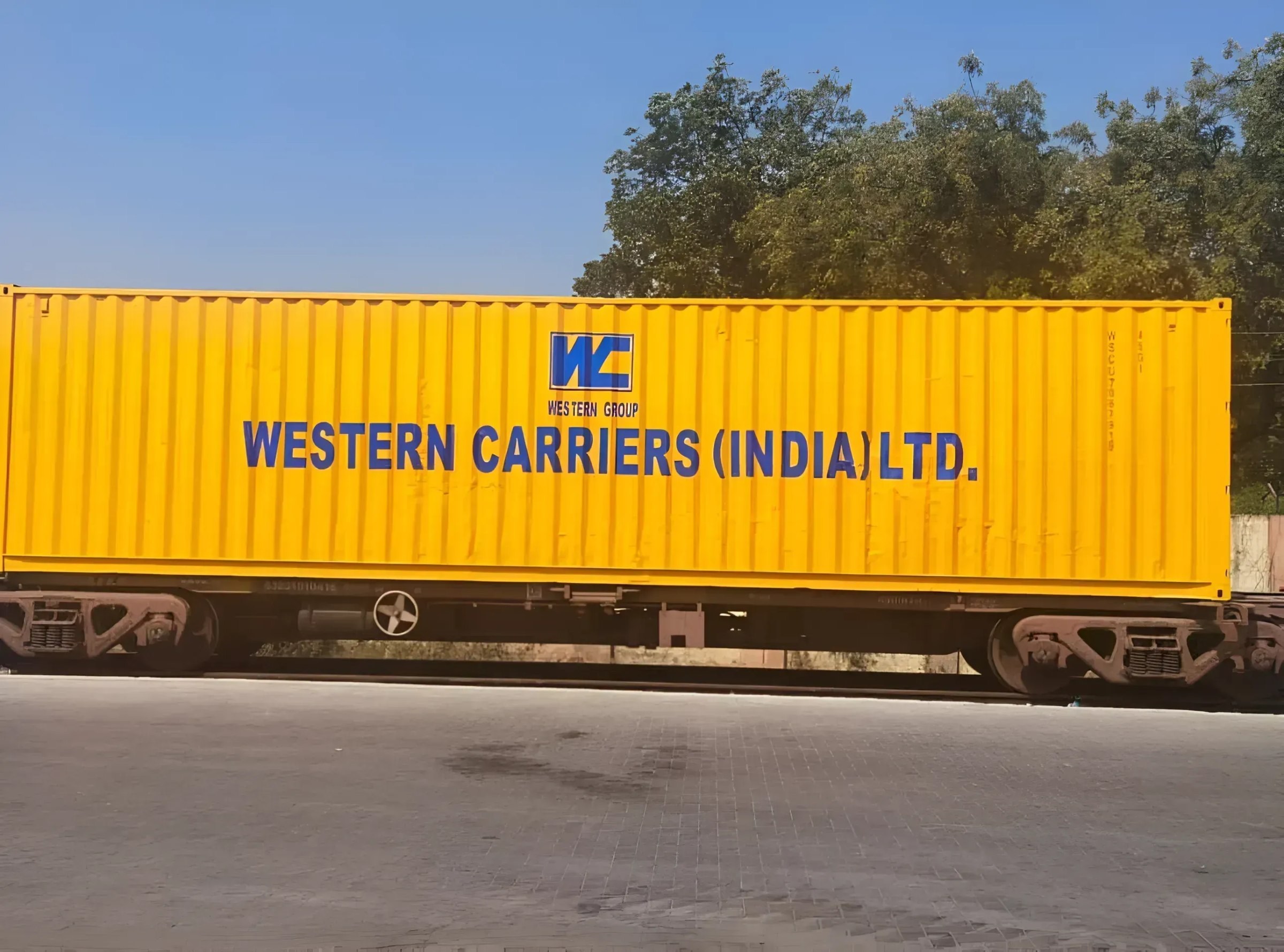
Western Carriers (India) Ltd Q4 FY26: The Asset-Light Blueprint Collides with a Ground-Reality Cash Crunch
Section 1 — At a Glance
Western Carriers (India) Ltd (WCIL) has delivered an operational performance for the full year ended March 31, 2026, that presents a sharp paradox between top-line expansion and bottom-line erosion. Revenue from operations grew by 6.0% to ₹1,829.24 crore in FY26, up from ₹1,725.72 crore in the previous fiscal year, driven by a steady volume uptick. Total TEU volumes scaled to 226,578 TEUs, supported by a 14.36% expansion in domestic container handling. However, this volume-led momentum failed to transmit to profitability, exposing structurally weak execution metrics.
Investor attention is heavily drawn to a sharp contraction in operating efficiency. EBITDA for the full year plunged by 29.1% to ₹85.00 crore, with EBITDA margins compressing to 4.65%, down from 6.95% in FY25. This deterioration was driven by a steep escalation in operational expenses, which rose to ₹1,615.00 crore. The margin crunch cascaded to Net Profit, which plummeted 40.4% to ₹38.82 crore from ₹65.13 crore in the preceding year.
The underlying stress is further amplified by a lengthening working capital cycle, with trade receivables ballooning to ₹695.18 crore, translating into a stretched debtor collection period of 139 days. This inventory-free, high-receivable operational structure has placed severe pressure on cash flows. Net cash from operating activities deteriorated significantly to a negative ₹21.76 crore. While an influx of post-IPO liquidity has cushioned the balance sheet, the widening divergence between reported accounting profits and actual cash realization remains a primary structural risk.
Operational scale without cash velocity is merely an expensive exercise in moving assets.
Section 2 — Introduction
Western Carriers (India) Ltd occupies a highly specialized niche within the Indian logistics landscape, positioning itself as a multimodal, rail-focused, fourth-party logistics (4PL) orchestrator. Operating primarily on an asset-light framework, the company designs and executes customized, end-to-end supply chain integration by combining rail, road, and river transport networks. This structural positioning allows the company to cater heavily to large industrial sectors, bypassing the capital-intensive demands of heavy fleet ownership while maintaining control via proprietary digital tracking and custom house capabilities.
The current analytical relevance of WCIL stems from its post-IPO transition in a dynamic macroeconomic environment. Following its listing in late 2024, the company has aggressively scaled its infrastructure network, expanding to over 50 branches, 55 major rake handling points, and commissioning its flagship 30-acre Gati Shakti Multi-Modal Cargo Terminal at Devaliya, Gujarat. Simultaneously, the logistics sector is adjusting to major structural shifts, including the phased completion of the Western Dedicated Freight Corridor (DFC) and newly emerging international trade lanes. This article provides a comprehensive evaluation of whether WCIL’s capital allocation strategy can effectively translate its massive industrial order book into scalable, shareholder-friendly cash generation.
Section 3 — Business Model: WTF Do They Even Do?
To the smart but uninitiated investor, Western Carriers is essentially an ultra-glorified supply chain travel agent for heavy industrial titans. Instead of booking flights, they orchestrate the movement of thousands of tons of metal, commodities, and consumer goods across India’s complex logistical infrastructure. They operate as a 4PL provider, meaning they do not just rent out trucks; they manage the entire regulatory, custom-clearance, warehousing, and multi-modal transport layout through a single window.
The company heavily relies on an asset-light model, utilizing leased infrastructure and renting warehouse capacities while maintaining a highly selective, strategic base of owned assets, including 500+ GPS trucks and 850+ shipping containers to safeguard operational reliability at key transition points.
The core revenue engine is fundamentally tied to the cyclicality of India’s heavy industrial manufacturing. The company’s sectoral revenue mix as of FY25 reveals an intense concentration:
Metals: ~55%
FMCG: ~19%
Pharmaceuticals and Chemicals: ~8%
Oil and Gas: ~4%
Utilities and Others: ~15%
While they boast an impressive client roster containing blue-chip monopolies like Hindalco, Tata Group, Vedanta, and JSW Steel, moving massive slabs of steel and zinc requires keeping substantial credit lanes open. This heavy orientation toward metal conglomerates means WCIL is highly exposed to the supply chain extended-payment leverage structures typical of primary industrial producers.
Section 4 — Financials Overview
Figures are consolidated, in ₹ crore.
Quarterly & Full-Year Financial Performance
Metric
Q4 FY26
YoY (Q4)
QoQ
FY26 (Full Year)
YoY (Full Year)
Revenue
495.72
15.67%
3.69%
1,829.24
6.00%
EBITDA
21.43
-14.10%
-10.41%
85.00
-29.11%
PAT
8.26
-41.34%
-23.73%
38.82
-40.39%
EPS (₹)
0.81
-41.21%
-23.58%
3.81
-46.79%
The sequential and year-on-year trends highlight severe margin pressure. While Q4 FY26 top-line revenue advanced to an all-time quarterly high of ₹495.72 crore, operational expenses ballooned even faster to ₹474.29 crore, shrinking quarterly EBITDA to ₹21.43 crore. Net profit for the final quarter came in at a weak ₹8.26 crore, down over 41% from the ₹14.08 crore posted in Q4 FY25.
Growth in revenue without an equivalent expansion in gross margin quality indicates a loss of pricing power against operational sub-contractors.
What is Management Promising in the Coming Quarters?
During the May 2026 earnings conference call, management focused heavily on forward-looking growth enablers to counter investor anxiety regarding structural margin compression. They emphasized that recent operational performance was heavily impacted by localized demand softening in North India and global geopolitical friction affecting the EXIM transit mix.
Management is pointing to several long-cycle catalysts:
Order Book Execution: Full monetization of the newly secured ₹1,089 crore long-term logistics mandate from Vedanta and multiple multi-year contract renewals with Jindal Stainless.
Dedicated Freight Corridor (DFC): The impending full completion of the Western DFC up to JNPT by mid-2026 is projected to shift bulk freight from road to rail, structurally lowering transit times and boosting margins.
Revenue Mix Pivot: Management outlined a formal roadmap to transition the company’s historical revenue profile away from metals toward a balanced 50-50 mix between metals and higher-margin non-metals (FMCG, pharma, and chemicals) over the next two to three years.
Section 5 — Valuation Discussion
To evaluate the valuation framework for Western Carriers (India) Ltd, we establish structural parameters derived from a snapshot price of ₹97.01, total market capitalization of ₹987.75 crore, and an outstanding base of 10.20 crore adjusted equity shares.