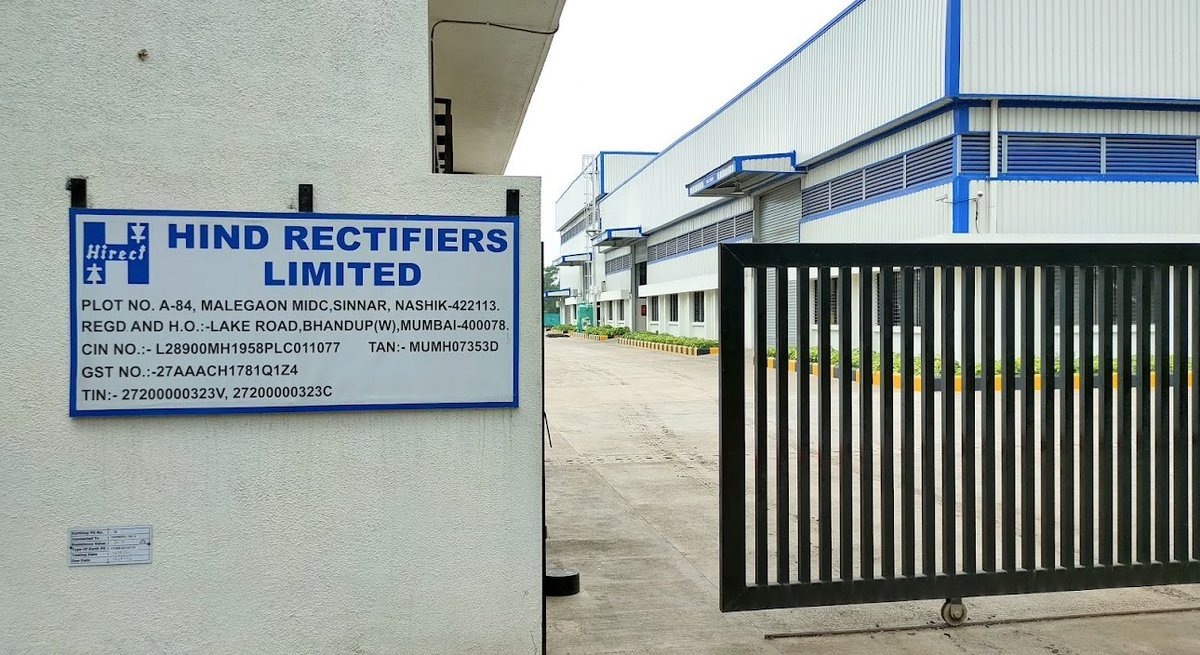
Hind Rectifiers Q4 FY26: A ₹999 Crore Milestone Collides with Margins in Recovery
Section 1 — At a Glance
Hind Rectifiers achieved a critical scale milestone in FY26, pushing consolidated revenue up 52.5% year-on-year to ₹999.13 crore. However, this blistering top-line volume arrived with a severe contraction in profitability metrics that has sharply split investor sentiment. While raw operational execution remains strong, consolidated EBITDA margins collapsed from 10.73% in FY25 to 8.42% in FY26, driven by an acute margin squeeze in the final quarter where operating profit margins bottomed out at just 3.01%.
Consolidated Net Profit for the full year stood at ₹38.56 crore, a moderate 3.91% advance over the ₹37.11 crore posted in the previous fiscal, muted by raw material input cost pressures and structural investments. Investors are closely tracking two primary dynamics: the rapid commercialization of the in-house continuous transposed conductors (CTC) copper facility at Sinnar to relieve margin pain, and the advanced field trials of the indigenous railway propulsion systems on Western Railway. Conversely, immediate anxiety centers around structural operating cash drainage from global expansion, alongside a ballooning inventory and receivables cycle that pushed short-term borrowings past ₹204 crore. Top-line hyper-growth means little if capital gets permanently trapped inside the manufacturing pipeline. The upcoming periods will decide whether this expansion establishes a high-value technology moat or dilutes capital efficiency.
Section 2 — Introduction
Hind Rectifiers stands at a structural crossroads. Long categorized as a traditional tier-2 electrical component vendor to the heavy industrial and locomotive ecosystems, the enterprise is attempting a multi-year pivot to become a vertically integrated, high-value systems supplier. The justification for an institutional deep-dive at this precise juncture is clear: the company has finalized its financial ledger for FY26, printed an all-time high revenue base close to ₹1,000 crore, and initiated a major corporate restructuring. On May 16, 2026, the board approved a 100 crore preferential equity issuance to Tata Mutual Fund and authorized a 1:1 bonus share allotment to enhance public float. Concurrently, a decisive global transformation is underway with the integration of Elventive France to anchor a European engineering hub, paired with the structural appointment of Douglas Bailey as Global CEO to champion Wide Bandgap semiconductor technologies.
Section 3 — Business Model: WTF Do They Even Do?
To the uninitiated investor, Hind Rectifiers sounds like a boring catalog company selling electrical components. In reality, they manufacture the highly complex, ruggedized power conversion brains that prevent electric trains from frying themselves. The business model splits cleanly into two distinct operational universes: Railway Transportation Equipment (which commands 70-80% of total revenue) and Industrial Power Electronic Systems.
On the locomotive side, they build IGBT-based traction converters, massive traction transformers that step down 25kV overhead electrical lines, vehicle control units, and customized rolling stock HVAC networks. In the industrial segment, they build high-current, low-voltage thyristor rectifiers and advanced high-frequency power supplies for harsh settings like hydrogen generation plants, steel mills, and electrostatic precipitators. They do not operate a simple high-volume assembly line; they design custom mechatronics. The economic layout is inherently low-volume but highly customized, demanding long gestation periods where products must be simulated, rigorously tested, and field-validated over tens of thousands of kilometers before turning into predictable revenue streams.
Section 4 — Financials Overview
Figures are consolidated, in ₹ crore.
Metric
Latest Quarter (Q4 FY26)
YoY (%)
QoQ (%)
Revenue
279.82
51.21%
0.88%
EBITDA / Operating Profit
8.43
-57.64%
-67.01%
PAT
-1.59
-131.05%
-112.52%
EPS (₹)
-0.46
-130.87%
-112.47%
The final quarter of FY26 exposed the steep operational friction of rapid scaling. While Q4 revenue climbed to ₹279.82 crore, operating profit evaporated down to ₹8.43 crore—a stark sequential drop from the ₹25.55 crore generated in Q3 FY26. This sudden profitability crash dropped the quarter into a net loss of ₹1.59 crore, weighed down by an unyielding raw material expense line of ₹271.39 crore and a sharp expansion in tax adjustments. Revenue growth without simultaneous margin oversight is an invitation to financial volatility.
Did Management Walk the Talk?
Reviewing the commentary from the February 2026 mid-quarter updates reveals a clear mismatch between management expectations and near-term realization. During the Q3 conversations, the executive team explicitly signaled that raw material commodity pressures—specifically copper volatility—and the initial structural ramp costs of the Sinnar project would begin to ease immediately, predicting sequential margin improvements starting in Q4. Instead, Q4 margins cratered to an multi-quarter low of 3.01%.
What is Management Promising in the Coming Quarters?
Despite the near-term margin setback, management is doubling down on structural growth. The leadership team maintains a confident forward execution path, forecasting a structural 30% year-on-year top-line growth runway into the upcoming fiscal year, backed by an active order book that stood at ₹845.50 crore at the close of March 2026. Management noted that the margin compression is a temporary timing mismatch rather than a permanent structural breakdown. They indicate that sequential recovery will materialize through the early quarters of the next fiscal period, with substantial operational upside unlocked from the second quarter onwards as captive sourcing from the new 350