Jay Bee Laminations Ltd H2 & FY26: The Dangerous Downstream Waltz of a Steel Transformer
Section 1 — At a Glance
Jay Bee Laminations Ltd delivered an intense performance in fiscal year 2026, pushing its headline revenue up by 49.1% to ₹547.97 crore compared to ₹367.45 crore in the prior fiscal year. However, the earnings quality reveals a classic commodity margin trap. Despite the top-line surge, Net Profit dropped by 28.1% to ₹18.26 crore down from ₹25.39 crore in FY25, compressed by a sharp inventory overhang and the structural costs of building out new downstream divisions. Operating profit margins shriveled from 11.70% to 6.22% on an annual basis.
The market’s attention is firmly locked onto the company’s aggressive business pivot. Jay Bee Laminations is transforming itself from a pure-play transformer core component manufacturer into an integrated engineering, procurement, and construction (EPC) player and full-scale transformer builder. While the new EPC segment provided an explosive ₹141.46 crore revenue boost in the second half of the year, it has triggered massive working capital strain. Trade receivables have skyrocketed to ₹190.61 crore , casting a shadow over cash flow realization. True operational excellence requires balance sheet protection; executing uncollected revenue is simply giving away products for free. Investors are left watching a high-stakes balancing act: capacity is rising to 23,340 MTPA and new approvals are locked in, but structural cash conversion remains heavily stressed.
Section 2 — Introduction
Jay Bee Laminations Ltd enters mid-2026 at a defining crossroad in its 37-year corporate journey. Long recognized as a quiet provider of cold-rolled grain-oriented (CRGO) silicon steel cores for electrical transmission infrastructure, the company has shed its low-profile sub-contractor skin. It is stepping directly into the bright, volatile arena of turnkey electrical infrastructure execution.
This comprehensive analysis exists because the company’s financial mechanics have fundamentally altered over the last twelve months. Following its public listing, management has deployed capital into a multi-pronged downstream expansion. It has setup a brand-new corporate architecture designed to capture more wallet share from the domestic power grid expansion. However, changing your core business model mid-stream is an expensive and logistically difficult evolution. As raw material prices swing globally, looking closely at their numbers reveals whether this change creates a highly profitable industrial champion or an over-leveraged, asset-heavy contractor chasing empty revenues.
Section 3 — Business Model: WTF Do They Even Do?
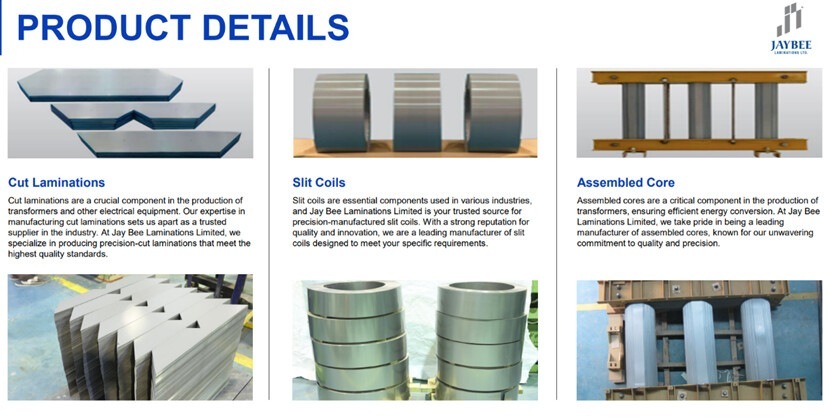
At its historical core, the company performs a high-precision manufacturing job: it takes massive coils of raw CRGO silicon steel and processes them into cut laminations, slit coils, and fully assembled cores. These items are the magnetic hearts of electrical distribution and power transformers. If you do not have these precisely engineered steel stacks, the electrical grid cannot step voltage up or down, making them vital for the infrastructure sector.
However, recognizing that pure component processing leaves them vulnerable to global steel price cycles, management has integrated forward. They now produce complete Core Coil Assemblies and fully built transformers under their new corporate brand, INTELLICORE. To ensure they can sell these new products, they have added a turnkey EPC execution segment focused entirely on building substations and transmission lines. This segment acts as a built-in customer for their own manufacturing plant. It is a smart way to generate steady demand, provided they can successfully collect their bills from regional utility companies.
Section 4 — Financials Overview
Figures are consolidated, in ₹ crore.
Financial Performance Table
Metric
Latest Half (H2FY26)
YoY (Same Half)
Previous Half (H1FY26)
Revenue
329.25
53.65%
218.73
EBITDA / Operating Profit
23.87
19.03%
10.19
PAT
14.58
32.83%
3.69
EPS (₹)
6.46
21.43%
1.63
Did Management Walk the Talk?
When looking at past commentary from the November 2025 earnings call, management openly admitted that high-priced inventory bought in early 2025 severely hit profitability in the first half of the fiscal year. They stated that this expensive steel was fully used up by the end of H1FY26, promising a margin recovery in the second half.
The numbers show they delivered on this specific operational promise. EBITDA jumped from ₹10.19 crore in H1 to ₹23.87 crore in H2, while PAT staged a clear recovery to ₹14.58 crore. However, total annual margins still look weak because the CRGO pricing environment remains highly deflationary. Global spot prices dropped from ₹235/kg down toward ₹210/kg. While the business passes steel cost changes through to customers, the time lag in processing means a falling price trend creates automatic margin compression.
What is Management Promising in the Coming Quarters?
Looking forward, management has set a clear volume target of 16,000 MT for the processing business. They have completed their main capacity addition, bringing the plant up to 23,340 MTPA. This leaves them well-positioned to step away from low-margin slit coils and focus production on value-added power transformer laminations.
On the downstream side, the new transformer segment is expected to scale up