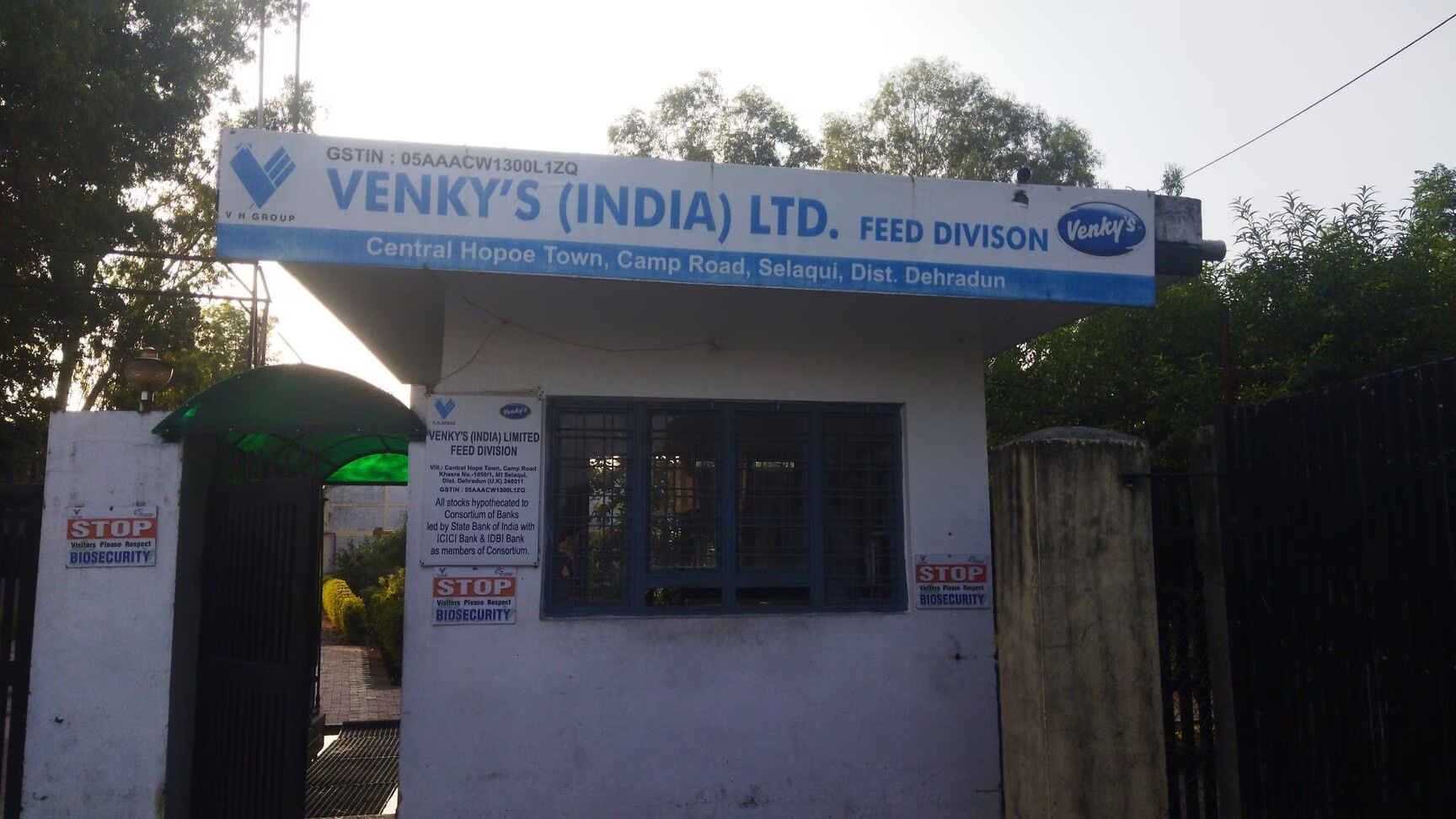
Venkys (India) Ltd Q4 FY26: Operating Margins Surge to 12% as Realizations Recover, but Structural Cyclicality and Inter-Group Sales Loom Over Long-Term Valuation
1. At a Glance
The poultry sector in India has long been a graveyard for impatient capital, and Venkys (India) Ltd is a prime example of why this industry demands a cold, analytical lens. Over the past five years, the company has delivered a poor compounded sales growth of 3.64%, accompanied by a modest three-year average Return on Equity (ROE) of 7.81%. Investors who entered this stock with expectations of smooth, fast-moving consumer goods (FMCG) growth lines have instead found themselves strapped to a volatile commodity roller coaster.
The financial performance of the company is heavily dependent on the wild fluctuations of live bird realizations and the volatile pricing of agricultural feed inputs like maize and soybean. A clear demonstration of this structural risk occurred in the first half of the 2026 financial year (H1 FY26). During this period, an unexpected oversupply in domestic markets, coupled with an early and extended monsoon that disrupted logistics and dampened festive consumption, caused a severe pricing shock.
Live bird realizations plunged far below the cost of production, driving the operating profit margin down to a negative 4% in the second quarter of FY26 and producing an overall net level loss of ₹10.70 crore for the half-year period. This sharp downturn highlights how quickly a shift in supply dynamics can wipe out the profitability of integrated poultry operators.
However, the final quarter of the fiscal year (Q4 FY26) showcased an equally rapid operational reversal. Driven by a seasonal recovery in winter demand and a substantial correction in global and domestic raw material prices—specifically soybean meal—the company reported a strong financial performance. Quarterly revenue reached ₹1,100.47 crore, representing a year-over-year increase of 30.52%.
More importantly, the operating profit margin rebounded sharply to 12%, producing an operating profit of ₹130 crore and a net profit of ₹101 crore. This quarterly net profit marks a 662% increase compared to the depressed base of the same quarter in the previous fiscal year.
While the strong close to the year has driven the trailing twelve-month profit after tax up to ₹139 crore, serious structural questions remain for long-term analysts. The company continue to operate with low capacity utilization across several key business lines, including its core oilseed processing and captive feed mills. Furthermore, the Animal Health Products division, which serves as a highly profitable and stable segment, retains a significant operational dependency on internal group companies, with 55% of its total output sold to related entities under the Venkateshwara Hatcheries Group.
As the market reacts to these highly volatile earnings patterns, a deeper investigation into the underlying asset structure, cash flows, and corporate arrangements is required to separate short-term cyclical recoveries from sustainable, long-term capital compounding.
2. Introduction
Venkys (India) Ltd, established in 1976 and headquartered in Pune, operates as a core subsidiary of the Venkateshwara Hatcheries Group (VH Group). The VH Group was founded by the late Dr. B.V. Rao and has grown over five decades into a highly integrated poultry conglomerate in India. The group holds a dominant position across the domestic poultry value chain, with operations spanning from pure-line genetic research and grand-parent breeding farms to commercial broiler production, hatcheries, animal pharmaceuticals, feed processing, and retail operations. Within this larger corporate framework, Venkys (India) Ltd functions as the primary listed entity, focusing its poultry operations primarily across the northern and western regions of India, while its unlisted parent company, Venkateshwara Hatcheries Private Limited (which holds a 51.02% equity stake in the listed company), manages the southern and eastern territories.
The operational scale of the listed company includes breeder farms, commercial broiler operations, Specific Pathogen-Free (SPF) egg manufacturing facilities, hatcheries, and feed mills across 11 states, including Maharashtra, Gujarat, Haryana, Punjab, and Uttarakhand. To support its core poultry activities and diversify its raw material sourcing, the company also operates three soybean solvent extraction and vegetable oil refining plants in Maharashtra with an aggregate processing capacity of 5.4 lakh metric tonnes per annum (MTPA). In addition, it maintains a small retail footprint consisting of 14 processed chicken express outlets located in Tier-1 and Tier-2 cities.
The capital allocation strategy of the company has historically focused on vertical integration rather than aggressive geographic or retail footprint expansion. This structure provides a steady internal supply of day-old chicks and veterinary medicines, but it also exposes the company’s financial performance directly to domestic agricultural cycles and consumer meat-consumption habits. The stock currently carries a market capitalization of ₹2,279 crore, trading at a price-to-earnings (P/E) multiple of 16.4x against its full-year FY26 audited earnings. Over a multi-year horizon, the stock’s market valuation has remained largely flat, delivering a total return of 0.02% over the last three years and a negative return of 7.47% over the past five years. This performance reflects the market’s ongoing caution regarding the volatile cash flow profile typical of pure-play poultry enterprises.
3. Business Model – WTF Do They Even Do?
To understand how Venkys makes its money, you have to look past the “Venky’s Chicken” banners at your local sports stadium and examine a highly complex, asset-heavy agricultural value chain. The company divides its operations into three main business segments: Poultry & Poultry Products, Animal Health Products, and the Oilseed Division.
+-------------------------------------------------------------------------+
| VENKYS VALUE CHAIN INTEGRATION |
+-------------------------------------------------------------------------+
| OILSEED DIVISION POULTRY BREEDING ANIMAL HEALTH |
| (Soya Processing) (Chicks & SPF Eggs) (Medicines & Feed) |
| | | | |
| v v v |
| [5.4 Lakh MTPA Soya] ---> [Day-Old Broiler] <--- [Captive Feed & Meds]
| |
| v
| [Commercial Broiler Birds]
| |
| v
| [Processed QSR Supply]
+-------------------------------------------------------------------------+
Poultry & Poultry Products
This is the core operational engine, contributing approximately 35% of total revenue but driving the vast majority of P&L volatility. The company buys its single-day-old broiler breeder parent chicks from Venco Research and Breeding Farm Private Limited—a specialized joint venture between the VH Group and Cobb-Vantress USA. It also sources parent layer chicks through another group arrangement with ISA Breeders Inc. USA. These parent chicks are reared to produce day-old commercial broiler and layer chicks, which are either sold directly to independent poultry farmers or distributed through the company’s contract farming network.
This segment also includes the production of Specific Pathogen-Free (SPF) eggs. These highly specialized, bio-secure eggs are used by pharmaceutical companies to manufacture human and veterinary vaccines. While the SPF egg business represents a high-margin, technologically advanced niche where Venkys is one of Asia’s largest producers, it continues to operate at a modest 50% capacity utilization rate, leaving substantial unutilized capital on the balance sheet.
Animal Health Products (AHP)
This segment manufactures specialized veterinary medicines, nutritional powders, and poultry feed supplements. In FY24, the company expanded this division by completing and commercializing a new manufacturing facility at Kesurdi in Satara, Maharashtra, designed to produce 600 tonnes of medicine powders and 300 kilolitres of oral liquids annually. This division operates as a stable, high-margin profit center that grew its revenue base to nearly ₹335 crore in FY25, with management targeting ₹370 crore to ₹380 crore for FY26.
However, a closer look at the business structure reveals a significant captive dependency: 55% of all animal health products manufactured by the company are sold internally to other VH Group companies, leaving only 45% to be sold to external commercial buyers. Furthermore, when independent poultry farmers face financial stress due to low bird prices, this division experiences severe working capital pressure and collection delays.
Oilseed Segment
Accounting for the remaining 65% of the company’s total revenue, this division handles large-scale soybean crushing and refining. The company operates three processing plants in Maharashtra with an aggregate capacity of 5.4 lakh MTPA. The primary goal of this business is vertical integration: crushing soybean provides a guaranteed internal supply of de-oiled cake, which serves as a major protein source for the company’s poultry feed formulations. The leftover refined soybean oil is sold in the open commercial market.
Financially, this segment operates with thin EBIT margins, typically around 3%. Because domestic raw soybean prices are heavily tied to the government’s Minimum Support Price (MSP) frameworks, while refined oil and meal prices follow volatile global commodity trends, this division often faces margin squeezes. It also operates under low capacity utilization, running at just 50% to 55% of its total installed capacity.
How sustainable do you think a business model is when its largest volume segment (Oilseed) operates as a low-margin utility to feed its volatile poultry business?
4. Financials Overview
The financial performance of Venkys (India) Ltd over the past year highlights the extreme volatility built into its operations. Reviewing the quarterly sequence leading into the close of the fiscal year reveals an abrupt transition from deep operational losses to record profitability.
Quarterly Performance Sequence
September 2025 (Q2 FY26): Revenue stood at ₹960 crore, but an oversupply of live birds in northern markets, combined with seasonal consumption drops during festival periods, caused a sharp drop in realizations. Day-old broiler chicks fell to ₹21.42 per chick, and commercial broiler birds dropped to ₹71.27 per kg, falling well below the average production cost of ₹85 to ₹86 per kg. This imbalance led to an operating profit loss of ₹31 crore and a consolidated net loss of ₹27 crore.
December 2025 (Q3 FY26): Conditions began to stabilize. Revenue rose to ₹1,019 crore, and operating profit moved back into positive territory at ₹70 crore, representing a 7% operating profit margin.
March 2026 (Q4 FY26): Financial performance accelerated significantly. Total sales reached ₹1,100.47 crore, a 30.52% increase compared to the ₹843 crore recorded in Q4 FY25. Operating profit reached ₹130 crore, expanding the operating profit margin to 12%. Net profit for the single quarter came in at ₹101.37 crore, marking a 662% expansion over the prior year’s fourth-quarter net profit of ₹13.30 crore.
Financial Performance Comparison
The following table summarizes the financial results across key periods: